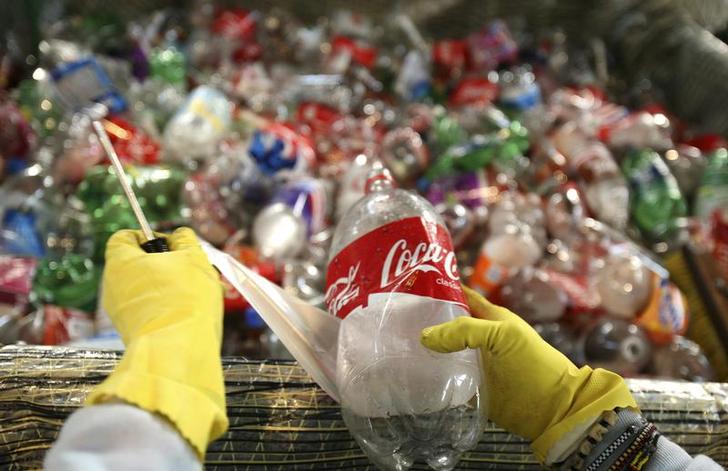
A worker removes labels from recycled plastic bottles to be used in the construction of the sailboat Plastiki at Pier 31 in San Francisco, California, March 13, 2009. (Reuters / Robert Galbraith)
NEW YORK: Plastic used in everyday objects from bottles to packaging emit greenhouse gases when exposed to sunlight, according to a study released on Wednesday, as global concern about its impact on the world's oceans grows.
Plastic pollution has come under increased scrutiny from environmentalists as the scale of the problem has become clear - this year it emerged that a giant island made up of plastic waste in the Pacific Ocean was far larger than thought.
Now scientists have discovered that commonly used plastics also generate the potent greenhouse gas methane as well as ethylene as they age, adding to the global tally of planet-warming emissions.
The study, published in the journal PLOS ONE, said plastics were "likely to be an insignificant component of the global (methane) budget" due to the low quantities produced in this way.
Nonetheless Jonathan Nichols, an associate professor of earth sciences at Columbia University in New York, said the finding was "definitely important".
"You can't solve the greenhouse gas problem until you've defined every part of it," he told the Thomson Reuters Foundation by phone.
Methane emissions, mainly caused by burning fossil fuels, are a major driver of global warming, putting them in the crosshairs of the global fight against climate change.
Jennifer Provencher, a plastic pollution researcher at Acadia University, in Canada, said the results pointed to "another piece of evidence suggesting that losing plastic to the environment is not good".
More than nine billion tons of plastic has been produced since 1950 with most of it discarded in landfills or the environment, previous research has found.
Scientists have repeatedly linked exposure to some plastic chemicals, such as bisphenol A (BPA), to health risks.
The so-called garbage patch of plastic floating in the Pacific holds as much as 16 times more debris than was previously thought, posing a significant threat to the food chain, scientists found in March.
(Reporting by Sebastien Malo @sebastienmalo, Editing by Claire Cozens. Please credit the Thomson Reuters Foundation, the charitable arm of Thomson Reuters, that covers humanitarian news, women's rights, trafficking, property rights, climate change and resilience. Visit http://news.trust.org)