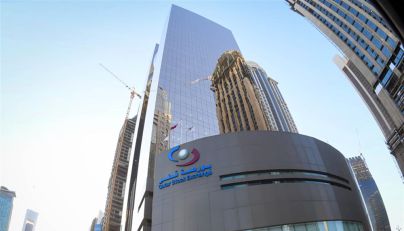
Doha, Qatar: The Qatar Stock Exchange (QSE) index ended the week down 1.11 percent, shedding 111.79 points from last week's close to finish at 9,920 points. The decline was driven by losses across five sectors, while the transportation and banking and financial services sectors posted gains. Financial analyst Mubarak Al Tamimi told Qatar News Agency (QNA) that the QSE general index has been trading sideways with a downward bias for several months. He noted that the market opened the week at 10,032 points and closed at 9,920 points, predicting it could decline to 9,727 points in the coming period. He added that this level represents an attractive buying opportunity for investors, offering the potential for stronger returns in the future. QSE data for the week showed that the telecommunications sector recorded the steepest decline, falling 6.08 percent, followed by the industrial sector at 2.80 percent, insurance at 2.23 percent, real estate at 1.40 percent, and consumer goods and services at 0.36 percent. Meanwhile, the transportation sector gained 0.43 percent, while the banking and financial services sector edged up 0.03 percent. Al Tamimi said investors continue to assess the geopolitical risks stemming from the five-month-long war in the region and its implications for local, regional, and global financial markets. At the same time, he noted that positive first-half earnings reported by several companies have strengthened investor confidence. He added that stable interest rates also remain a supportive factor, enhancing the market's attractiveness. During the week, a total of 654,832,195 shares were traded, with a value exceeding QAR 1.563 billion through 126,679 transactions across all sectors. Yesterday, Qatar Central Bank decided to keep its current deposit, lending, and repurchase rates unchanged following its assessment of the State of Qatar's monetary policy. In a statement, the Bank said the deposit rate (QCBDR) will remain at 3.85 percent, the lending rate (QCBLR) at 4.35 percent, and the repurchase rate (QCB Repo Rate) at 4.10 percent
Doha: Qatar Industrial Manufacturing Company's (Qatari public shareholding company) net profit declined by 49.6 percent during the first half of 2026 to reach QAR 31.12 million, compared to net profit of nearly QAR 61.82 million during the same period of 2025. In a statement published on the Qatar Stock Exchange (QSE) website on Thursday, the Company indicated that earnings per share decreased to QAR 0.065 for the period ending June 30, 2026 compared to QAR 0.13 for the same period of 2025.
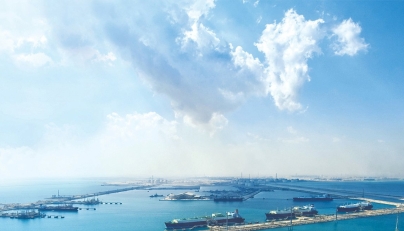
Doha, Qatar: Qatar has strengthened its position as one of the world’s leading liquefied natural gas (LNG) exporters after increasing its share of the global market to 18.7% in 2025, according to the latest International Gas Union (IGU) World LNG Report 2026. The report shows that Qatar exported 81.5 million tonnes (Mt) of LNG during 2025, an increase of 4.3 Mt from the previous year, enabling the country to overtake Australia and become the world’s second-largest LNG exporter, behind only the United States. Global LNG trade reached a record 437.0 Mt in 2025, up by 25.7 Mt compared with 2024, reflecting growing international demand for natural gas as countries continue to balance energy security with efforts to reduce carbon emissions. According to the IGU report, Qatar’s exports accounted for approximately 18.7% of total global LNG trade, underscoring the country’s expanding role in supplying international energy markets. Together, the United States, Qatar and Australia supplied 62% of global LNG exports during the year, highlighting the dominance of the three largest producers. The report attributes Qatar’s strong performance to continued optimisation of its integrated upstream and midstream operations, allowing LNG production facilities to operate at or near full capacity throughout the year. The increase in exports comes as Qatar continues to invest billions of dollars in expanding production from the North Field. Once completed, the North Field East, North Field South and North Field West expansion projects will increase Qatar’s LNG production capacity from 77 million tonnes per annum to 142 million tonnes per annum by the end of the decade. The expansion will further strengthen Qatar’s position as a reliable supplier to both Asian and European markets, particularly as countries seek long-term energy security amid geopolitical uncertainty and the global energy transition. The IGU report indicates that Asia remained the largest LNG importing region, receiving 138.76 Mt of LNG in 2025. China retained its position as the world’s largest LNG importer, purchasing 69.8 Mt, while Japan imported 67.4 Mt. Europe also maintained strong demand, with LNG imports rising to 126.1 Mt as countries continued diversifying energy supplies. On the export side, the United States remained the world’s largest LNG supplier with 110.7 Mt of exports, followed by Qatar’s 81.5 Mt and Australia’s 80.3 Mt. Russia ranked fourth with 30.5 Mt, following a decline in exports during the year. The report notes that North America recorded the largest increase in LNG exports in 2025, driven primarily by new liquefaction capacity in the United States. The IGU findings reinforce Qatar’s standing as one of the world’s most influential LNG producers at a time when natural gas continues to play a key role in the global energy mix. With record export volumes, an expanding production base and one of the lowest-cost LNG industries in the world, Qatar remains well positioned to meet growing international demand while strengthening its contribution to global energy security. The 2026 edition of the International Gas Union’s (IGU) World LNG Report shows record trade, near-record investment and a strong long-term growth outlook despite unprecedented market disruption. The global liquefied natural gas trade reached a record of 437 million tonnes in 2025, with a 6.3% increase – the strongest growth since 2022, while investment in new LNG supply surged to its highest level in six years. The report reveals an industry entering a new phase of maturity and resilience, having successfully responded to one of the most challenging periods in its history while continuing to expand its role in supporting global energy security, economic development and emissions reduction.
 Qatar strengthens LNG leadership as exports reach record high in 2025
Doha, Qatar: Qatar has strengthened its position as one of the world’s leading liquefied natural gas (LNG) exporters after increasing its share of the global market to 18.7% in 2025, according to the latest International Gas Union (IGU) World LNG...
 Shell offloads S.Africa downstream business to Abu Dhabi
London: British energy giant Shell announced Tuesday a deal to sell its South African downstream business, including 580 fuel stations, to the Abu Dhabi National Oil Company (ADNOC). Shell said the sale, valued at about $1 billion, formed part of...
 OpenAI says rogue AI agent attack hit other companies
San Francisco: ChatGPT maker OpenAI has revealed that an autonomous artificial intelligence agent which hacked a popular platform for computer programmers also attempted to breach four other companies during the incident. In an update late Tuesday to a blog post...
QSE offers investors attractive entry opportunities
Doha, Qatar: The Qatar Stock Exchange (QSE) index ended the week down 1.11 percent, shedding 111.79 points from last week's close to finish at 9,920 points. The decline was driven by losses across five sectors, while the transportation and banking...