File photo
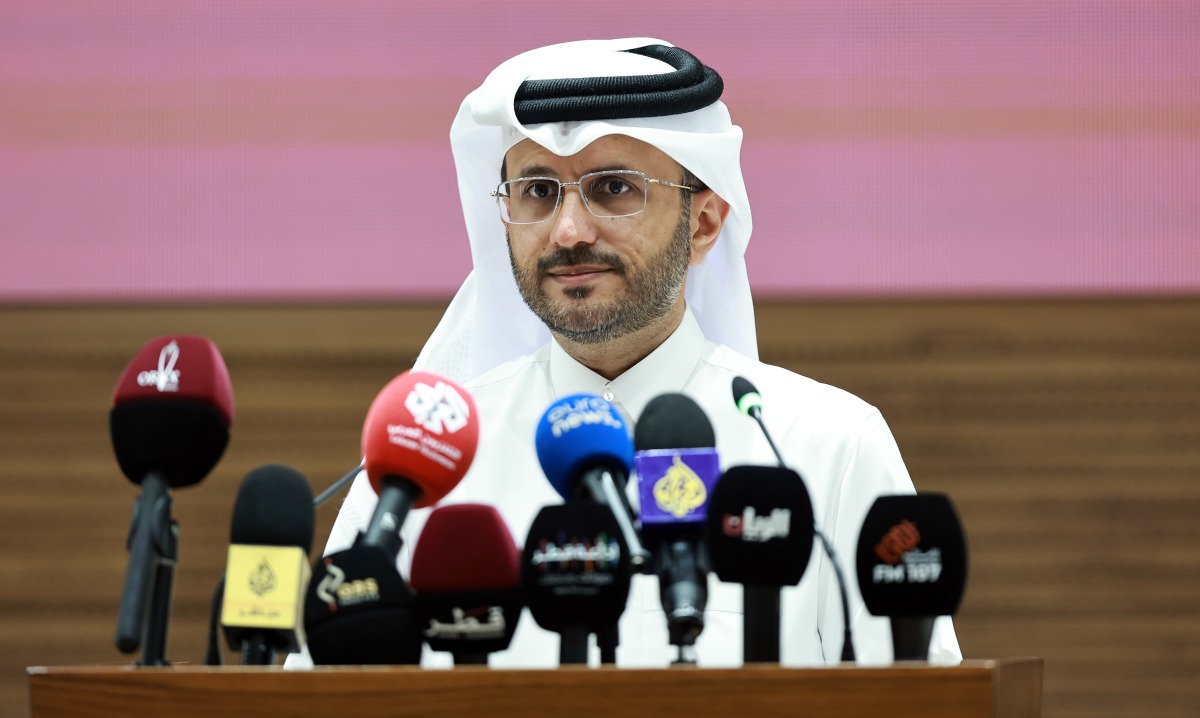
Doha,. Qatar: Advisor to the Prime Minister and Official Spokesperson for the Ministry of Foreign Affairs Dr. Majed bin Mohammed Al-Ansari has said that the continued closure of the Strait of Hormuz leads to further escalation in the region.
“The State of Qatar, in coordination with its mediation partners, continues its regional and international efforts and contacts aimed at de-escalation,” he said in a weekly media briefing held yesterday, urging all parties to exercise wisdom and return to the negotiating track.
He added that the Gulf countries have demonstrated their ability to overcome previous crises, thanks to the wisdom of their leadership, the resilience of their economies, and their international standing, while continuing to play an active role in mediation and dispute resolution.
Responding to a question about a possible diplomatic off-ramp in the near future, he said: “Well, first of all, we cannot afford to believe otherwise. In Qatar, in the region, in the world today, we cannot afford to accept the status quo as it stands right now. The effects of the current escalation are not felt only here in the region. They are felt across the world... reduced yields from crops in needy communities, effects on the pharmaceutical industries when it comes to helium, effects on various industries when it comes to other products.... the energy product shortages that will occur. All of that is felt across the world.”
He said that it has entered homes in far geographies where they have nothing to do with the crisis. “Therefore, it is an international crisis in that sense... we are doing everything that we can here in Qatar, working with our partners to make sure that this crisis ends through a diplomatic resolution that guarantees that the Strait of Hormuz is open, that the people of the world can enjoy the products coming out of this region, that the security of our region is guaranteed, and that the ambitions of all the people in our region for prosperity and security are addressed.”
Commenting on the recent visit of Prime Minister and Minister of Foreign Affairs H E Sheikh Mohammed bin Abdulrahman bin Jassim Al-Thani to Iran, he said it was part of a series of visits to Tehran in recent days, including visits by officials from Oman and Pakistan. “All these visits were aimed at supporting mediation efforts to return to negotiations and prevent a renewed escalation in the region,” he said.
He added that consultations with mediation partners in Oman and Pakistan were ongoing. “Qatar had warned from the start about the consequences of leaving the crisis unresolved, and cautioned that treating the closure of the Strait of Hormuz as a fait accompli could lead to further escalation, affecting all sides.”
Al Ansari also rejected suggestions that the Gulf’s role was declining, saying the GCC states continued to hold a prominent position in international politics and the global economy, while playing an active role in mediation and conflict resolution and maintaining a central role in the global economy.
To a question about Israeli attacks in Gaza and other regional countries, Al Ansari said there was a clear attempt to impose a new normal in the region. He urged countries around the world, international partners and peace-loving nations to pay close attention to the developments and take concrete steps to hold Israel accountable for its actions.
“Many of the Israeli occupation’s actions could not be justified in the context of the war in the Gaza Strip or the military escalation witnessed across the region in recent months. Attempts are being made to impose a new reality in several areas, including Syria, the West Bank and Jerusalem.”
He said that Qatar had repeatedly warned that Israel was seeking to exploit regional tensions to bring about strategic and dangerous changes to the situation in the West Bank, Gaza, Lebanon and Syria.
On Minister of State for Foreign Affairs Dr Mohammed bin Abdulaziz Al Khulaifi’s visit to Libya, Al Ansari said Qatar was strongly committed to supporting the aspirations of the Libyan people and their efforts to build a stable and inclusive state. “The visit was part of Qatar’s continuing efforts to support a political solution in Libya and promote consensus among the country’s various parties. Qatar supports a ‘Libyan-Libyan’ solution,” he said.
“The State of Qatar reaffirms its continued support for its brothers in Libya and its commitment to fostering a Libyan consensus that fulfills the aspirations of the Libyan people and ensures a better future for the country.”