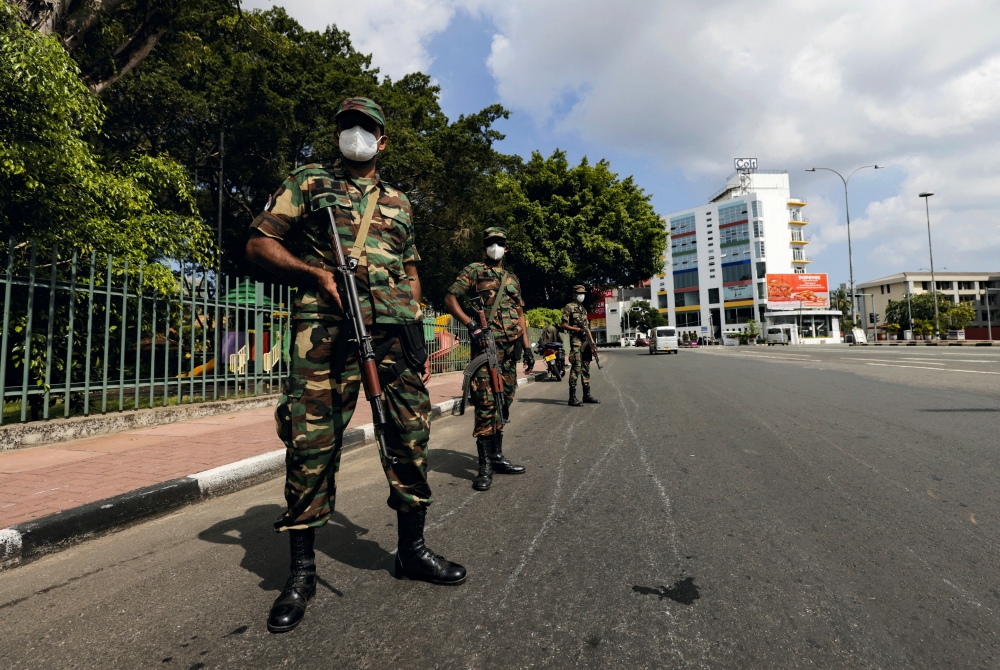
Sri lankan army soldiers stand guard at a checkpoint after the government imposed a curfew following a clash between police and protestors near Sri lankan President Gotabaya Rajapaksa's residence during a protest last Thursday, amid the country's economic crisis, in Colombo, Sri lanka April 3, 2022. REUTERS/
Opposition lawmakers in Sri Lanka on Sunday marched in the capital, Colombo, protesting against the president's move to impose a nationwide curfew and state of emergency following demonstrations blaming the government for an economic crisis.
Internet users in Sri Lanka were also unable to access Facebook, Twitter, YouTube, WhatsApp and other social media platforms on Sunday, after they had been used to organize protests calling for President Gotabaya Rajapaksa to resign, saying he is responsible for the country’s deepening economic woes.
Netblocks, a global internet monitor, confirmed that network data collected from over 100 vantage points across Sri Lanka showed the restrictions coming into effect across multiple providers from midnight.
Sri Lanka is under a nationwide curfew from Saturday night until Monday morning after Rajapaksa declared a state of emergency and assumed emergency powers at midnight Friday. More protests were being planned throughout the country on Sunday, as anger over shortages of essential foods, fuel and long power cuts boiled over.
The emergency declaration by Rajapaksa gives him wide powers to preserve public order, suppress mutiny, riot or civil disturbances or for the maintenance of essential supplies. Under the emergency, the president can authorize detentions, seizure of property and search of premises. He can also change or suspend any law except the constitution.