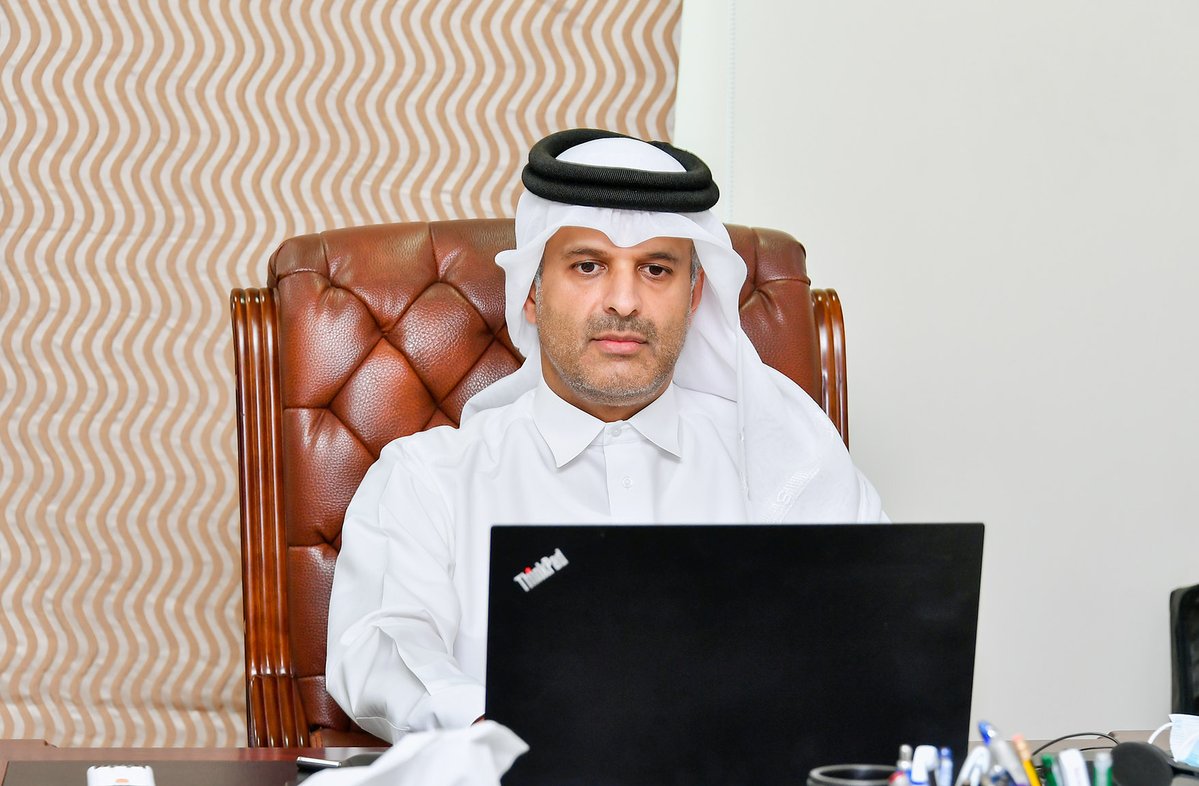
Doha: Member and representative of the State of Qatar at the ICC Court of Arbitration HE Sheikh Dr Thani bin Ali Al Thani said that construction contracts are at the fore of the mega projects being implemented in the state, pointing out that commercial arbitration is an effective way to resolve these disputes after the failure of friendly mechanisms such as negotiation, mediation, and others.
Speaking at a webinar organized by Qatar International Centre for Conciliation and Arbitration (QICCA) in cooperation with ICC Qatar and Chartered Institute of Arbitrators (CIArb) on Wednesday, HE Sheikh Thani said that the Coronavirus pandemic has negatively affected world economies, as well as projects related to construction, urban development, and real estate development.
His Excellency indicated that these projects faced many problems including shortages in raw materials and building materials, problems related to energy and employment.
The webinar was held under the theme "Arbitration Construction Disputes during Covid-19 and Beyond" to highlight many topics pertaining to arbitration in construction disputes during the pandemic and beyond.
It also discussed the management of infrastructure project during crisis period and amendments of the arbitration rules to overcome the challenges of the pandemic.
Speakers during the event also included Arbitrator Eng. Abdulla Hassan Al-Mehshadi, General Counsel at QICCA Dr Minas Khatchdourian, President of Qatar Chapter of the Chartered Institute of Arbitrators Eng. Ahmed Al Ansari, Past-President of the Chartered Institute of Arbitrators, Chartered Arbitrator and Accredited Mediator James Bridgemen, and Partner at Pinsent Masons Law Firm Pamela McDonald.
Arbitrator Eng. Abdulla Al Mehshadi said that the Covid-19 pandemic has impacted all economic sectors, foremost of which is the construction sector, reviewing the most important challenges facing the construction industry in the region and in the world in the wake of the spread of the pandemic.
Al-Mehshadi also noted that the construction sector was affected by many factors, including the lack of employment, the disruption in supply chains, the unavailability, and high prices of raw materials, as well as challenges related to cash flows and the laws and procedures issued within the precautionary measures, including closure procedures and travel restrictions.
For his part, General Counsel at QICCA Dr Minas Khatchdourian said that arbitration centres have issued many directives to ensure the continuity of arbitration cases despite the conditions imposed by the pandemic.
He further reviewed the technical and legal challenges that face holding the arbitration sessions remotely, noting that in this regard QICCA has adopted the latest electronic means in arbitration procedures.
Eng. Ahmed Al Ansari said that commercial arbitration has proven great flexibility in its rules to adapt to the current circumstances, adding that arbitration centers and institutions were able to hold sessions remotely using modern technologies in the arbitration process through holding virtual sessions, hearing witnesses, and exchanging files and documents.
James Bridgemen, Past-President of the Chartered Institute of Arbitrators, Chartered Arbitrator and Accredited Mediator, delved into the most important effects of the pandemic on the construction sector within a year and a half, as well as the role of arbitration in dispute settlement and the role of arbitration centers in dealing with the arbitration in the post-pandemic period.
Pamela McDonald, Partner at Pinsent Masons Law Firm, noted that construction disputes entail some features than other commercial disputes, as they entail specialized technical issues, and their parties are often international companies and partners, and also they include a huge volume of documents.