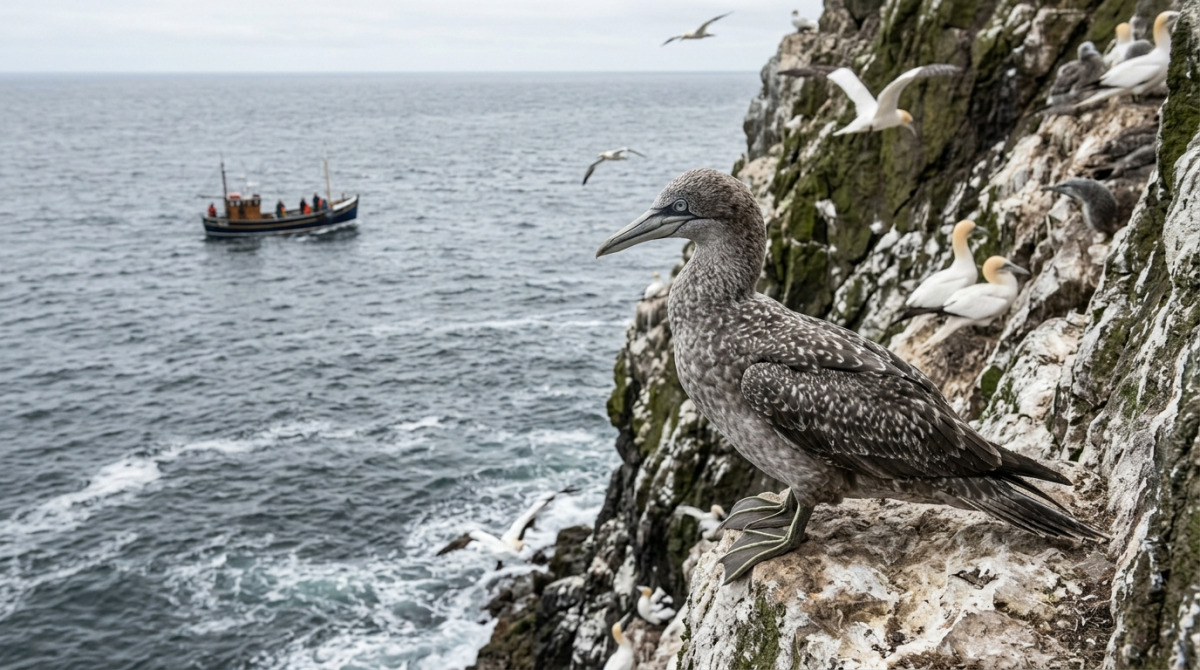
AI generated image for representational purposes only.
London: A centuries-old annual bird chick hunt on a remote Scottish island, known as the Guga Hunt, has been banned this year, the authorities said Monday, citing conservation concerns.
A hunting group, the "Men of Ness", had requested a licence to hunt up to "2,000 juvenile gannets", Scotland's natural heritage agency NatureScot said.
First recorded in 1549, the annual hunt involves a 64-kilometre (40-mile) journey across rough seas to the remote, uninhabited island of Sula Sgeir, off Scotland's northwest coast.
During the hunt, baby gannets are taken from the rocks with a special pole, hit on the head and salted before hunters return to the Isle of Lewis.
NatureScot acknowledged the "significant opposition" the hunt faced from animal rights campaigners, who have long petitioned against it.
But it said it had banned the hunt as "based on the most up-to-date science, we have concluded an adverse impact is possible on the Sula Sgeir gannet population in 2026".
The gannet population had suffered "mass mortalities" in 2021-2023 due to bird flu, it said, adding the hunters could reapply for a licence in 2027.
Yet many locals lamented the loss of a centuries-old tradition.
The ban was "inevitable" but it is "a real shame", said local John Malcolm, 46. "The hunt's been going for 400 years and it's a sustainable practice."
Traditionally, the gannet chick meat ("guga") is boiled for a long period of time and served with potatoes.
Wild bird meat was historically a vital source of food for impoverished communities living in a harsh, remote environment. Other cliff-nesting birds were also harvested for everything from eggs to fat.