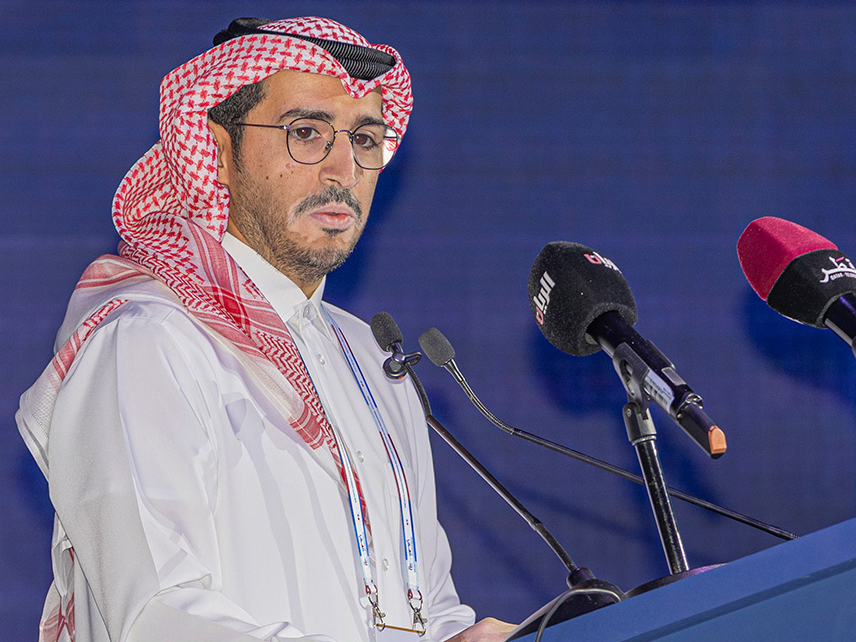
Chairperson of Unesco’s Executive Board and Permanent Representative of Qatar to Unesco, H E Dr. Nasser bin Hamad Al Hinzab
Doha, Qatar: Universities must prepare young people not only for the changing demands of the labour market but also to think about the future, assume responsibility and contribute to building more peaceful and equitable societies, Chairperson of Unesco’s Executive Board and Permanent Representative of Qatar to Unesco, H E Dr. Nasser bin Hamad Al Hinzab, has said.
Addressing the fifth Unesco Conference on Higher Education in the Arab States, which opened in Doha yesterday, Al Hinzab stressed that universities and higher education institutions had a fundamental role in equipping young people with the knowledge and skills needed to achieve their ambitions and contribute to the development of their countries.
Al Hinzab also commended Qatar’s leading role in international efforts to protect education from attacks, highlighting the contributions of Chairperson of Qatar Foundation H H Sheikha Moza bint Nasser in keeping the issue high on the international agenda and translating global commitments into practical initiatives. He recalled that the UN General Assembly proclaimed September 9 as the International Day to Protect Education from Attack in 2020, following an initiative by Qatar supported by Her Highness.
He said the role of higher education extended beyond providing individuals with opportunities, as it should also help build societies that value knowledge, create opportunities and manage differences through dialogue, understanding and mutual respect.
Al Hinzab noted that global higher education enrolment had reached 269 million students in 2024, according to Unesco’s preliminary global report on higher education trends. Although Arab countries had made significant progress in expanding access to higher education, challenges remained in ensuring equal opportunities, improving quality and providing young people with relevant qualifications and skills.
He called for sustained investment and shared responsibility among governments, educational institutions and the private sector to strengthen higher education systems, support scientific research and innovation, and ensure quality education.
“Higher education, at its core, is a long-term investment in people, in social and economic development, and in the future of coming generations,” he said.
Highlighting the need for universities to respond to rapid technological changes, he said artificial intelligence was transforming learning, scientific research and the workplace, while raising important questions about future jobs and the skills required.
He stressed that universities must continuously update their academic programmes, maintain educational quality and strengthen cooperation with different sectors to ensure graduates are prepared for a rapidly changing employment landscape.
However, he emphasised that preparing graduates for employment was not the only responsibility of higher education institutions.
“Universities are also required to instil ethical responsibility, promote critical thinking and prepare generations capable of contributing to more cohesive and stable societies,” he said.
He added that technology should remain a tool for serving humanity and supporting education rather than replacing human thinking or controlling its direction.
He highlighted the role of open science in strengthening regional and international research partnerships through the exchange of scientific knowledge, publications and data, while respecting research ethics, privacy and human rights.
Addressing the challenges facing education in conflict-affected regions, he stressed that education was a fundamental human right and must never become a target of attacks. He called for greater efforts to protect students, teachers and educational institutions and ensure the continuity of learning during crises.