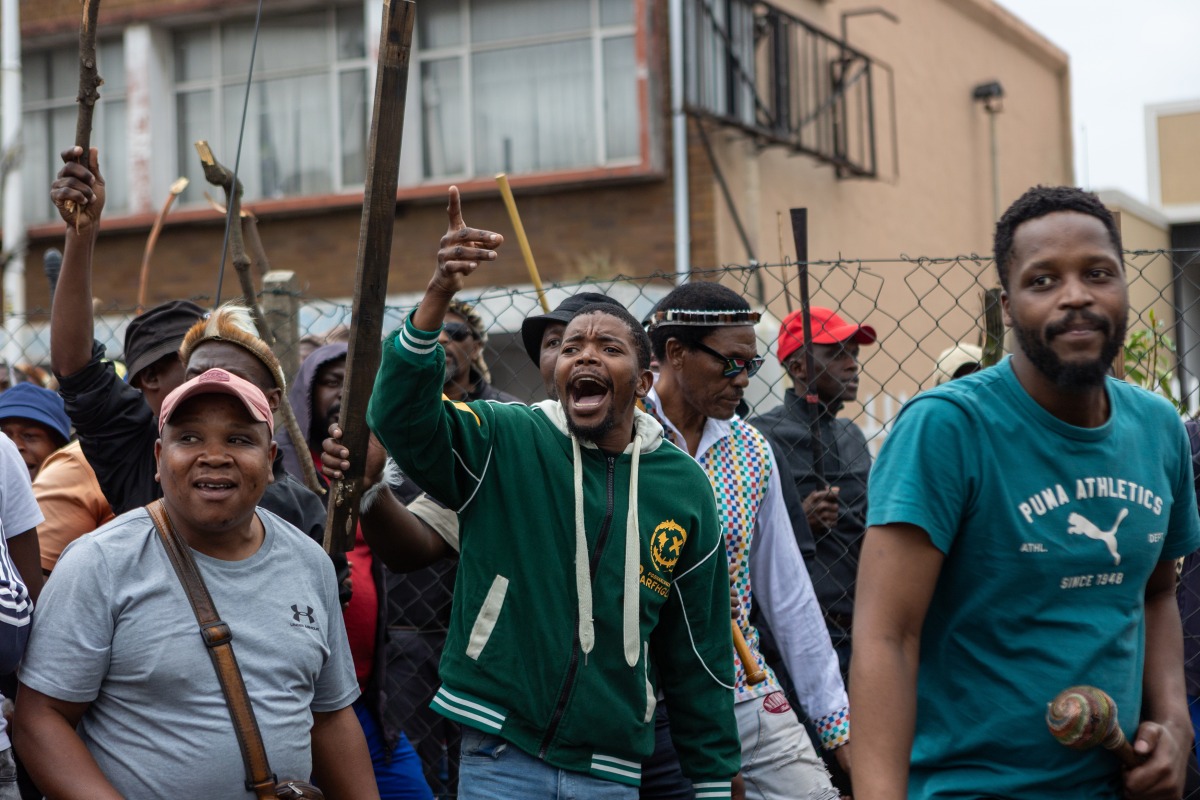
Protesters march during a demonstration against illegal immigration in Durban, South Africa, June 30, 2026. (Photo by Mbuthi Msweli/Xinhua)
Johannesburg: The South African government has moved to strengthen its migration policies as the country grapples with a crisis linked to anti-immigration violence, which has led to the repatriation of citizens from several African countries amid controversy.
To ease tensions following anti-immigration protests and related violence, President Cyril Ramaphosa unveiled a "comprehensive approach" to migration in early June. Less than a month later, the government has begun rapidly operationalizing enforcement measures, activating specialized immigration courts and temporary repatriation facilities to accelerate deportation processes.
At a media briefing in Pretoria on Friday, Minister in the Presidency Khumbudzo Ntshavheni delivered the Cabinet's first operational progress report on the rollout. She said more than 35,000 migrants have left South Africa since the new migration policy was launched on June 7, and outlined a series of law-enforcement measures undertaken by the government.
The measures include the re-establishment of a specialized immigration court in Durban, the Immigration Court at OR Tambo International Airport, and the reactivation of a court at the Lindela Repatriation Center in Krugersdorp, according to Ntshavheni.
These specialized courts are intended to provide expedited judicial processing of immigration matters, reducing backlogs and enabling faster decisions on detention and deportation.
A newly established temporary repatriation facility in Musina on the South Africa-Zimbabwe border in Limpopo Province is also managing a sharp increase in border interceptions, the minister said.
The government said the Border Management Authority has recorded a notable rise in irregular migration attempts, including undocumented entrants, persons deemed undesirable and travelers with non-compliant documentation.
South Africa continues to attract large numbers of migrants from neighboring and other African countries, drawn by its relatively larger economy and labor market.
However, long-standing challenges such as high domestic unemployment, strained public services and periodic outbreaks of xenophobic violence have intensified political pressure for tighter border controls and stricter migration enforcement.
Ramaphosa's "comprehensive approach" is structured around multiple pillars, including law enforcement, border management, return and reintegration, economic measures and international cooperation, aimed at both curbing irregular migration and addressing its underlying drivers.
The activation of specialized courts and repatriation facilities forms part of the law-enforcement pillar, intended to ensure deportations proceed under judicial oversight. Government officials said these measures are designed to ensure that removals are "orderly and lawful."