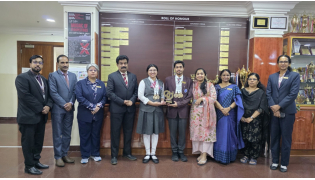
General Director of Doha Center for Media Freedom (DCMF), Jan Keulen, Chairperson of Sudanese Parliamentary Media Committee, Afaf Tawerm, and Egyptian Academic and Legal Expert, Nijad Bari, at the press conference at the DCMF headquarters yesterday.
DOHA: Experts have recommended re-examination of the Sudanese draft media law in its entirety to ensure its compatibility with the constitution and international rules.
This follows a two-day meeting on the draft law at the Doha Centre for Media Freedom (DCMF).
Academics, government representatives and journalists discussed legal implications of new proposals and made a series of recommendations.
The meeting was supervised by Egyptian academic and legal expert, Nijad Bari, and chaired by the Sudanese Parliamentary Media Committee chief Afaf Tawer.
Other participants included Hisham Jaz from the Sudanese embassy in Qatar and Jordanian lawyer Mohamed Kteishat, as well as a number of locally-based Sudanese journalists.
DCMF framed the meeting by four important questions. First, the meeting asked why a press and publications law is needed in Sudan. This focused on the flaws of the previous media law in the country, which had been described by journalists as the ‘worst media law ever.’ Participants also discussed the impact of the Arab Spring and the cessation of South Sudan on press freedom in Sudan.
Second, participants discussed whether the law meets fundamental standards of press freedom, and whether it enables journalists to carry out their work freely and safely.
The experts then addressed the issue of balancing the need for and right to access to information, with the restrictions and punishments journalists might face for failing to carry out their work responsibly.
Finally, participants examined the role of the National Council of Press and Publication in implementing the new law and how to ensure its independence and effectiveness in defending media freedom in Sudan.
Participants agreed that there is a need to amend punishments and national security laws which allow security authorities to ban publications and confiscate newspapers.
They noted that there is a need to add legal articles that reinforce Sudanese journalists’ easy access to information instead of the vague article in the Draft Law.
Participants agreed to scrap the article which allows the suspension of journalists from work for ten days and proposed to replace it by a punishment that complies with international standards.
The meeting recommended that the issue and confiscation of licenses and the suspension of journalists from work must be reconsidered.
Participants agreed that punishments of journalists must be reconsidered to ensure that they comply with internationals standards, including punishments related to arresting journalists.
The Peninsula