Doha, Qatar: The travelling exhibition ‘Your Ghosts Are Mine: Expanded Cinemas, Amplified Voices’ is opening new avenues for cultural exchange between Qatar and Latin America, bringing contemporary artistic voices from the Arab world, Africa, and Southeast Asia to Chilean audiences for the first time, Mathaf: Arab Museum of Modern Art Director Zeina Arida has said.
Speaking to The Peninsula, Arida said the exhibition’s presentation at Centro Cultural La Moneda in Santiago represents an important milestone in fostering cross-cultural dialogue and strengthening institutional relationships beyond geographical boundaries.
The exhibition, which previously travelled from Palazzo Franchetti in Venice during the 60th Venice Biennale to Mathaf in Doha, is part of the legacy of the 2025 Year of Culture partnership between Qatar, Argentina, and Chile.
Arida said the Santiago presentation provides an opportunity for artistic works to be experienced through different cultural perspectives and historical contexts.
“For Mathaf, Your Ghosts Are Mine is particularly meaningful because it brings artistic voices from the Arab world, Africa, and Southeast Asia into conversation with audiences in a very different geographical and cultural context,” she said.
She noted that the exhibition reflects the strength of collaboration among Qatar’s cultural institutions, bringing together Mathaf, the future Art Mill Museum, and Doha Film Institute (DFI).
According to Arida, the initiative goes beyond presenting an exhibition to a new audience, creating opportunities for meaningful exchange and relationships that can continue long after the programme concludes.
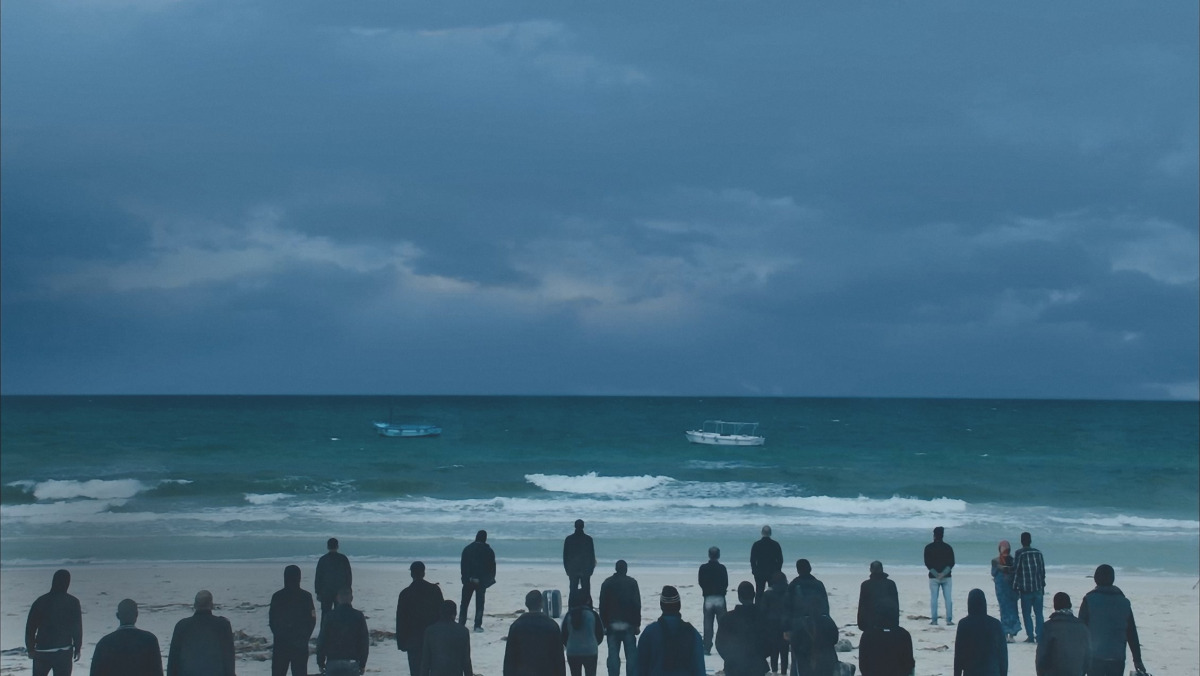
The exhibition explores themes of memory, displacement, exile, belonging, grief and loss through moving-image works that engage with different historical and cultural experiences.
Arida said these themes could resonate strongly with Chilean audiences, given the country’s own complex histories of migration, displacement and social transformation.
However, she emphasised that the exhibition does not attempt to equate different historical experiences but encourages audiences to recognise shared human concerns while appreciating their distinct cultural contexts.
“This is, in many ways, at the heart of the Years of Culture programme: using culture not to diminish or erase our differences, but to create opportunities for greater understanding and meaningful dialogue across them,” she said.
Featuring more than 40 filmmakers and artists, the exhibition brings together film excerpts and video installations spanning fiction, documentary, animation, and memoir.
Its presentation is organised around eight thematic environments: Deserts, Ruins, Borders, Exile, Futurism, Cosmos, Fires, and Fantasma. Arida explained that the exhibition’s underlying structure remains consistent across its international presentations, while its adaptable design allows each venue’s architecture, audience and cultural context to shape the viewing experience.
She also highlighted the significance of the exhibition’s title, drawn from Tariq Teguia’s film Zanj Revolution, describing the idea of ghosts as deliberately layered.
The concept evokes ancestors and traditions, as well as something that remains present despite being physically absent. She said this interpretation is particularly relevant to works addressing inherited histories, displacement, memory, and loss, which continue to shape individuals and societies across generations. Arida believes the exhibition’s multidisciplinary approach also reflects an evolving understanding of the relationship between cinema and contemporary art.
She said each participating institution contributes distinct expertise: Mathaf brings its scholarship on modern and contemporary Arab art, DFI contributes its engagement with cinema and support for filmmakers, while the future Art Mill Museum offers a multidisciplinary perspective encompassing visual art, film, architecture, and design.