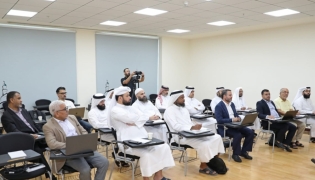
Doha – 4 December, 2013 – The Doha International Family Institute (DIFI), member of Qatar Foundation, has concluded the Population Dynamics Seminar.
Hosting a number of international and regional scholars, scientists, and policy makers to discuss the population and demographic trends affecting the Arab Family, , DIFI’s seminar took place on the 2nd and 3rd of December, 2013.
Tuesday’s first discussion, titled “Population Trends and Arab Families: Implications for Research, was moderated by Dr. Fadwa El Guindi. Day two also included a presentation by Dr. Carla Makhlouf titled “Adolescents in Arab Countries: Major Health Issues and Their Social Context,” while Dr. Mohamad Mohieddin discussed “Migration and the Family in Arab Countries.” Dr. Maher Khalifa moderated a discussion titled: “Adolescents and the Family 1” which saw participation from Dr. Abdallah Badahdah and Dr. Caroline Barakat. The “Adolescents and the Family 2” discussion, moderated by Dr. Abdul-Aziz Farah, included a presentation about “Measuring the job quality concept of youth in Egypt” by Dr. Ali Rashed, and another presentation by Dr. Majed Al Eissa from the Kingdom of Saudi Arabia (KSA). Prince Amadichukwu gave his views on the behaviour and relationships of adolescents in the Arab world.
DIFI concluded the event with the introduction of KIVA, a revolutionary form of debate and discussion which allows students to rapidly collect large volumes of data within a limited time-frame.
KIVA provided students with the opportunity to discuss with researchers women’s rights and children’s issues, ask questions, and share views in an open and frank environment.
The seminar focused on five key topics related to Arab families: Marriage and Family Formation; Trends and Patterns in Fertility and Family Size; Population Migration and the Family; Adolescents and the Family; and Intergenerational and Gender Issues Affecting Family Cohesion.
The first day of the seminar focused on a policy dialogue and the presentation of research papers. The policy dialogue specifically considered the impact of population dynamics on the Arab family and the policy implications of those changes. The dialogue featured a keynote address and moderated panel discussion on the five core themes of the seminar. The research seminar was an opportunity for local, regional and international scholars to present original, high-level research papers on the Arab family.
For more information about the Impact of Changing Population Dynamics on the Arab Family seminar, please visit: www.difi.org.qa/events
About DIFI
DIFI is a leading international institution in Qatar that supports research, policy and outreach programs that promote the development of Arab families. With research as its core focus, DIFI supports a wide range of international, regional and local evidence-based studies relating to marriage and family structure, women, fertility and demography, child and family safety, and parenting. The Institution is comprised of three divisions; Family Research Division, Family Policy Division and Social Outreach Division. Its body of work includes contributions to the UN Secretary General’s campaign to end violence against women; international and regional colloquia in partnership with most UN funds and programmers, including UNDESA, UNFPA, UNAIDS and UNICEF; and the funding and development of a wide range of publications on family in the new millennium. A member of Qatar Foundation, it has a Special Consultative Status with the United Nations Economic and Social Council (ECOSOC).