The Gulf Cooperation Council (GCC) has significantly accelerated the pace of coordination among relevant authorities to achieve the desired economic integration to achieve Gulf economic unity by 2025, approximately 56 weeks from now. This long-awaited dream is seen as a deserving achievement for the people of the GCC member states.
In October, the GCC Financial and Economic Cooperation Committee, in its 120th meeting in Muscat, made several decisions aimed at enhancing economic integration towards achieving economic unity by 2025.
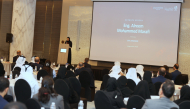
The meeting approved a timeline for completing the remaining steps to establish the GCC Customs Union and the GCC Common Market to reach economic unity in 2025. Prior to this, the GCC’s Common Market Committee held its 37th meeting in Riyadh attended by representatives of all GCC states, GCC national statistical centers, and representatives of national chambers of commerce of the member states. The meeting focused on the digital transition strategy in the common Gulf market, which aims at formulating a unified framework for the digital transition and a media campaign to explain the benefits of establishing a common Gulf market and the gains realized by GCC membership.
Associate Professor at the College of Economics at Qatar University Dr. Khalid Shams Al-Abdulqader said in a statement to Qatar News Agency (QNA) that Gulf economic integration began in 2001 with the establishment of the GCC Customs Union and Common Gulf Market. Efforts are still ongoing to achieve one of the most crucial steps of integration: the introduction of a unified Gulf currency.
Dr. Al-Abdulqader emphasized that the political and popular will remains strong to continue this process, which aligns with the ambitions and aspirations of the GCC people as outlined in the GCC Charter.
According to the GCC General Secretariat’s official website, the GCC Common Market aims to serve both political and economic objectives. It ensures the smooth flow of goods among Gulf states, thereby increasing competition among Gulf institutions for the benefit of consumers. Additionally, it contributes to political stability in the region and fosters military and political cooperation among the member states, paralleling their economic collaboration. He explained that despite the similarity in oil production and exportation among the Gulf states, most oil exports are directed overseas. There is little competition among the Council’s member states in selling these products within the GCC system, largely due to self-sufficiency in most of these countries. He highlighted that the Council’s states prioritize importing their energy needs from within the Council, as stipulated in their energy cooperation agreements. This arrangement includes the trade of crude oil, natural gas, and petrochemical products according to the local needs of the member states.
He also commented on the potential for competition in certain industries within the GCC, saying that there is no harm, especially in the case of complete economic openness among the member states. An open economy encourages competition, production efficiency, and innovation, and in some cases, mergers. The consumer sector in the Gulf states benefits from this openness as competition results in more realistic prices and a wider variety of products.