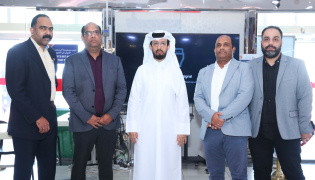
DOHA: The Medical Commission detected 178 HIV/ Aids cases last year during mandatory check-ups of newly recruited foreign workers, a senior official has disclosed. All infected workers were deported.
Last year, the commission screened 849,000 people, up 86,000, compared to 2013 when 763,000 underwent the check-up, Director Dr Ibrahim Al Shaar told local Arabic daily Al Raya.
The increase reflects the growing number of foreign workers being recruited for mega infrastructure projects in Qatar, said Al Shaar. All newcomers must undergo the screening to prevent the spread of infectious diseases such as HIV/Aids, tuberculosis, hepatitis B and C.
Of the total people screened last year, 5,452 were found unfit due to various diseases. Majority of the rejected cases — 3,587 — were infected with pulmonary tuberculosis that affects the lungs, while chest X-ray abnormalities were detected in 1,194 cases.
Other major illnesses included HIV/Aids (178), hepatitis B (380), hepatitis C (89) and enlarged heart (10).
No Ebola or MERS (Middle East Respiratory Syndrome) cases were detected last year. All suspected cases are immediately transferred to Hamad General Hospital for further investigation, said Al Shaar.
“When we discover pulmonary TB cases we transfer them to Hamad Medical Corporation (HMC) for treatment before starting the deportation procedures. The patient is treated here until his situation becomes stable so that he will not infect others,” said Al Shaar.
However, the affected people are deported immediately if their cases do not pose any danger.
The commission receives about 3,100 visitors every day, working 13 hours from 7am to 8pm with a 410-member medical team.
It will soon open a branch in Mesaimeer with a capacity of 500 visitors daily, in collaboration with Qatar Red Crescent.
The Industrial Area branch opened last year has not helped reduce the pressure on the main facility in Abu Hamour, said Al Shaar.
The mandatory screening is also conducted at three private hospitals, for white-collar workers, while Qataris and other GCC citizens can have tests at primary health centres, if needed.
There is strict monitoring of private hospitals to ensure that they meet the required standards and do not engage in any malpractice. A committee with representatives from the Ministry of Interior has been set up for this purpose.
Al Shaar urged employers not to delay check-ups of newly recruited workers. Some families keep housemaids on a trial basis for one or two months before sending them for the screening. This can be risky for the families in case the maids suffer from infectious diseases.
“The commission has no interest in failing any worker. Some sponsors refuse to accept the results and become angry. We are neutral and our aim is only to protect society from diseases,” Al Shaar added.
The Peninsula