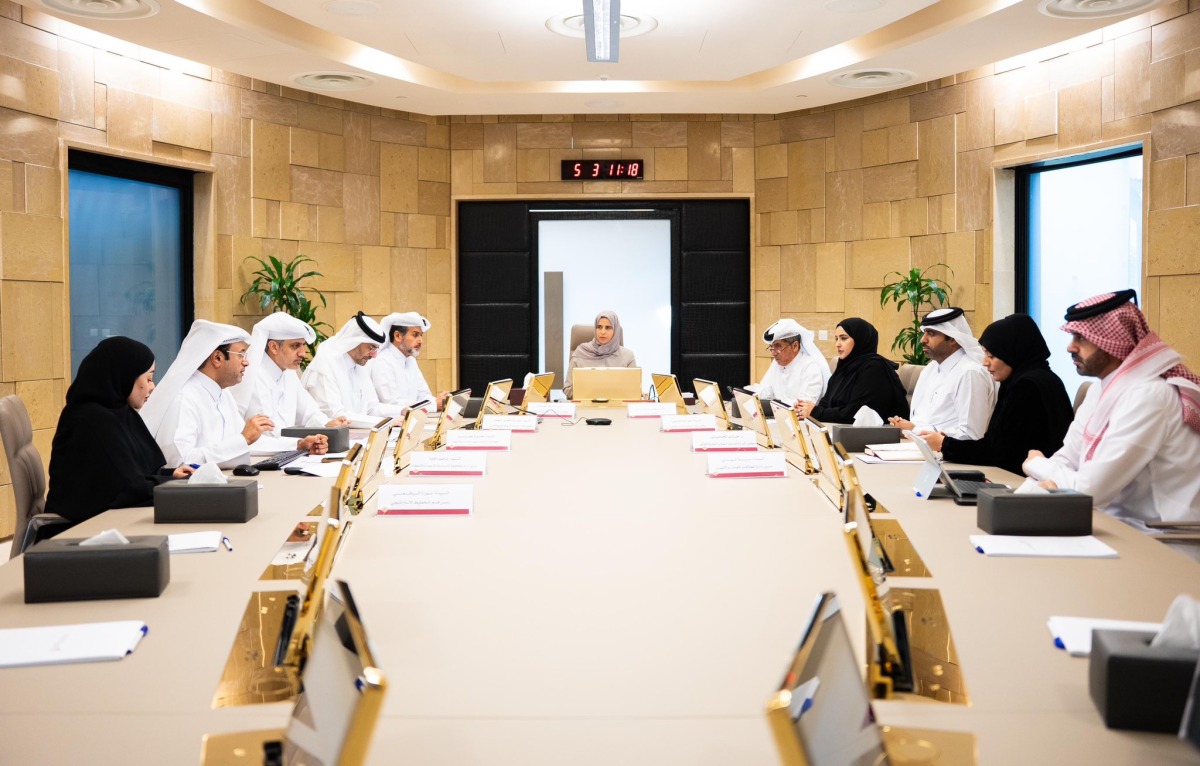
Minister of Education and Higher Education H E Lolwah bint Rashid Al Khater chairing the meeting.
Doha, Qatar: The Ministry of Education and Higher Education affirmed the regular continuation of distance learning in line with approved business continuity plans during the fifth meeting of the Institutional Risk Management and Business Continuity Committee.
The meeting held yesterday under the chairmanship of Minister of Education and Higher Education H E Lolwah bint Rashid Al Khater, and attended by senior ministry officials.
During the meeting, participants reviewed the latest developments related to the implementation of the decision to shift to distance learning. They also examined operational performance indicators following the transition across kindergartens, public and private schools, higher education institutions, and educational centres.
The meeting further addressed the situation of students studying abroad and ongoing coordination with relevant authorities to ensure the stability of their academic progress.
Members of the committee also observed several live-streamed lessons delivered to students in order to ensure the continuity of the educational process and assess the quality of interaction within virtual classrooms.
The Ministry emphasised that distance learning is proceeding smoothly across all affiliated institutions in light of current developments, stressing that the continuity of education remains a fixed national priority managed through approved operational plans that ensure stability and uninterrupted learning. The Ministry noted that the measures implemented are based on careful assessment of developments and on full operational readiness at both academic and technical levels, thereby maintaining efficiency and preserving the quality of educational outcomes.
The Ministry also announced adjustments to the school day schedule in public and private schools during the period from March 8 to March 12, 2026, to enhance the effectiveness of distance learning during this phase.
Under the revised schedule, classes for primary school students will run from 10am to 12.35pm, while preparatory and secondary school students will attend classes from 10:30am to 1.15pm. Private schools will adjust their timetables flexibly to ensure the required number of instructional hours during this period, with live classes delivered through official educational platforms according to each school’s approved schedule.
The Ministry explained that these measures form part of its approved business continuity plan, which aims to ensure uninterrupted delivery of essential services, most notably education, by activating alternative operational mechanisms and monitoring performance indicators regularly. The plan also includes operational follow-up mechanisms in coordination with school administrations and relevant entities to address any challenges promptly.
Regarding nurseries, the Ministry announced that the suspension of in-person attendance will continue until further notice due to the specific care requirements associated with this age group. Developments will continue to be assessed periodically, and any updates will be announced through official channels.
Distance learning through asynchronous learning systems will also continue in kindergartens and across public and private schools.
To ensure clarity in procedures and consistency in practices, the Ministry confirmed that the updated Distance Learning Guidelines, previously circulated to schools and parents, remain in effect. The guidelines outline academic and behavioral regulations, technical requirements, and technical support mechanisms, and will continue to be updated regularly in line with operational and technological developments.
The Ministry stressed that families play a key role in the success of this stage by ensuring students’ regular attendance in classes, adherence to approved guidelines, and the provision of a suitable home learning environment. Student attendance and assessment will continue to be recorded according to the approved mechanisms, while official communication channels remain open to address inquiries.
With regard to higher education institutions and educational centers, the Ministry noted that coordination is ongoing with these institutions to align their academic and administrative policies with current requirements, ensuring the continuity of studies within the approved frameworks while maintaining academic quality.
The Ministry is also continuing to monitor the status of students studying abroad in coordination with cultural attachés and relevant authorities to ensure the stability of their academic paths and readiness to take any necessary measures in response to developments.
Training and professional development programs for staff will continue through approved digital platforms, while programs requiring in-person training will remain postponed until further notice and will be rescheduled once appropriate conditions are available, without affecting the approved strategic plans.
The Ministry concluded by reaffirming its full readiness and continued operational oversight to ensure the smooth functioning of the educational process with efficiency and quality, through the integrated roles of educational institutions, families, and students, reflecting the community’s awareness and shared responsibility.