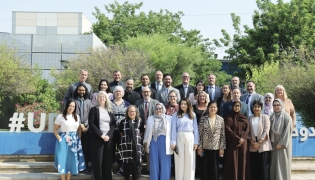
DOHA: The Supreme Council of Health (SCH) is planning to conduct a study to assess early-life exposure to a wide range of environmental, biological and lifestyle hazards and link these with major mother and child health outcomes.
The Birth “Cohort” study, which is the first of its kind in the Middle East, will be conducted by The Biomedical Research Department at SCH over a period of five years.
The primary goal of the study is to improve national reproductive health in Qatar. A certain number of pregnant women will be selected from the primary health care centres for the study and biological samples will be collected from the participants.
The samples will be analysed using novel tools including “omics”-based approaches to study genomic expression profiles, protein profiles, metabolic profiles, and biomarkers.
The study will apply innovative methods to assess the effect of environmental factors on health via remote sensing systems based on geographic information systems.
Dr Faleh Mohamed Hussain Ali, assistant secretary general for policy affairs at SCH, said that based on the outcomes of the study, preventive measures will be implemented in collaboration with the Primary Health Care Corporation (PHCC) to promote and develop strategic measures to improve reproductive health in Qatar.
Among the outcomes that will be examined in mothers are gestational diabetes, metabolic syndrome and postpartum depression, breastfeeding and nutrition, lifestyle patterns including physical activity, sleep and timing of activities and psychosocial factors.
Child health outcomes include preterm births and low birth weight, obesity and metabolic related disorders, neurodevelopment, immune system, asthma and allergies. Special emphasis will be put in the evaluation of air-pollution using advanced techniques allowing personal monitoring in a rapidly changing urban environment in Doha.
To conduct the study, the Research Department at SCH will collaborate with various research institutions such as Primary Health Care centers, Qatar Bio bank, Weill Cornell University, Sidra Research Centre, Hamad Medical Corporation, Qatar Biomedical Research Institute, anti-Doping Lab, Qatar Environmental and Energy Research Institute, Texas A&M University Qatar, Qatar University and CREAL Centre, Spain.
The research teams will work closely together to ensure high quality research is being conducted via validated protocols. Memoranda of Understanding (MoU) between Supreme Council of Health and collaborative research institutes have been exchanged, the Qatar News Agency reported yesterday.
The Peninsula