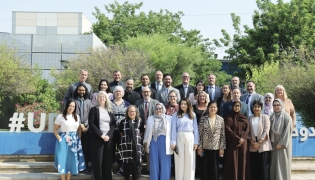
DOHA: The link between kidney disease and diabetes, metabolic and gestational disorders was highlighted at a symposium held by Hamad Medical Corporation (HMC) to conclude World Kidney Day activities.
More than 300 healthcare professionals attended the two-day event which featured a series of scientific lectures and presentations that focused on kidney disease, a condition in which kidneys are damaged and can no longer perform their usual function of removing wastes and excess water from the blood.
Professor Ayub Akbari, a renowned Canadian nephrologist, spoke about gestational hypertension which he said can be linked to kidney disease and other maternal and fetal complications during the latter half of pregnancy.
Dr Riadh Abdulsattar, Consultant of Nephrology and Head of Qatar Centre for Organ Donation (Hiba), shared information about the Doha Donation Accord, describing it as a viable approach with strategies designed to address the shortage in the number of organ donors in Qatar.
“The accord applies best practices in organ donation and is tailored to suit the demographic, economic, and social conditions in Qatar.
It incorporates the principles of fairness and equal opportunity to all residents of Qatar, regardless of nationality and it respects the dignity of all donors, in addition to encouraging individuals to donate their organs,” D Abdulsattar said.
“Since its inception four years ago, the accord has had a positive impact on the number of organ donors.
“A remarkable increase has also been recorded in the number of both live and cadaveric (after death) donations,” he added.
Activities marking the day were also held at Hamad General Hospital, some schools, Qatar University and Landmark Shopping Mall.
These included blood pressure and blood sugar checkups, in addition to health educational sessions held by HMC’s kidney health educators Muna Abdulbaseer, Faten Jamal and Dr Jamal Aashour, also a nephrology Specialist.
The Peninsula