Aspetar, the world’s leading specialised orthopaedic and sports medicine hospital, has unveiled its upgraded artificial altitude acclimatisation facility. The acclimatisation facility is now the first fully-integrated dormitory in the world, enabling teams to benefit from advanced high altitude recovery practices in a highly comfortable environment.
The state-of-the-art facility houses 25 bedrooms for single and double occupancy as well as two spacious common living areas, each with capacity to allow 8-10 people to relax in comfort. Both the bedrooms and living areas are capable of creating an artificial environment equivalent to 5500 meters in altitude, double the performance of the previous system and slightly more than Base Camp on the South side of Mount Everest.
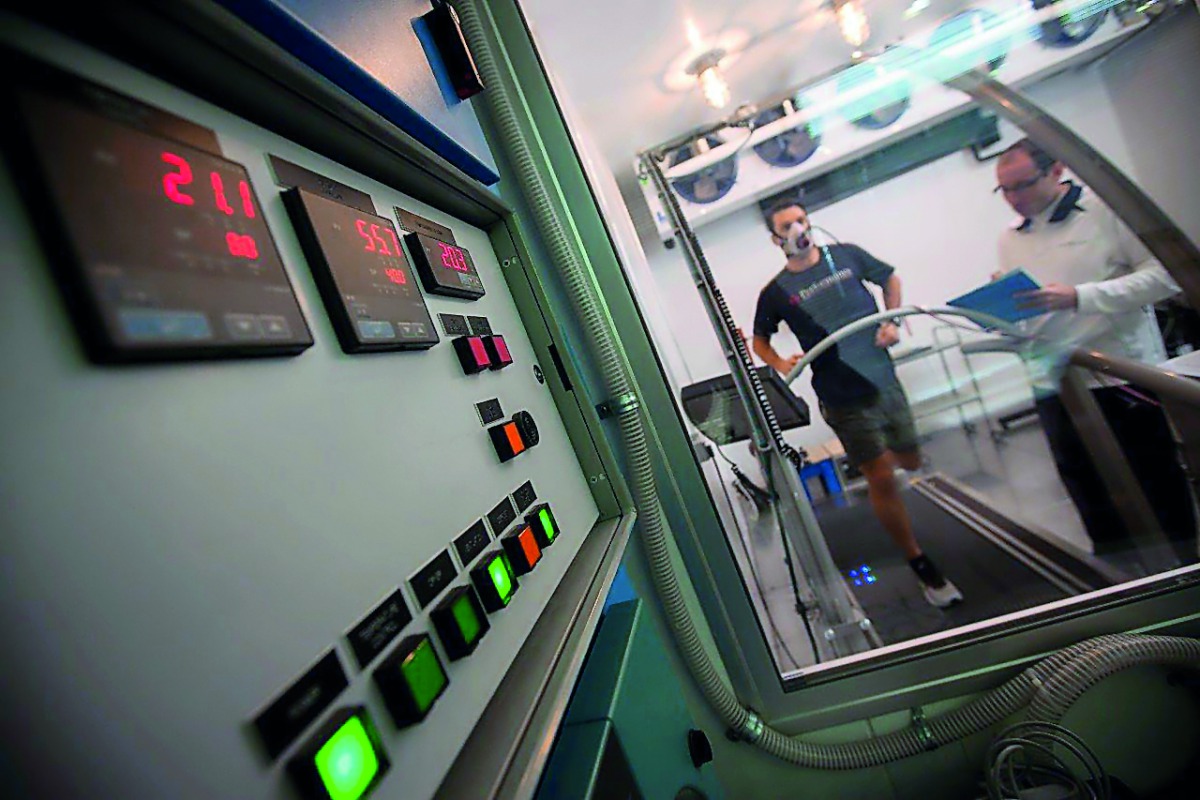
The new dormitory is fitted with an upgraded altitude engine that incorporates a completely new nitrogen generation system and a state-of-the-art control panel, whilst maintaining the existing bedrooms and technical areas.
At full capacity, it takes approximately 4-5 hrs for all rooms to achieve the maximum target altitude of 5500 metres. Each room can be individually programmed from a central panel within the control room, however, and when fewer rooms are in operation, it takes even less time to reach the maximum altitude.
The facility includes numerous safety features, including a CO2 monitoring system and an emergency shut-off system. The facility also uses advanced technology that enables conditions to be monitored remotely from anywhere in the world. Commenting on the launch of the new dormitory, Dr Mohamed Ghaith Al Kuwari, Acting Director General of Aspetar, said: “Aspetar has upgraded this dormitory based on its ten year experience to become one of the most prominent service providers of sports medicine and performance development in the world. Hypoxic training is one of the well-known practices that has been utilised to enhance athlete performance during competitions. This upgraded facility is one of the world’s largest and houses up to 50 athletes at a time, allowing entire teams to benefit from high altitude recovery and adapt themselves to decreased levels of oxygen.” Al Kuwari added, “Such facility will assist both local and international athletes from different disciplines, particularly runners, cyclists and triathletes and we encourage all sports federations in Qatar to benefit from this practice and the knowledge of our experts.”