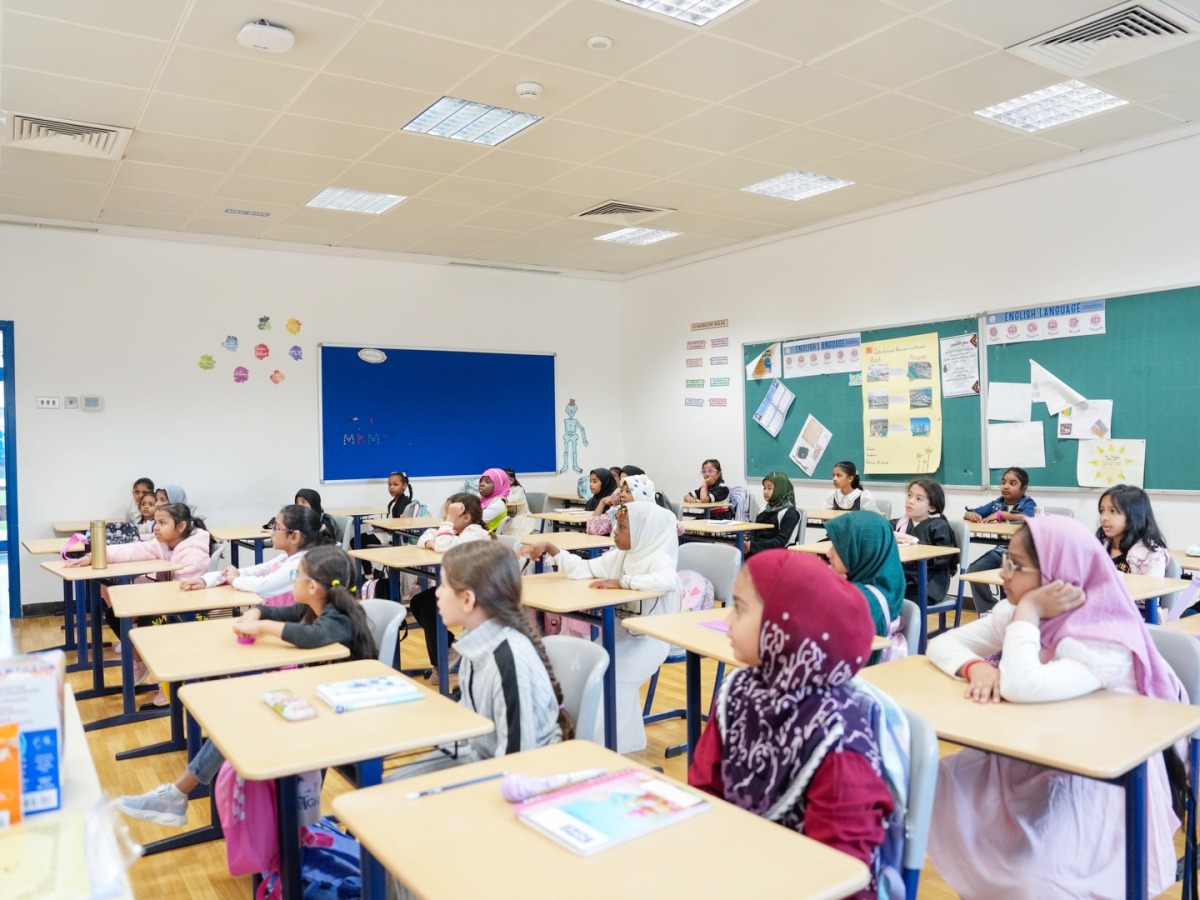
File photo
Doha, Qatar: Qatar’s private education community responsibility project has expanded sharply, with the number of free and discounted school and kindergarten seats rising to 16,500.
Director of the Department of Private Schools and Kindergartens and Acting Director of the Private Schools Licensing Department Dr. Rania Mohamed said the project, which began with only 40 seats offered by two private schools, has witnessed significant growth in less than a year, with participation now exceeding 120 private schools and kindergartens.
Speaking to Qatar TV recently she said the increase has been supported by a range of measures designed to make better use of existing school capacity.
“These include allowing schools to offer more than one educational curriculum within the same school, open additional operating periods where appropriate, and apply capacity-related regulations more flexibly to accommodate larger numbers of students. As a result, the project has been able to secure substantially more places for families across its four categories of support,” said Dr. Rania.
She said that the first category consists of completely free seats, which are available to students of all nationalities, both Qatari and non-Qatari. The second category offers seats at discounted tuition rates ranging from 20% to 70%, depending on the school and applicable category. The third category is dedicated to students with disabilities, with schools covering the student’s full tuition fees, effectively making the places fully free for eligible students.
Dr. Rania said that the fourth category covers seats based on the educational voucher, under which the Ministry bears the value of the educational voucher, amounting to QR28,000.
She said that parents provide the voucher to the school, while any tuition amount exceeding the QR28,000 voucher value is borne by the school rather than the family. As a result, Dr. Rania explained, the educational-voucher category effectively functions as a free seat for parents.
“Of the 16,500 seats currently available under the project, around 5,000 seats are being offered through the educational-voucher category for Qatari students. The number of participating schools and kindergartens has also increased from 113 to more than 120."
“Meanwhile, the number of schools offering educational-voucher seats has risen from 17 to 25,” said Dr. Rania.
She announced the participation of several additional schools, including Al Maha, Al Jazeera, West Virginia and King’s College schools, describing them as institutions with strong international and regional reputations.
“The project has already resulted in the placement of more than 7,000 students in the available seats. In addition, around 1,000 students have been placed through the educational-voucher category,” said Dr. Rania.
She said that the number of seats specifically allocated to students with disabilities has also increased significantly, from 130 to 330 fully free seats, with the cost covered by the state. Dr. Rania said the expansion reflects the state’s efforts to increase educational opportunities while supporting families and ensuring access to quality private education.
The expansion is also being linked to Qatar’s policy of making additional land available to investors to build schools. Dr. Rania said schools that receive state-provided land for construction will now be required to participate in the Community Responsibility Project. Such schools must allocate at least 20% of their total capacity to the project.
The school licence holder will determine the number and value of seats allocated within the project, in accordance with its four categories.
Dr. Rania highlighted the diversity of Qatar’s private education sector, noting that the country currently offers 24 different educational curricula.
The project has attracted strong demand, with the Ministry receiving more than 17,000 electronic applications so far. Dr. Rania noted that some applications, particularly those related to educational-voucher seats, are also being submitted in paper form.