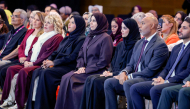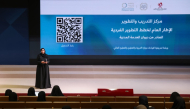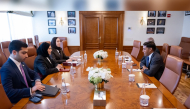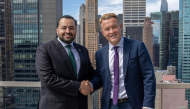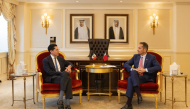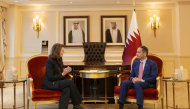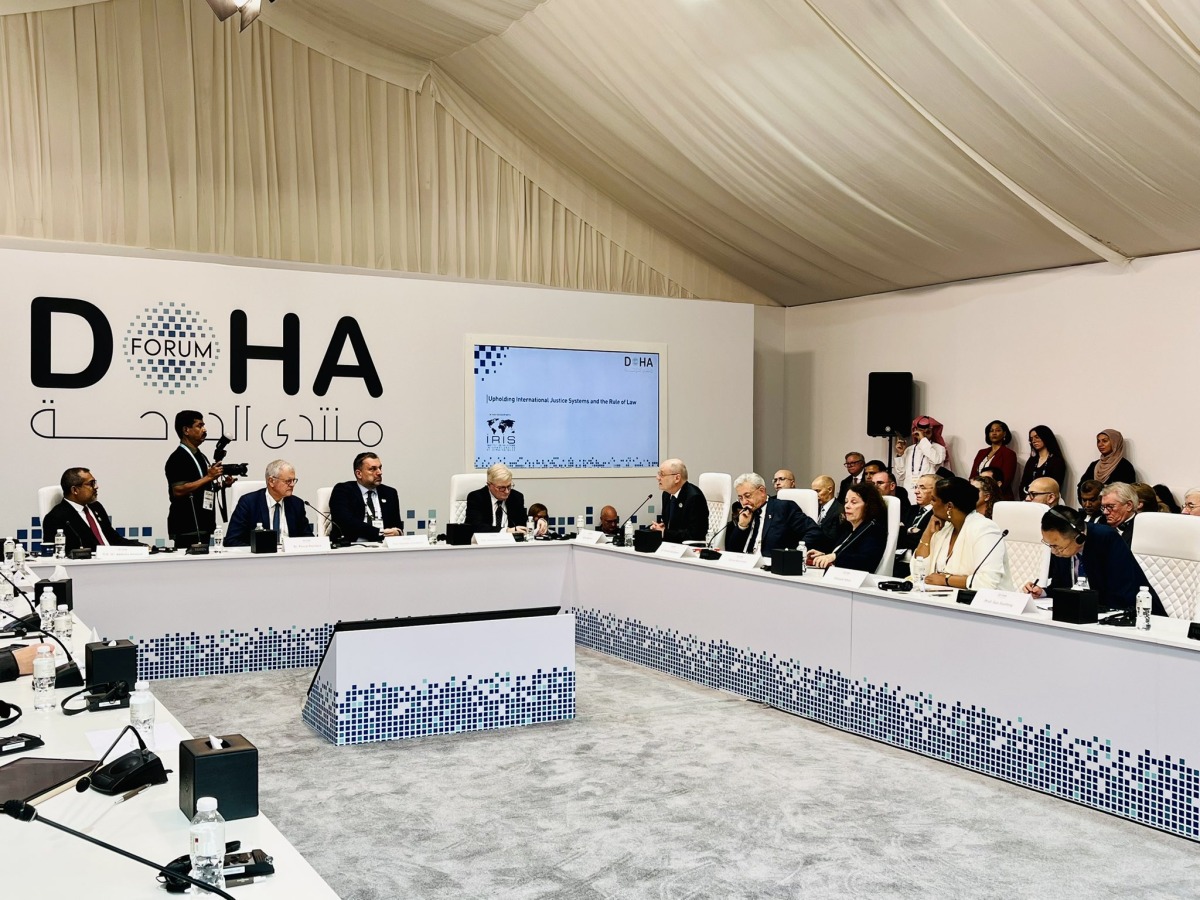
Panellists during a discussion on international justice system and rule of law.
Doha, Qatar: A session themed ‘Upholding International Justice and the of Rule Law’ as part of Doha Forum 2025 on December 6 discussed intensifying global rivalries and conflicts, and international justice systems coming under growing pressure.
The session organised in partnership with French Institute for International and Strategic Affairs, brought together diplomats and experts to assess whether international justice can still serve as a stabilsing force in a fractured global landscape, and whether it can deliver on its promise of accountability amid shifting power dynamics.
The discussions explored how international justice can avoid being perceived as a tool of the powerful, and how it can be more effectively integrated with transitional justice in post-conflict settings, and whether meaningful reform is essential to its long-term legitimacy and impact.
One of the panellists, Minister of Foreign Affairs of Maldives H E Dr. Adbulla Khaleel said, “The Maldives has taken a principled stand in support of accountability for the atrocities faced by the Rohingya, including through international legal proceedings in the ICJ. As a nation with deep belief in the rule of law, we can’t remain indifferent when an entire population is denied basic rights and forced into displacement. Their plight underscores why international justice must be accessible to all, especially the most marginalised.
“The Maldives firmly believes and remains firmly committed to a rule-based international order, and to multilateral cooperation, and to global justice that protects the weak and restrains the powerful. We believe that international justice is strongest when it is universal, impartial, and accessible, and when it restores hope to those who have suffered the most.” Another panellist, Minister of Foreign Affairs of Bosnia and Herzegovina
H E Elmedin Konaković said, “The equal justice for all countries and individuals is the most important issue if we want to talk about international law and international order. Today what we see in Gaza, in Ukraine, and Sudan is just opposite. Big players, strong players, geopolitically strong countries, and individuals are hiding themselves behind their power and they are not being held responsible for the crimes they are doing.” Secretary-General, Digital Cooperation Organisation H E Deemah AlYahya, said, “I wanted to emphasise the importance of the integrity of the information and the content that we are receiving right now. So if we look at the integrity of international justice, it has been always dependent on one fundamental assumption. And that assumption is that we can distinguish between truth and false news. Today, that assumption is under unprecedented strain and stress. And in conflict zones where facts are already constrained, the rise of cynical realities threatens justice.” Secretary General, Palestinian National Initiative Dr. Mustafa Barghouti, said, “The world is facing probably the biggest challenge since World War II when it comes to the issue of international law or justice in principle. I think that Gaza and Palestine in general has become the parameter according to which one can measure whether there is respect for international justice.
“There is the first question that every Palestinian asks, and so many other people in this world ask, where is international justice, when more than 70,000 Palestinians were slaughtered, 83% of them were civilians, and thousands of them were children. Together that figure is 12% of the population of Gaza. It’s not just genocide, it’s also the collective punishment which continues. People are starving, children are malnourished, and epidemics are spreading because of lack of clean water, and food.”