Cairo: The Arab League Council on Sunday expressed strong condemnation of the Iranian attacks on the State of Qatar; the Kingdom of Saudi Arabia; the Sultanate of Oman; the State of Kuwait; the United Arab Emirates; the Kingdom of Bahrain; the Hashemite Kingdom of Jordan; and the Republic of Iraq, describing them as illegal and unprovoked acts that constitute a serious violation of the sovereignty of these states and a grave threat to regional and international peace and security.
In Resolution No. 9241 issued at an extraordinary ministerial-level session of the Council, held virtually, at the request of Qatar; Saudi Arabia; Jordan; Bahrain; Oman; Kuwait; and the Arab Republic of Egypt, the Council addressed Iranian attacks targeting the sovereignty and territorial integrity of a number of Arab countries.
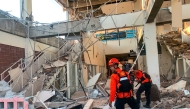
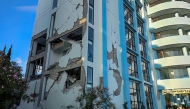
The Council condemned what it described as Iran's deliberate and unlawful targeting of civilian installations and infrastructure, including airports, sea ports, energy facilities, food security services, public service sites, residential areas and diplomatic premises. It stated that such acts endangered civilian lives, resulted in civilian casualties and caused material destruction, in flagrant violation of international law and international humanitarian law.
The Council reaffirmed its unwavering support for the territorial integrity, sovereignty and independence of the affected Arab states and endorsed all necessary measures they may take to safeguard their security and stability and to protect their territories, citizens and residents, including the option of responding to these attacks.
It expressed categorical rejection of the Iranian assaults and affirmed the full solidarity of all Arab states with the countries targeted, backing all steps taken to deter and repel such attacks. The Council also recalled the provisions of the Arab League Charter and the Joint Arab Defense and Economic Cooperation Treaty, stressing that the security of member states is indivisible and that an attack on any member constitutes a direct attack on all member states.
The Council called for the immediate cessation of these hostile military attacks and urged Iran to halt all provocative actions or threats against neighboring countries, including the use of proxy groups and armed militias in the region.
It also affirmed the right of the targeted Arab states to legitimate self-defense, individually or collectively, in accordance with Article 51 of the United Nations Charter. The Council commended the courage, readiness and professionalism demonstrated by defense and security institutions in the affected countries in intercepting Iranian ballistic missiles and drones, which helped save lives and reduce material and human losses.
The Council further stressed its full support for the right of Arab states to seek recourse through international institutions, including the United Nations Security Council and the United Nations General Assembly, as well as backing efforts to secure international resolutions condemning the attacks and holding Iran fully responsible for their consequences.
The Ministerial Council called on the UN Security Council to assume its responsibilities in maintaining regional and international peace and security by issuing a binding resolution condemning the Iranian attacks on Arab states, compelling Iran to halt its assaults immediately and unconditionally, and holding it accountable in accordance with international law and international humanitarian law.
The Council also urged Iran to fully comply with its obligations under international law, particularly with regard to the protection of civilians and civilian objects during armed conflicts. It emphasised the need to respect the rights and freedoms of commercial navigation and maritime transport under international law and affirmed the right of states to defend their vessels and means of transport accordingly.
In addition, the Council condemned Iranian measures aimed at closing the Strait of Hormuz or disrupting international navigation, as well as threats to freedom of navigation in the Bab el-Mandeb Strait and international waters. It warned that any attempt by Iran to obstruct lawful passage in the Strait of Hormuz would endanger the stability of the Arabian Gulf region, its vital role in the global economy and energy supplies, and international peace and security.
The Council also reaffirmed its support for the unity, sovereignty, independence and territorial integrity of Lebanon and stressed the need for the Lebanese state to exercise full authority over all its territory in order to strengthen its constitutional institutions and preserve national security and stability.
In this regard, The Ministerial Council of the Arab League welcomed the decision issued by the Lebanese Cabinet on March 2, 2026, to immediately ban all security and military activities of Hezbollah, declaring them illegal and limiting the group's activities to the political sphere within constitutional and legal frameworks. The decision also emphasised that arms must remain exclusively in the hands of the Lebanese state and its legitimate institutions, particularly the Lebanese Armed Forces and official security agencies, in line with the provisions of the Lebanese constitution and relevant international resolutions, foremost among them United Nations Security Council Resolution 1701 and the Taif Agreement.
The Council further called on influential international actors to pressure Israel to immediately cease its attacks on Lebanon and implement relevant international resolutions.
The meeting also urged influential actors in the international community to pressure Israel, the occupying power, to end its illegal occupation of Palestinian and Arab territories occupied in 1967 and implement the two-state solution, establishing the independent State of Palestine along the June 4, 1967 borders with East Jerusalem as its capital. This, the Council said, would enable the Palestinian people to exercise their legitimate and inalienable rights, bringing an end to the Arab-Israeli conflict and achieving a just and lasting peace, security and stability in the region.
The Council requested Arab groups in international organisations, Arab ambassadorial councils and the missions of the League of Arab States worldwide to move urgently at all levels to convey the substance of the resolution to relevant capitals and international organisations.
It also called on the Arab Group in New York to support the efforts of Arab states targeted by the Iranian attacks and to coordinate with them and with the Arab member of the Security Council to achieve the objectives of the resolution. The Council further tasked the Secretary-General of the League of Arab States with following up on the implementation of the resolution and submitting a report on the matter to the Council's next session.