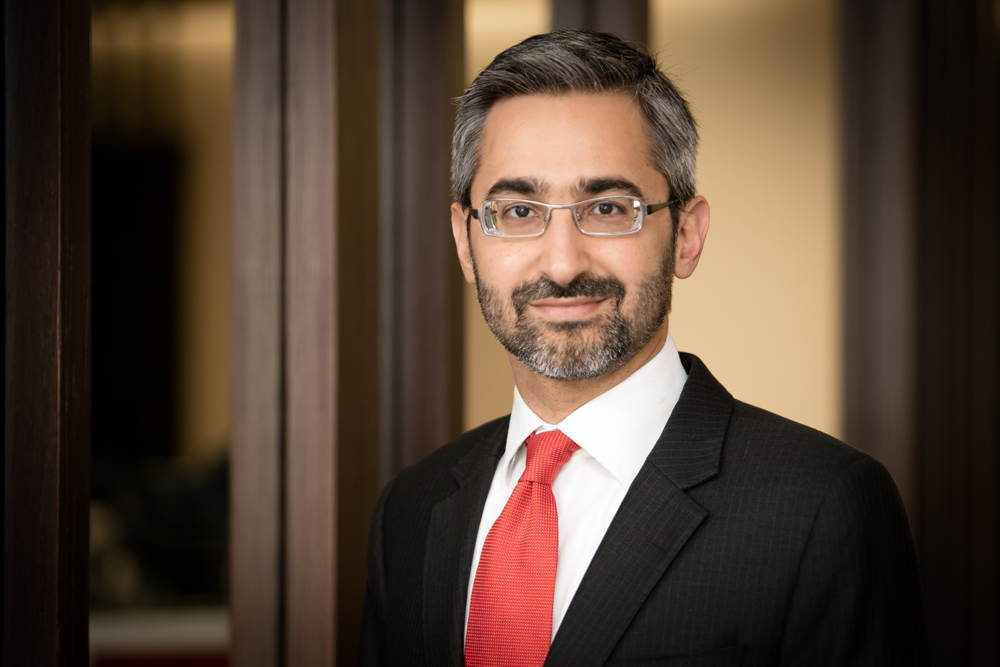
Akber Khan, Senior Director, Asset Management , Al Rayan Investment.
With neighbouring Saudi Arabia opening up to global investors, fund managers in Qatar believe it is time regulators address issues in Qatari equity markets to check capital outflows to neighbouring markets. The asset managers, who have significant exposure to Qatari stocks, are anticipating additional capital flight, should Qatar fail to make the local market more efficient.
Saudi Arabia’s announcement to sell a 5 percent stake in Saudi Aramco, which could raise $50bn, has underlined its efforts to welcome foreign investors to this enormous regional market. FTSE and MSCI are likely to add the Saudi bourse to their emerging market indices within the next 18 to 24 months. The Aramco listing could mean Saudi alone is 5 percent of their emerging market indices.
“Saudi is the giant in the region. This $700bn economy, with an equity market capitalisation of $450bn, trades an average of one billion dollars a day in its local bourse. During busy sessions, the exchange has seen $3-4bn of trades in a single day. So, when Saudi Arabia goes in to the FTSE and MSCI emerging market indices, it will certainly attract the largest global investors hungry for a new and liquid market. This will be partly at the expense of Qatar and the UAE”, Akber Khan, Senior Director, Asset Management at Al Rayan Investment, told The Peninsula in an interview.
Khan’s thoughts were also echoed by of other asset managers.
During 2012-2014, both Qatar and the UAE benefitted from billions of dollars of buying by active and passive foreign investors. This was helped by Brent crude remaining above $100 and bolstered by MSCI’s upgrade of these countries to emerging market status. Despite their relatively small size and liquidity, the Qatari and UAE bourses attracted considerable international attention because these investors did not have access to the Saudi market. Now, with Saudi’saggressive economic diversification plans, their equity market is in the process of a paradigm shift in its structure and openness.
Saudi Arabiais expected to enter FTSE and MSCI emerging market indicesduring 2018 and 2019. When it does,the weights of other emerging market index constituents, including Qatar, will be reduced and investors who track these indices will have to sell some of their Qatari and UAE shares.To attract foreign investors who manage active funds, Qatar has to be seen to be an exciting investment destination and where investors find it easy to understand listed companies. “There are a handful of listed Qatari companies that have excellent communication withinternational investors. But transparency of the majority is far from regional best practice, leave alone international standards,” Khan said.
For investors, to understand companies and quantify opportunities and risks, it is imperative that company management teams are accessible and provide relevant information. While there have certainly been some improvements, Qatar still has far to go to improve transparency and corporate disclosures to appropriate levels. Unfortunately, as a result, active foreign investors have very little interest in investing new money in Qatari stocks and their ownership of the local bourse has dropped to the lowest in many years, he said.
According to Khan, in Qatar, the government, directly or indirectly, is the primary shareholder of the majority of listed companies.Unfortunately, many of these companies donot pay sufficient attention to the other shareholders. “To help a company, investors need to realize its true market value. Management teams should consider the requirements of all shareholders, who are all part owners. Many companies only remember their shareholders when they wish to raise equity capital but it shouldn’t have to come to that.”
Listed Qatari companies need to improve transparency, corporate access, disclosure and financial reporting.Effective investor relations officers, quarterly conference calls with investors and investor presentations are all part of the most basic tools that international institutional investors expect to see when considering a listed company. “We have been reinforcing this message to Qatar authorities for several years and while there has been some positive change, there is still a long way to go. The Qatar Stock Exchange has done a good job in trying to push for improvements,” he said.
Apart from insufficient corporate access, weak fundamentals have also caused investors to reduce exposure to Qatari equities. In general, slower revenue growth combined with higher costs has pressured company profitability. Khan added, “When Qatari investors have been net sellers of two and a half billion dollars of local equities since the beginning of 2016, it is difficult for foreign investors to be enthusiastic.”
In contrast to Qatari equities, the case for Qatari bonds is exciting.“Considering Qatar’s very strong credit rating, its bonds and sukuk offer extremely attractive yields in a global context.Despite weaker oil and gas prices in recent years, Qatar’s sovereign balance sheet has been managed prudently and remains robust. This is reflected in the AA, Aa2 rating, a level still enjoyed by very few countries,” said Khan.
With the need to raise capital to construct the world’s largest LNG production facilities, Qatar was the GCC’spioneer in establishing a sovereign yield curve almost twenty years ago. The state adopted a proactive and organized approach to interacting with bond markets and bond investors. The state of Qataris a well-respected issuer and a notable bond market success story within emerging markets. Khan credited this to many years of good work by Qatar Petroleum and the Ministry of Finance, which manage debt issuance.
Qatar Stock Exchange’s (QSE) benchmark index is down 5.78 percent year-to-date.