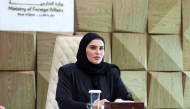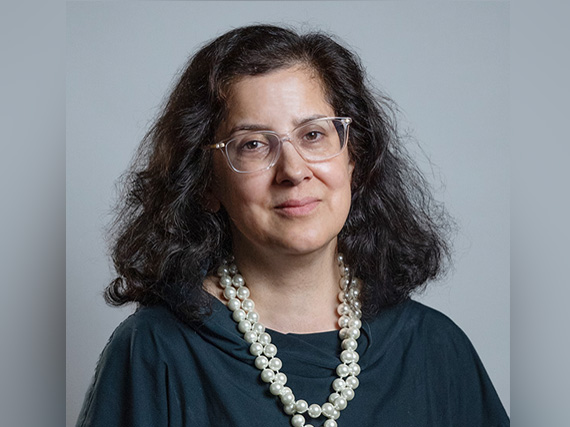
Executive Director of the Protect Education in Insecurity and Conflict (PEIC) programme of Education Above All (EAA) Foundation, Dr. Maleiha Malik..
Doha, Qatar: Attacks on education have surged by more than 40 percent, with 8,566 incidents recorded globally in 2024–25, underscoring the urgent need to move beyond emergency responses towards prevention, preparedness and community resilience, according to Executive Director of the Protect Education in Insecurity and Conflict (PEIC) programme of Education Above All (EAA) Foundation, Dr. Maleiha Malik.
The attacks recorded by the Global Coalition to Protect Education from Attack (GCPEA) harmed at least 10,600 people, with prolonged conflicts increasingly placing schools and universities at risk of destruction, military use or occupation.
“The drivers are eroding restraint norms where states are more willing to use explosive weapons in civilian areas, and more states and non-state armed actors ignoring international law distinction principles,” Malik told The Peninsula ahead of the International Day to Protect Education from Attack, observed annually on September 9.
She pointed to prolonged conflicts including Sudan, Gaza and the Sahel, where schools may be used as military assets or displacement shelters, further exposing students and teachers to danger.
The scale of the crisis is evident across several conflict settings. Ukraine has recorded around 900 attacks on schools, while Palestine has seen at least 2,400 attacks affecting students, teachers and education personnel. Myanmar, Nigeria, Yemen and Cameroon together account for more than 1,700 people killed or injured.
“Each context reshapes the crisis differently,” Malik said, describing Gaza as an example of the “almost total deliberate obliteration” of schools, universities and the education system. Colombia and the Democratic Republic of Congo demonstrate how decades of chronic conflict can steadily destroy education opportunities and deny access to learning.
Against this backdrop, Malik said the International Day to Protect Education from Attack has become an important platform for keeping education protection on the global agenda. Established by the UN General Assembly in 2020, it is the only UN observance dedicated specifically to attacks on schools, students and teachers as an accountability issue.
The observance has also contributed to international action. In 2021, UN Security Council Resolution 2601 condemned attacks and threats against schools, students and teachers and called on to safeguard the right to education.
The 2022 observance at Unesco headquarters in Paris helped build momentum for states to develop preventive action plans. The global #UniteToProtect campaign has further raised awareness.
However, Malik said legal protection alone is not enough. This year’s theme, “Can Education Survive Attack? The Resilience of Human Communities,” recognizes the role of communities, teachers and students in maintaining education during crises. “Legal protection and grassroots resilience are two tracks that must run together, not sequentially,” she said.
Teachers, students, families and communities are often the first responders before formal assistance arrives.
Community schools, teacher-led psychosocial support and parent-organised safe routes can help sustain learning and reduce the long-term effects of conflict.
Technology can also provide temporary bridges. Offline digital content, radio and television instruction, and accelerated or self-paced curricula can help children continue learning when schools are damaged or occupied. Malik cautioned that these approaches cannot replace schools and require investment in connectivity and safeguarding to prevent a widening digital divide.
EAA Foundation’s approach is to strengthen national education systems so they can absorb shocks through teacher training and accreditation pathways, while using alternative learning models when systems have collapsed.
“The goal is always reintegration into formal, accredited pathways, not parallel permanent structures,” she said.
Recovery, Malik stressed, must go beyond rebuilding classrooms. It should include accredited catch-up learning, psychosocial support integrated into curricula and rebuilding teacher pipelines.
“Recovery is measured in learning outcomes recovered, not schools reopened,” she said. At the same time, accountability remains essential to prevent attacks on education from becoming normalised. Without consequences, such attacks can become a tactic of war used repeatedly to achieve military objectives.
As the seventh observance approaches, Malik called on governments to fund prevention, preparedness and education continuity alongside emergency responses, while urging civil society to stand in solidarity with teachers, students, families and communities who continue to pursue education amid war and humanitarian crises.
She said their “courage and resilience” should remain at the centre of global efforts to protect education from attack.