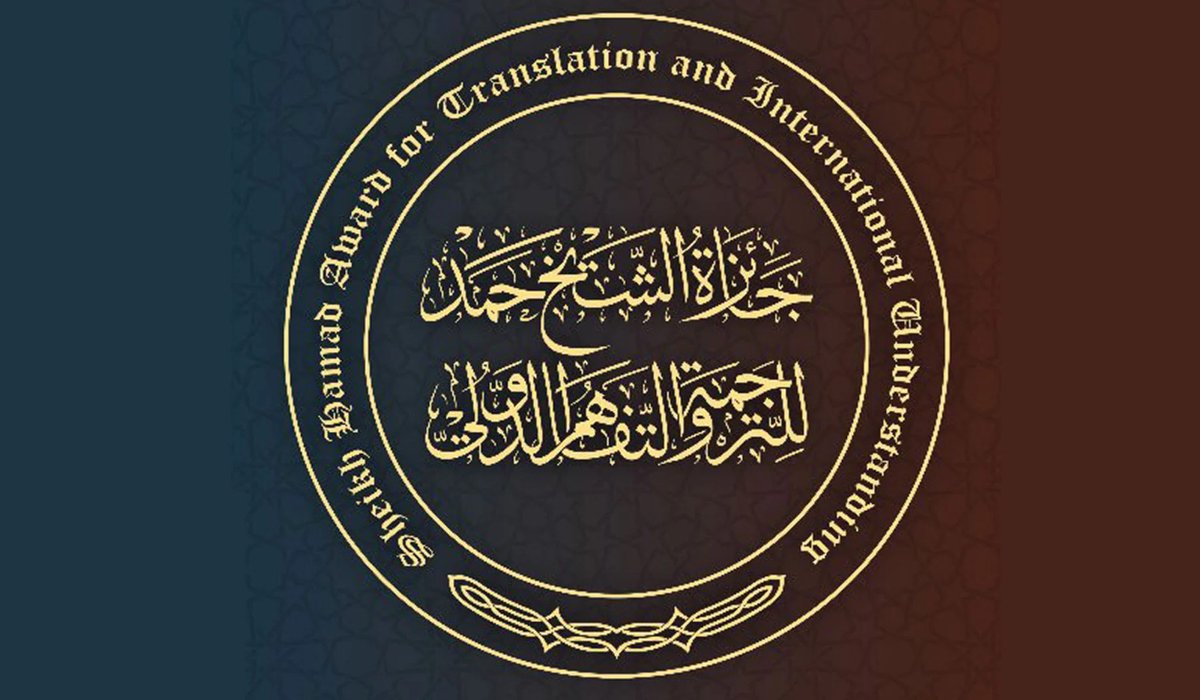
Doha: The Sheikh Hamad Award for Translation and International Understanding has received 256 nominations from 33 countries for its 12th edition, reflecting the award's growing international reach and the diversity of participants, languages and translation directions.
Of the total, 176 nominations were submitted in the individual books category and 80 in the achievement category. Individual accounts accounted for 75 percent of nominations, compared with 25 percent submitted through institutional accounts.
Participants came from 16 Arab and 17 non-Arab countries, with Arab countries accounting for 59.8 percent of nominations and non-Arab countries 40.2 percent. Egypt ranked first by number of nominations, followed by Syria, China, Saudi Arabia and Morocco. Men accounted for 78 percent of nominations, while women represented 22 percent.
The nominations covered five language pairs and 10 translation directions, involving English, Chinese, Italian, Azerbaijani and Fula. Translations into Arabic accounted for 66 percent of nominations, while translations from Arabic into other languages made up 34 percent.
Award media official Abdulrahman Al Marri said the figures demonstrated the award's expanding international presence and its reach across diverse cultural and linguistic communities. He said the balance between Arab and non-Arab participation highlighted its role in building bridges between Arab culture and other cultures.
He added that the strong share of translations into Arabic underscored the continued importance of bringing global intellectual, literary and knowledge-based works to Arab readers, while translations from Arabic help introduce Arab culture and intellectual output to audiences worldwide.
The award seeks not only to honor outstanding translators and works, but also to support translation, promote cultural and knowledge exchange, and strengthen translation as a tool for understanding and rapprochement among peoples and cultures. (QNA)