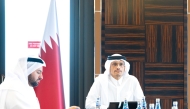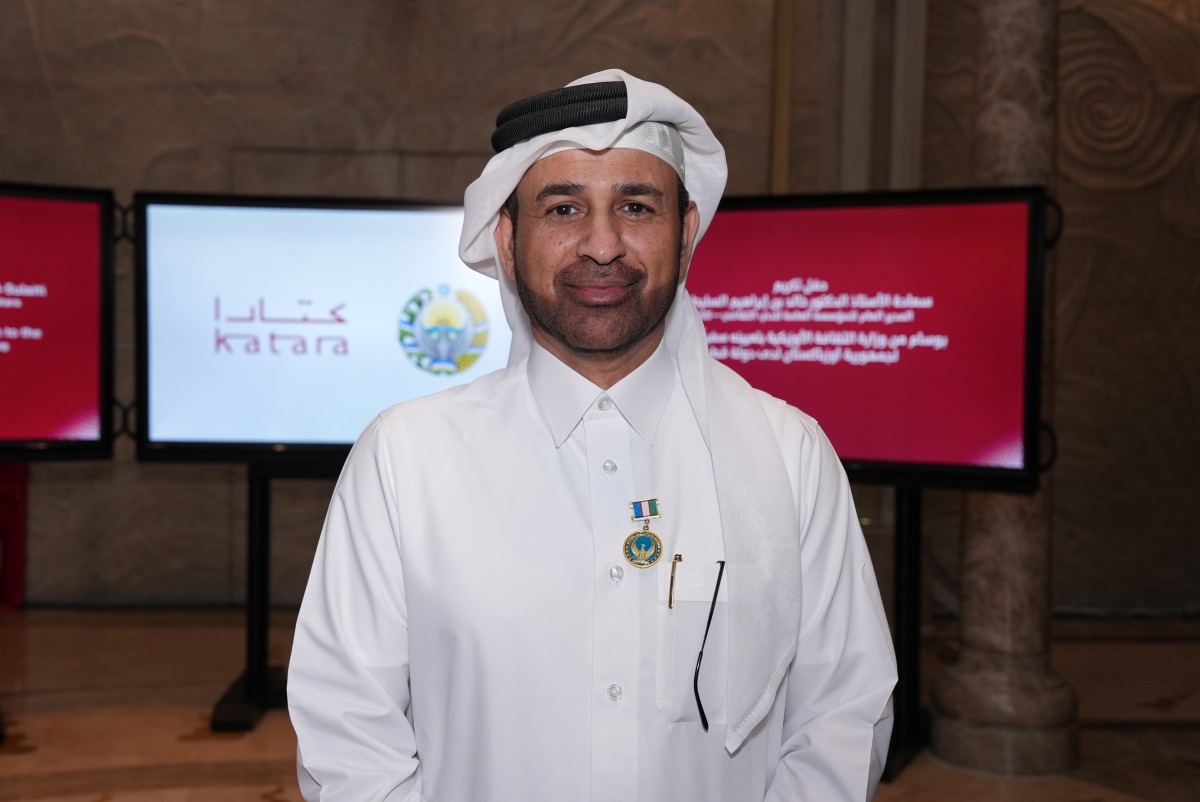
Director General of Katara Cultural Village Professor Dr Khalid bin Ibrahim Al Sulaiti
Doha, Qatar: Director General of Katara Cultural Village Professor Dr Khalid bin Ibrahim Al Sulaiti has described his new appointment as Cultural Ambassador by the Republic of Uzbekistan as a significant honour for both himself and the State of Qatar, underscoring the deepening cultural partnership between the two countries that dates back more than a decade.
In an exclusive interview with The Peninsula, the veteran cultural diplomat expressed deep appreciation for the recognition from Uzbekistan.
“First of all, I would like to thank the Republic of Uzbekistan for this appointment. This appointment means a lot to me as a person and also to the foundation of Qatar. And this appointment, I believe, is an appointment for the state of Qatar as well,” he said.
Dr Al Sulaiti, noted that bilateral cooperation began in 2011 and has steadily grown into a robust exchange of artistic and cultural programmes. He personally visited Uzbekistan in 2012, attending major festivals, an experience that laid the foundation for sustained collaboration. “Since that time, we are in continuous cooperation with Uzbekistan. We have done many exhibitions and festivals and events as well here in Qatar. We invited all the embassies in Qatar to attend those activities,” he recalled.
The Director General highlighted that Katara Cultural Village has served as a vibrant platform for these joint initiatives, with Uzbek artists and cultural groups regularly participating in events in Doha. He added that more programmes are already in the pipeline.
“We are still in the process of preparing and scheduling other activities and events with Uzbekistan. So Uzbekistan, in the past, they are with us. In the present, also, we are doing something. And for the future, we will strengthen also this relationship,” he affirmed.
Dr Al Sulaiti, widely recognised as a global leader in cultural diplomacy, emphasised the unique power of culture to foster understanding and peace, particularly amid regional challenges.
He pointed out that Qatar currently presides over an international network comprising 28 countries dedicated to cultural exchange.
“Qatar plays a very good role in bringing people together, tying the countries, because we believe that culture is the real bridge between nations,” he said.
The appointment, he noted, reflects the growing trust and mutual respect between Qatar and Uzbekistan, two nations that have consistently leveraged cultural initiatives to build stronger people-to-people ties. Colleagues at Katara Cultural Village, he added, share in the pride of this achievement.
As Katara continues to position itself as a global hub for intercultural dialogue, Dr Al Sulaiti’s latest recognition is expected to open new avenues for collaboration with Uzbekistan and beyond. The development comes as Qatar strengthens its role in promoting culture as a tool for global harmony and peaceful coexistence.