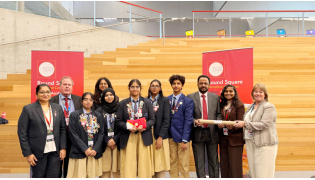
DOHA: Ooredoo yesterday said it will continue to support initiatives designed to close gender gaps in markets across its footprint in the Middle East, North Africa and Southeast Asia.
According to the Global Gender Gap Report 2014 from the World Economic Forum (WEF), launched this month, the gender gap for economic participation and opportunity now stands at 60 percent worldwide, having closed by four percent from 56 percent in 2006. Ooredoo is one of the partners of the WEF’s Gender Parity Programme,
“Ooredoo supports a diverse range of initiatives that enable human growth with a particular focus on the economic empowerment of women,” said Sheikh Abdullah bin Mohammed bin Saud Al Thani, Chairman, Ooredoo Group, who is a member of the Global Advisory Board of the WEF’s Gender Parity Programme and the World Bank Group Advisory Council on Gender and Development.
“We are striving to accelerate the growth of the female digital economy, both through dedicated products for women customers and enhanced opportunities for employment and development across our markets. We believe that these initiatives will go some way towards reducing the gaps identified in this report,” he said.
The ninth edition of the report finds that, among the 142 countries measured, the gender gap is narrowest in terms of health and survival. This gap stands at 96 percent globally, with 35 countries having closed the gap entirely.
The educational attainment gap is the next narrowest, standing at 94 percent globally. Here, 25 countries have closed the gap entirely.
While the gender gap for economic participation and opportunity lags stubbornly behind, the gap for political empowerment, the fourth pillar measured, remains wider still, standing at just 21 percent, although this area has seen the most improvement since 2006.
With no one country having closed its overall gender gap, Nordic nations remain the most gender-equal societies in the world. Last year’s leading four nations – Iceland (1), Finland (2), Norway (3) and Sweden (4) – are joined by Denmark, which climbs from eighth place to fifth.
In the Middle East and North Africa, Kuwait, at 113th, is the highest-placed country in the region, after making significant gains in overall income, including for women. Qatar, which stands at 117th, has also shown significant improvements since the previous report.
The region is also home to the lowest-ranked country in the index, Yemen, which, at 142nd, has remained at the bottom of the index since 2006; but it has significantly improved relative to its own past scores.
The Peninsula