Doha: Kashmiris residing in Qatar were highly critical of the hanging of Mohammed Afzal Guru by the Indian government yesterday for his alleged role in the 2001 attack on the country’s parliament.
While condemning the execution of Guru, they said the move was ‘unjust’ and ‘tragic’.
In 2005, Guru was handed down death sentence by India’s Supreme Court for his alleged involvement in the terror attack.
Guru’s wife and several human rights groups had appealed to the government for mercy. The mercy petition was rejected by President Pranab Mukherjee on February 3.
“Why wasn’t there an open trial? We should be given access to the evidence against Afzal Guru,” one Kashmiri, who did not want his name in print, told this newspaper yesterday.
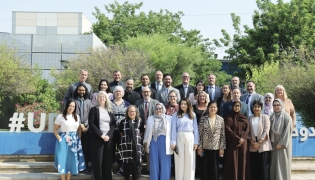
“There was an open admission by the Supreme Court of India that there was no direct evidence that links Afzal Guru to the attack on the parliament,” said Dr Farhan Mujahid Chak (pictured).
Dr Chak, a Canadian of Kashmiri origin, is part of Qatar University’s faculty of International Affairs. He stressed that Guru had forsaken weapons and had retired to a completely civilian life.
“This gives us Kashmiris the impression that the Indian government is not willing to let go of the past,” he said, adding that the Indian court’s statement that the collective conscience of the society will be satisfied only if the death penalty is awarded to Afzal Guru also gives the impression that the court was influenced by the street sentiments. “If you speak to any Kashmiri today, they will tell you that an innocent man has been killed. The people of Kashmir will not forget this,” he said.
There is a three-day shutdown in Kashmir, and according to Dr Chak, the death penalty can give impetus to more violence in the valley.
“Ultimately, Kashmiris are waiting for the right kind of leadership and things will blow up. This could very well be one of the causes for more hostility,” he said.
Dr Chak, who has roots in both Pakistani and Indian administered Kashmir, categorically said India will have to eventually come to accept that Kashmiris want to have their own voice.
“What Pakistan should also do is openly come out and say they accept whatever the will of the people of Kashmir is,” said Dr Chak, who is active in the Kashmiri freedom movement.
The Peninsula