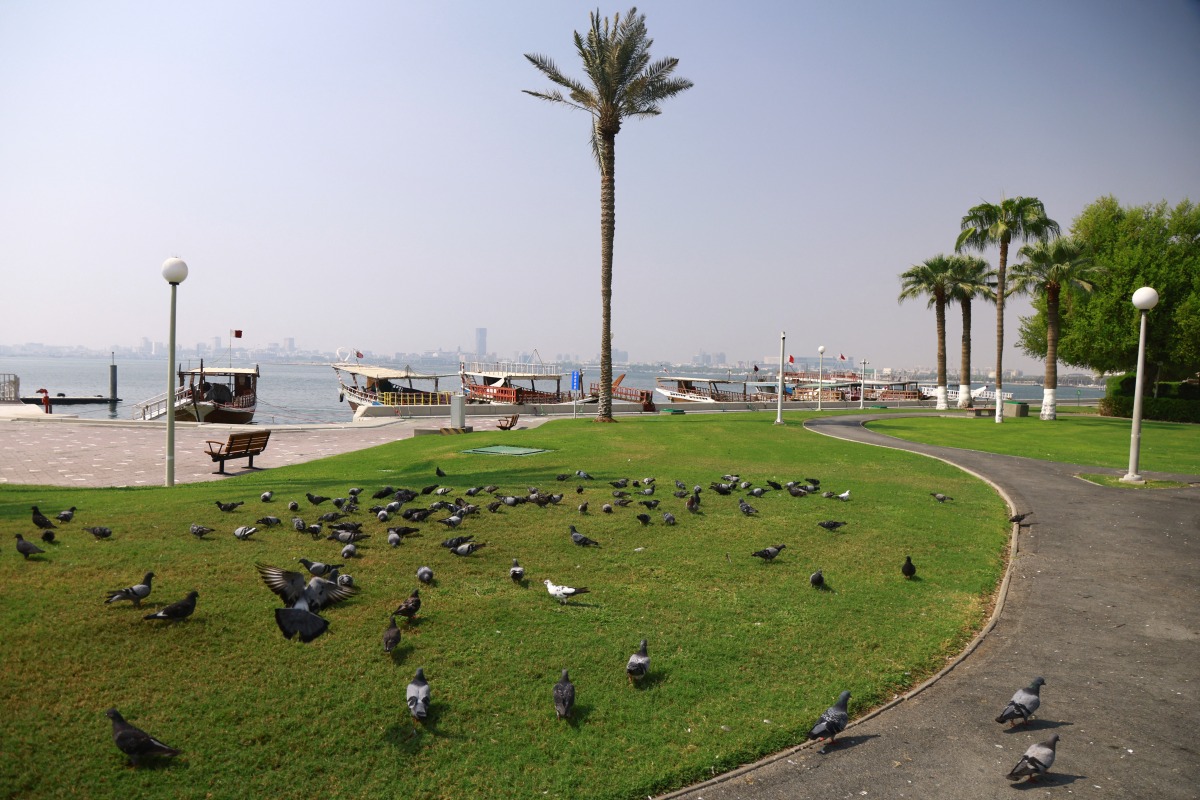
Doha, Qatar: Qatar is accelerating nationwide efforts to expand green spaces, restore native vegetation, and promote environmental sustainability as part of a broader strategy to combat desertification and enhance the country’s ecosystem.
Officials and environmental experts highlight that Qatar possesses a unique natural environment with resilient plant species capable of adapting to harsh conditions. These characteristics are now central to the country’s environmental initiatives.
According to Mohammed Abdullah Abbas, Head of the Parks Section at the Ministry of Municipality, Doha has witnessed a significant increase in green spaces over the past decade.
Speaking to Qatar TV recently, he noted that the number of parks in the capital currently recorded about 45, including residential parks, public parks, and open plazas developed over the years.
“In the early stages of urban development, there were only around 10 to 15 parks. However, over the past ten years, nearly 30 new parks and public plazas have been established in Doha alone,” said Abbas.
He added that these parks are continuously upgraded with modern facilities, including playgrounds and essential amenities, to enhance their appeal and usability for the public.
Speaking in the same TV programme Dr. Munira Al-Mesifri, from Qatar University, explained that deserts are rich ecosystems with specialized flora and fauna uniquely adapted to survive extreme conditions.
“Desert plants are highly resilient,” she said. “They can withstand drought, strong winds, and sandy conditions. Many have deep root systems to access groundwater, while others feature small or modified leaves to reduce water loss and capture moisture from dew.”
She further explained that such plants often have lighter or dust-colored foliage to minimize heat absorption, and may develop hair-like structures to trap moisture. In some cases, leaves transform into spines to reduce transpiration, demonstrating the remarkable adaptability of desert vegetation.
Environmental initiatives are also focusing on restoring native plant species. Environmental researcher Ali Hanzab revealed that since 2019, efforts have been underway to reintroduce endangered and nearly extinct wild plants.
“We collected seeds from natural habitats such as rawdat (lowland depressions) and valleys, and began replanting them during the appropriate seasons,” he said. “We have successfully cultivated more than 40 plant species and supported multiple sites across Doha with seedlings.”
Hanzab emphasized the importance of community involvement, encouraging residents, campers, and visitors to contribute by planting even a small number of trees. “These plants act as oxygen producers and natural air filters,” he noted. “They are essential to sustaining life and protecting our environment.”
Echoing this sentiment, environmental researcher Abdullah bin Dhafer Al-Dosari stressed the role of public awareness in promoting a culture of planting and environmental stewardship. Through social media platforms, he and others aim to educate the community about the value of agriculture and greenery.
“Planting is life,” Al-Dosari said. “While urban greening is important, we must not overlook wild trees. Native species are more resilient and can survive long periods without water, making them vital for long-term sustainability.”