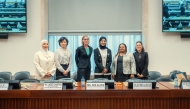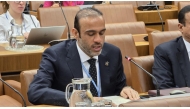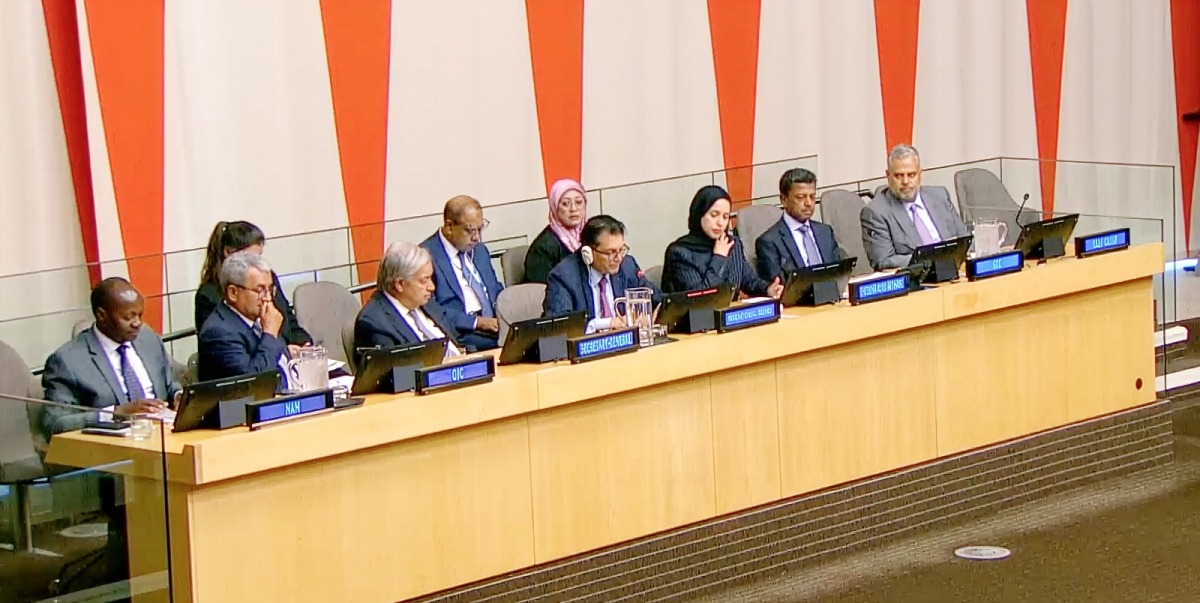
Doha: A solemn United Nations session has paid rich tribute to the memory and enduring legacy of late Father Amir H H Sheikh Hamad bin Khalifa Al-Thani, highlighting his role in transforming Qatar into a modern state and strengthening its position as a leading international partner in diplomacy, mediation, education, humanitarian action and sustainable development.
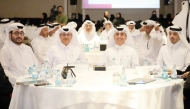
Held at the UN Economic and Social Council (ECOSOC) Chamber, the commemorative session brought together senior UN officials, representatives of member states and regional and international groups to honour the late Father Amir and reflect on his contributions to Qatar and the wider international community.
The session opened with remarks by President of the 81st session of the UN General Assembly H E Khalilur Rahman, followed by a minute of silence in remembrance of Sheikh Hamad. Formal statements were also delivered by UN Secretary-General H E António Guterres and Permanent Representative of the State of Qatar to the UN H E Sheikha Alya Ahmed bin Saif Al-Thani.
Further tributes were delivered on behalf of major regional and international groupings, including the Gulf Cooperation Council (GCC), the Arab Group, the Organisation of Islamic Cooperation (OIC) and the Non-Aligned Movement, before the General Assembly President formally adjourned the session.
In his remarks, UN Secretary-General H E António Guterres extended his deepest condolences to Amir H H Sheikh Tamim bin Hamad Al-Thani, the Al-Thani ruling family, and the government and people of Qatar.
Guterres described the late Father Amir as a visionary leader who helped transform Qatar and shape its modern history, noting that his years as Amir witnessed remarkable economic, social and institutional transformation.
He said Sheikh Hamad’s leadership laid the foundations for Qatar’s long-term prosperity and international standing, enabling the country to emerge as a global actor in diplomacy, mediation, education, energy and media.
“He championed modernization and reform,” Guterres said, stressing that Sheikh Hamad helped prepare Qatar for the future while simultaneously strengthening its national institutions. The UN Secretary-General highlighted a number of milestones achieved during Sheikh Hamad’s tenure, including the significant expansion of Qatar’s share of the global economy, the adoption of the country’s Permanent Constitution, major investments in higher education and research through Qatar Foundation and Education City, and the launch of Qatar National Vision 2030.
He described Qatar National Vision 2030 as a landmark framework that continues to guide the country’s sustainable development and long-term prosperity. Guterres also stressed that Sheikh Hamad’s impact extended well beyond Qatar’s borders.
The Father Amir, he said, understood that a country’s influence was measured not only by its economic achievements, but also by its contribution to peace, dialogue and international cooperation.
"Under Sheikh Hamad’s leadership, Qatar developed into a trusted partner in mediation and diplomacy, creating opportunities for dialogue and compromise between parties to conflicts and disputes."
The UN chief also highlighted Qatar’s expanding humanitarian role across the region and beyond, saying the country cemented its position as a constructive partner in regional and international affairs.
He noted the long-standing partnership between Qatar and the United Nations, expressing gratitude for the country’s support for humanitarian efforts, mediation initiatives and multilateral action in the service of peace and human dignity.
“The United Nations has long valued its partnership with Qatar,” Guterres said, adding that the partnership remains an important part of Sheikh Hamad’s enduring legacy. He concluded by saying that the late Father Amir had shaped Qatar’s history and that his contributions to dialogue and development had been felt around the world. “May his memory continue to inspire current and future generations,” Guterres said.
In her address, Sheikha Alya Ahmed bin Saif Al-Thani thanked the President of the General Assembly for convening the session, as well as the Secretary-General, member states and regional groups for taking part in the tribute to what she described as a great national loss.
Sheikha Alya said the international participation in the session reflected the stature Sheikh Hamad had attained within the international community. “With the passing of His Highness the Father Amir, the State of Qatar has lost an exemplary leader who transformed Qatar,” she said.
She recalled that Sheikh Hamad’s rule from 1995 to 2013 laid the foundations for a modern state built around established institutions and a people-centred development approach. She said he was a visionary leader who placed people at the centre of the development process and invested heavily in human capital, with education and scientific research receiving particular attention during his reign.
She highlighted the establishment and development of institutions including Qatar Foundation, Education City and the Qatar Research Fund, saying these initiatives opened new horizons for innovation, knowledge and scientific advancement.
Sheikha Alya also highlighted Sheikh Hamad’s contribution to advancing the role of women in Qatari society. "During his reign, Qatari women gained the right to run for and vote in elections, marking an important development in political participation and civic life."
She also emphasised the late Father Amir’s strong focus on young people, saying he believed that youth would be the shapers of the future. Among the defining milestones of his rule, she noted, was the adoption of Qatar’s Permanent Constitution through a referendum, which reinforced participation and the rule of law.
Under Sheikh Hamad’s leadership, she said, Qatar developed into a model of development and modernisation that brought together authenticity and openness, national identity and global ambition. Sheikha Alya said Sheikh Hamad’s vision extended beyond Qatar’s national development and fundamentally shaped the country’s foreign policy.
"He transformed Qatar into a leading state in mediation and the peaceful settlement of disputes, in line with the principles enshrined in the country’s Permanent Constitution,” she said.
She highlighted several major mediation initiatives undertaken during his leadership, including the Doha Agreement among Lebanese parties and the Doha Document for Peace in Darfur. "Qatar also mediated between Djibouti and Eritrea and supported Palestinian reconciliation, alongside other good offices aimed at building bridges of dialogue between parties across different regions and continents."
Sheikha Alya also highlighted Sheikh Hamad’s commitment to multilateralism and the role of the United Nations in maintaining international peace and security. "During his rule, Qatar strengthened its partnership with the UN and hosted a number of major international conferences."
Under late Father Amir’s guidance, she said, Qatar supported the unity and effectiveness of the UN Council, contributed to international peace and security and advocated just causes based on the principles and purposes of the UN Charter.
Sheikha Alya further underlined Sheikh Hamad’s commitment to humanitarian assistance, saying Qatar became increasingly associated with efforts to support people affected by conflicts and natural and other disasters. "During his rule, Qatar expanded its regional and international role, contributing to efforts to address global challenges and positioning itself as part of the solution to crises rather than merely an observer."
Sheikha Alya stressed that Qatar’s growing influence on the international stage was built on a vision that combined national development with international engagement. “Thanks to the wise leadership of His Highness, the State of Qatar has become an influential state on the international scene,” she said, highlighting the country’s contributions to peace, security, sustainable development and human rights.
The Qatari envoy concluded by expressing appreciation to the President of the General Assembly, the UN Secretary-General and all member states for joining the tribute. She prayed that Allah would grant the late Father Amir peace and the highest place in Paradise, and reward him for his contributions to Qatar and to humanity.
The solemn UN gathering thus served not only as a commemoration of late Father Amir Sheikh Hamad bin Khalifa Al-Thani’s life, but also as an acknowledgement of the transformation of Qatar during his rule from the development of national institutions and human capital to the country’s emergence as an influential voice in mediation, humanitarian action and multilateral diplomacy.