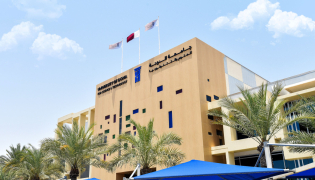
Fahad Al-Hajri, Vice President for Student Affairs at the University of Doha and for Science and Technology (UDST)
Doha, Qatar: As the ongoing crisis in the Middle East continues to affect individuals, entities, and travellers across the region, educational institutions in Qatar are turning to digital platforms to ensure that students can continue their academic journey without disruption.
The Ministry of Education and Higher Education last week announced the distance learning schedule for all government and private institutions in the country in response to the evolving situation.
“The shift to distance learning began in response to official directives under the current circumstances and naturally included all programmes and colleges,” Fahad Al-Hajri, Vice President for Student Affairs at the University of Doha and for Science and Technology (UDST), told The Peninsula in an interview.
To support students, the university has provided direct contact channels for assistance. “Students have access to a list of phone numbers and email addresses for support, while faculty members continue to share instructions, schedules, and login details for online classes,” Al-Hajri explained.
While the sudden shift to remote education has posed challenges for institutions worldwide, Al-Hajri noted that UDST had already invested heavily in digital infrastructure well before the current crisis.
“The university was fully prepared to deliver classes remotely,” he said. “This infrastructure had been in place and continuously developing for years, and had also been exploring the possibility of integrating blended learning into our courses and programmes in the future.”
The Vice President for Student Affairs mentioned that the existing familiarity of faculty members with online platforms enabled a relatively smooth transition.
“Our faculty has been using digital learning platforms for some time, so the move to distance learning was swift and effective,” he noted.
“The most significant challenge was that we rely heavily on practical laboratories and simulators in many of our courses,” Al-Hajri said. “However, this aspect was addressed in ways that preserved these hours and ensured that alternatives were provided so students could continue their studies.”
Al-Hajri explained that the wider societal context has also influenced student engagement, particularly as the regional crisis continues to unfold.
“Undoubtedly, the current situation in society may affect overall performance and students’ engagement in classes,” he said.
To address this, UDST has implemented systems to track attendance and encourage interaction in online sessions. The university has also expanded support services to assist students during the transition.
“Our systems confirm attendance and promote student interaction, while counselling services, both academic and psychological, are available to support students as they continue their academic journey,” Al-Hajri said.
Despite the shift to remote learning, the university has maintained the same academic standards used in traditional classroom settings.
“Students are currently assessed using the same mechanisms adopted by the university, including exams, assignments, projects, and presentations,” Al-Hajri said. “These assessments are conducted through approved e-learning platforms, with no fundamental difference in the criteria.”
He noted that the university has implemented several measures to ensure accessibility ensuring Information Technology support and assistive technologies when needed to all students.
“All classes are recorded so students can refer to them if they encounter technical difficulties,” Al-Hajri said. “There are also dedicated departments students can contact for assistance, while our technical support teams work around the clock to ensure optimal service.”
While the immediate priority remains ensuring uninterrupted learning during the crisis, the experience may have lasting implications for the university’s academic model.
He further added, “The availability of reliable technological infrastructure and stable digital learning platforms is essential”.
As the region navigates uncertain circumstances, UDST’s experience highlights the growing importance of resilient and flexible education systems capable of adapting to crisis situations while maintaining academic standards.