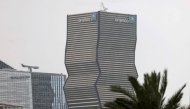
Doha: Qatar Exchange index dropped 106.55 points, or 0.89 percent, when the bourse closed yesterday at 11,836.95 points compared to 11,943.50 points on Tuesday.
The market capitalisation decreased to QR630.286bn compared with QR636.80bn registered on Tuesday.
The trading value yesterday increased to QR336.528m with a volume of 6,384,795 from 4,130 transactions compared with QR203.27m with a volume of 4,151,038 shares from 3,201 transactions on Tuesday.
Indices of six sectors ended in the red yesterday and one in green zone.
Consumer goods and services index gained the most, up 063 percent (7,421.00 points). Banking and financial services sector dropped 1.47 percent (3,111.57 points) and Insurance sector declined 1.01 percent (4,688.57 points)
Total Return Index dropped 0.89 percent (18,395.24 points). Al Rayan Islamic Index gained 0.10 percent (4,607.99 points) and QSE All Share Index dropped 0.85 percent (3,169.41 points).
Meanwhile, most other regional stock markets rose yesterday after oil prices jumped for a second day in a row and Dubai led gains, lifted by speculative buying.
Brent crude rose above $66 per barrel after a report of falling US inventories and signs that US oil production growth was levelling off after several years of very sharp increases.
The main Saudi index climbed 0.5 percent as most stocks rose. Saudi Basic Industries (Sabic), the largest petrochemicals company in the kingdom, gained 1.0 percent. Sabic’s earnings are sensitive to oil prices.
Index compiler MSCI said late on Tuesday it would seek feedback from investors on the accessibility of Saudi Arabia’s market following its opening on June 1, and gather information before considering whether to add the Saudi index to the review list for potential inclusion in its emerging markets index.
Some analysts saw this message as positive, while others said it was likely to delay Saudi Arabia’s inclusion from the initially expected mid-2017.
“This means that the 2017 accession date for Saudi Arabia to join the MSCI EM index is less likely now, since the process of joining the MSCI EM index takes a minimum of two years from the point at which consultation begins,” said Simon Kitchen, head of strategy at EFG Hermes.
But some said the kingdom could still be fact-tracked, especially after MSCI said it could change the status of Chinese domestic shares before the next annual review.
“MSCI can always choose to make changes outside the regular review schedule, as, for example, in the case of China A-shares,” VTB Capital said in a note.
The index compiler also did not mention Egypt in its statement. That was a relief to investors who had feared it might be downgraded from emerging market status, being represented by just three stocks since the exclusion of Telecom Egypt last month.
The Cairo index rose as much as 1.1 percent during the day but gave up all gains and closed 0.3 percent lower after reports showing inflation sped up in May.
Agencies