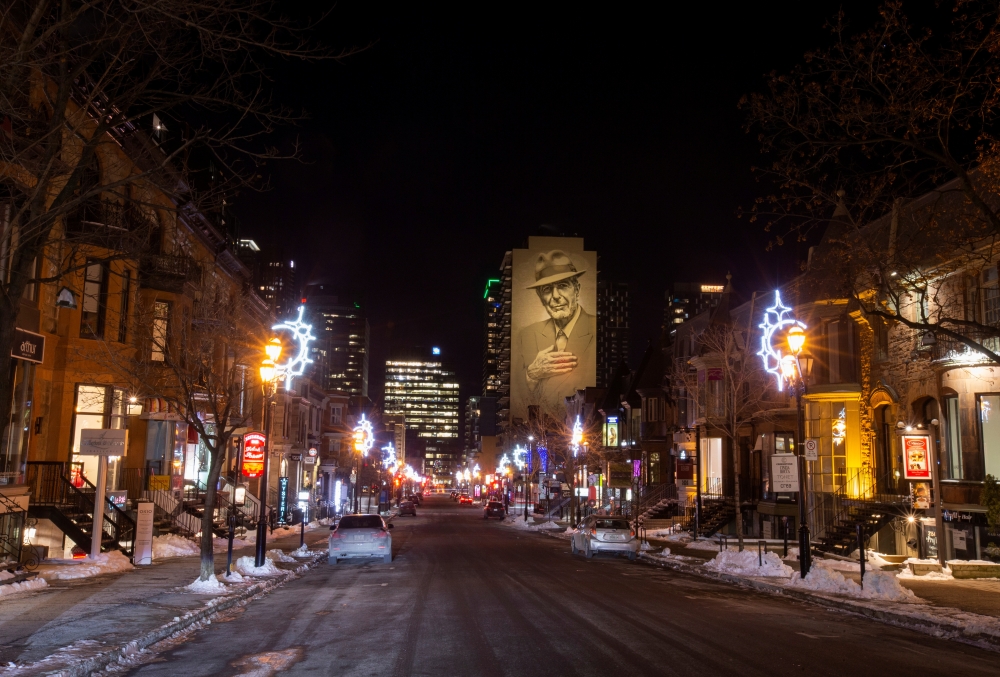
Crescent Street, a street known for its nightlife, is seen on the first night after a curfew is imposed by the Quebec government to help slow the spread of the coronavirus disease (COVID-19) pandemic in Montreal, Quebec, Canada January 9, 2021. REUTERS/Ch
Ontario’s government declared a second provincial emergency as Covid-19 rates accelerate and a new, more transmissible variant has surfaced in Canada’s most populous province.
"Now more than ever we need you to do your part. Stay home, save lives, protect our healthcare system,” Ontario Premier Doug Ford said Tuesday at a press conference in Toronto. "The system is on the brink of collapse. It’s on the brink of being overwhelmed.”
The province is imposing stay-at-home rules that take effect Jan. 14, requiring residents to stay in except for essential purposes such as buying groceries, medical appointments, exercise or essential work, according to a statement. All businesses must ensure any employee who can work from home does so.
Additional public health measures are being imposed, starting Tuesday.
Outdoor social gatherings will be restricted to five people, with limited exceptions, as was the case last spring during the first wave of the virus, according to the statement.
Non-essential retail stores will be required to close by 8 p.m., and there will be additional restrictions on non-essential construction. Schools in hot spots, including Toronto, won’t return to in-person instruction until Feb. 10.
The measures come as cases continue to set new records and a new variant of the virus, which is at least 56% more transmissible, is spreading.
Hospitalizations are up more than 70% in the last four weeks and the number of patients in intensive care units has risen 61%, according to provincial data released ahead of Ford’s announcement.
One-quarter of Ontario hospitals have no ICU beds available while another quarter has only one to two beds free. If community transmission of the new variant occurs, much higher case counts, ICU occupancy and mortality could occur, the government said.