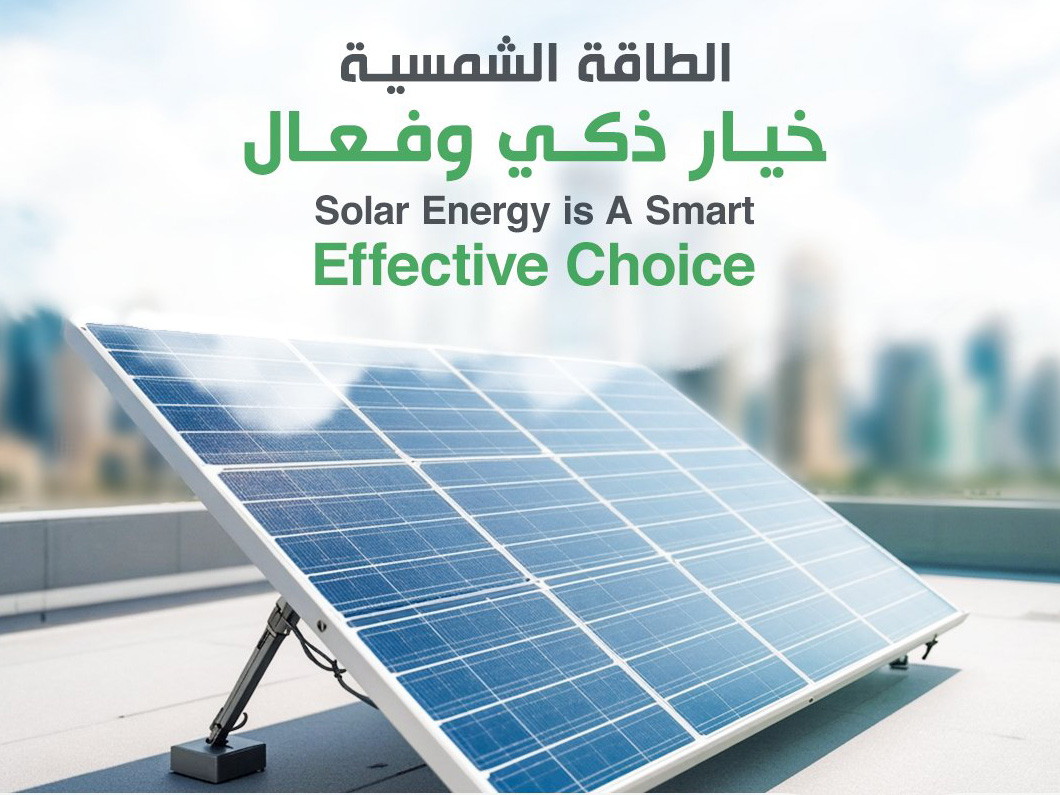
Doha, Qatar: The Qatar General Electricity and Water Corporation (Kahramaa) has highlighted the growing role of its “BeSolar” service in accelerating the country’s transition toward renewable energy, supporting both environmental sustainability and economic efficiency.
In a recent post on the X, Kahramaa said the BeSolar service enables customers to install solar energy systems and benefit from a net billing mechanism, allowing them to generate electricity on-site while exporting surplus power to the national grid. Excess energy is credited to subsequent electricity bills, making solar adaptation more financially viable.
The corporation noted that the service represents a significant step toward reducing carbon emissions, achieving long-term financial savings, and promoting the use of clean energy sources in alignment with Qatar National Vision 2030.
From an economic perspective, BeSolar operates through a net metering system that calculates the difference between electricity consumed and exported. This mechanism helps lower monthly bills and allows customers to gradually recover installation costs. Surplus electricity is purchased at a rate of QR0.237 per kilowatt-hour, further incentivising investment in solar energy and supporting the shift toward sustainable power sources.
Environmentally and strategically, the initiative contributes to Qatar’s transition to a low-carbon economy and supports targets to expand renewable energy capacity. These include producing 4 gigawatts of centralised solar power and 200 megawatts from distributed systems, in line with national sustainability goals. The service also enhances energy efficiency, strengthens grid reliability, and encourages a culture of sustainability among consumers.
Kahramaa offers flexible solar installation options tailored to different facility types. These include rooftop photovoltaic systems for optimal efficiency, solar canopies over parking areas that provide both electricity and shade, and ground-mounted systems suitable for large-scale or open-land projects. All installations are connected to the grid with bidirectional smart meters that accurately measure both consumed and exported electricity, ensuring compliance with technical and safety standards.
The initiative is part of Qatar’s broader efforts under the Qatar National Renewable Energy Strategy (QNRES), which aims to expand renewable energy adoption and build a sustainable energy system. The strategy focuses on reducing carbon dioxide emissions, increasing renewable energy penetration while maintaining grid stability, and maximising socio-economic benefits.
QNRES sets ambitious targets, including deploying 4 gigawatts of utility-scale renewable energy by 2030, primarily through solar photovoltaic technology, and increasing the share of renewables in the national energy mix from 5% to 18%. It also aims to achieve 200 megawatts of distributed renewable energy capacity, enabling customers to generate their own electricity and export surplus power.
With abundant solar radiation throughout the year, Qatar is well-positioned to harness solar energy as a reliable and clean resource. Kahramaa reaffirmed its commitment to advancing the country’s renewable energy agenda, supporting a diversified economy, and preserving the environment for future generations.