By Ole S. Hansen
(Head of Commodity Strategy, Saxo Bank)
Global growth fears remain one of the key drivers of financial markets at the moment, and this was also highlighted at the latest Federal Reserve meeting in which the Federal Open Market Committee raised concerns about weak economic growth in the Eurozone and the potential impact this could have on the US economy and dollar.
The market took this as a sign that Fed funds may not be raised as soon as the market had been led to believe, which in turn helped attract some profit-taking in the dollar (which had already weakened after strong support was found earlier in the week, especially around the 1.25 level against the euro).
A potential longer period of lower US rates, together with dismal export data from Germany triggered a rally in core bonds and stocks. But while bonds held onto the gains — with the yield on US 30-year bonds reaching a 17-month low and German 10-year bond yields hitting a record low — stocks quickly surrendered their gains. The MSCI World Index of major global companies has fallen three weeks in a row to a six-month low, and this is setting the scene for some nervous trading over the coming week as the positive impact on stocks from low US interest rates seems to be fading.
The agriculture sector continues to recover after reaching a four-year low a few weeks ago. All sub-sectors rose, not least grains which were driven higher by corn and especially soft commodities, where the price of coffee has now doubled since the beginning of the year.
Industrial metals received a boost from rising zinc prices, but overall the deteriorating outlook for global growth makes further advances for this sector difficult to come by at this stage. The price of copper is currently sitting on the edge, with the risk that additional weakness from here could trigger a bigger move lower.
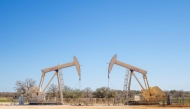
The reaction to this news in commodity markets was mixed, with precious metals receiving a boost from the weaker dollar and lower bond yields while the energy sector continued to slump (as rising supplies hit a market where demand growth is slowing). We are now into a capitulation phase, as the price of both WTI and Brent crude have broken levels that very few saw as possible just a couple of months ago.
On Friday, Opec released its monthly report for September which stated that the cartel increased its production to a three-year high of 30.47 million barrels per day due to rising production from Libya, Iraq, Angola, and Nigeria.
At the same time, Opec also reduced forecasts for the amount of crude it will have to produce next year to 29.2 million bpd due to the continued surge in US shale oil production.
This leaves a major gap of more than one million barrels which Opec will have to close sooner rather than later in order to avoid oil prices falling even further. The next Opec meeting is not due until November 27, and until this time the market will be keeping a close eye on signs of how the cartel will handle the current selloff and major hit on revenues.
Over the past week, the cartel has seen price cuts to Asian customers from suppliers such as Saudia Arabia, Kuwait and Iraq (among others). This means that finding a unified approach while not creating major shifts in individual market shares will likely prove a challenge. We expect that some interesting discussions will ensue... but these will certainly be held behind closed doors.
Precious metals and platinum group metals — not least palladium — received a boost from the weaker dollar and rising uncertainty in the stock markets together with falling bond yields. Gold went from testing major support at $1,180/oz before rallying to a two-week high at $1,233/oz, but so far we have not seen any major capitulation from hedge funds (which held a record short position as of September 30).
The sentiment towards precious metals will remain under pressure as long the market believes the dollar will move higher. So while the current stock market wobble has created some additional support, short sellers are not yet prepared to look the other way.
For now, the focus remains on the downside and the major levels being looked at are the band of support between $1,160 and $1,180/oz followed by $1090/oz (which represents a 50% retracement of the 2001-2012 rally). A move to the upside will be met with resistance at 1,245 followed by $1,264/oz.
The Peninsula