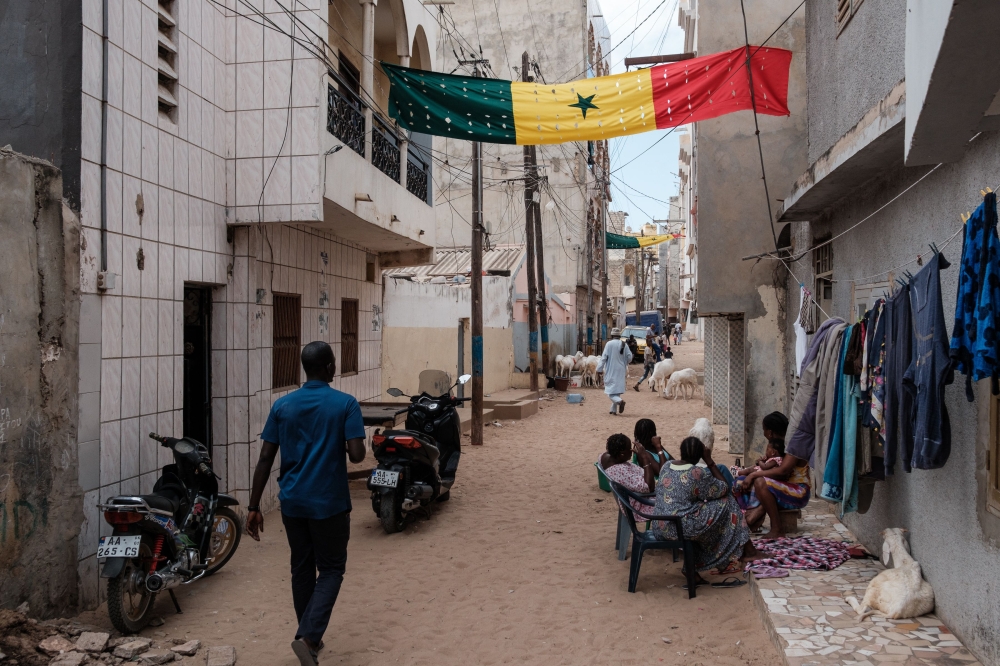
A large Senegalese flag hangs across a street in a neighbourhood in Dakar on February 13, 2024. (Photo by GUY PETERSON / AFP)
Dakar: Senegalese authorities faced growing anger at home and renewed international pressure on Tuesday, as the government suspended mobile internet and banned a march against the delay to this month's presidential poll.
Three people have been killed during violent protests after President Macky Sall's decision to push back the February 25 vote plunged traditionally stable Senegal into one of its worst crises in decades.
Former colonial ruler France called on the West African nation to ensure a "proportionate" response to any protests and reiterated its calls for authorities "to hold the presidential poll as soon as possible".
Demonstrations are subject to authorisation in Senegal, with authorities refusing to give the green light for many opposition rallies in recent years.
Unauthorised protests often descend into violent clashes. Security forces repressed demonstrations which took place on Friday.
"Senegalese authorities continue to display utter disregard for peaceful dissent," said Samira Daoud, Amnesty International's Regional Director for West and Central Africa.
"Authorities must promptly, thoroughly, independently, impartially, transparently and effectively investigate the lethal use of force against protestors," she added.
The United States embassy in Senegal also urged authorities to "fully respect" the right to peaceful assembly and freedom of expression, in a post on X, formerly Twitter.
The Aar Sunu Election (Let's protect our election) collective, which includes some 40 civil, religious and professional groups, had called for a peaceful rally in the capital Dakar on Tuesday at 1500 GMT.
But organisers said they had received an official letter from Dakar local authorities saying the march was banned as it could seriously disrupt traffic.
The collective postponed the march until Saturday.
"We will postpone the march because we want to remain within the law," said Malick Diop, coordinator of the Aar Sunu Election collective.
By mid-afternoon in the neighbourhood where the demonstration was due to take place, an AFP journalist reported a heavy police presence but no protesters.
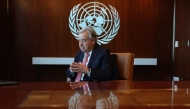
The UN had said earlier in the day that it was "deeply concerned" following reports of "unnecessary and disproportionate use of force against protesters and restrictions on civic space".
Liz Throssell, spokeswoman for the United Nations rights office, said at least three young men had been killed and 266 people, including journalists, were reportedly arrested across the country.
The UN called for a swift and independent probe into the killings.