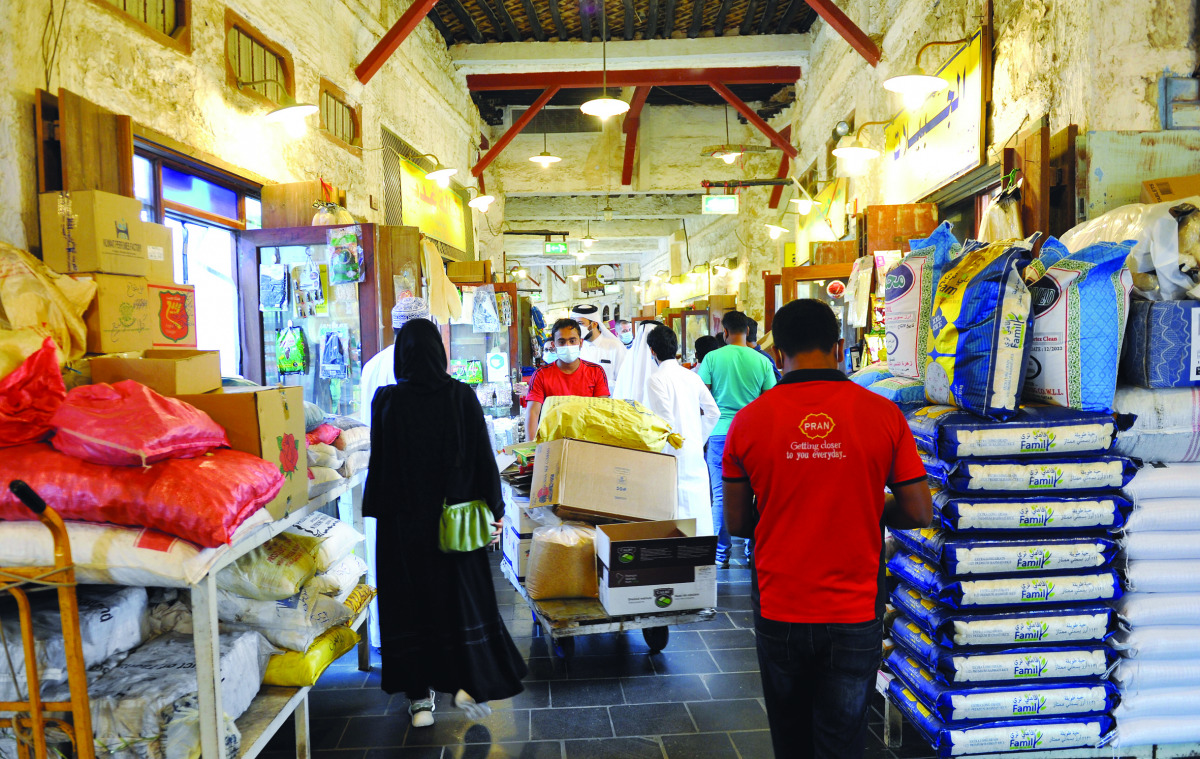
People shop on the eve of Ramadan at Souq Waqif. Pic: Salim Matramkot / The Peninsula
Doha: After the announcement confirming the beginning of Ramadan today, several shopping centres and food outlets saw an increase in patronage physically and electronically.
Citizens and residents made last-minute runs to take advantage of the numerous offerings on the eve of the holy month. Across Doha, several foods synonymous with Ramadan like dates, fruits, and nuts are in high demand.
The Ministry of Commerce and Industry (MoCI) had earlier announced the launch of its discounted consumer goods initiative, which covers more than 650 products during Ramadan this year.
The Ministry has been carrying out this initiative for the past nine years. Ministry’s Consumer Protection Department also conducts strict monitoring of commercial outlets during Ramadan to check compliance with the rules like proper display and details of the products.
The monitoring helps significantly in ensuring the availability of quality commodities at reasonable prices.
Meanwhile, a variety of dates are available to meet the customers’ needs for Ramadan. More than 12 types of dates are in the market. Al Khalas date is considered the most popular among consumers compared to other varieties.
Prices at the Souq Waqif are usually at the wholesale price, starting at QR150 for an 8kg box. In other places, it will be more expensive and may reach more than QR200. Hence, there’s an increase in patronage around the Souq Waqif. Medjool dates (large) from Jordan cost QR70/kg and medium (QR40/kg).
Mabroom and Piarom cost QR50/kg; Ajwa costs QR70/kg; Zahidi dates from Iran cost QR8/kg; while dry dates from Pakistan are being sold at QR12/ kg. Due to COVID-19, the relevant authorities announced that commercial complexes and Souqs are allowed to operate at a capacity of 30%. Children under 16 years are not allowed in the malls and Souqs, and Souqs would be closed on Fridays and Saturdays.
Speaking to The Peninsula, a shop manager at Souq Waaqif said, “The patronage has been moderate, considering the COVID-19 restrictions. Many people prefer to order and have it delivered to them, but a few have visited to get some products.”
A shopper at a local commercial complex said, “I usually shop in advance to avoid overcrowding. With COVID-19, the malls and Souqs are not particularly full due to the measures in place. After the Ramadan start was confirmed, I ordered some necessary foodstuffs and decorations online, but of course, you can forget a few things; hence, a quick dash to the store is necessary.”