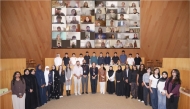
Doha, Qatar: The Civil Service and Government Development Bureau (CGB) yesterday announced significant milestones achieved through its training arm, the Institute of Public Administration, reinforcing the country’s commitment to building national competencies and elevating government performance.
According to performance statistics released for the first half of 2026, the Institute successfully delivered 740 specialised training programmes to 13,969 government employees, achieving an overall trainee satisfaction rate of 93.6 percent.
The remarkable satisfaction score reflects the high quality, relevance, and modern design of the Institute’s training offerings, which are tailored to meet the evolving operational needs of state ministries and government agencies.
Built around a competency-based professional development framework, these programmes aim to empower Qatari civil servants with actionable skills that support broader institutional transformation and align directly with the goals of Qatar National Vision 2030 and the Third National Development Strategy (NDS3).
To ensure a well-rounded approach to public sector upskilling, CGB structured its 740 training programmes across three primary tracks.
‘Behavioral Competencies’ are focused on communication, problem-solving, workplace ethics, and collaborative skills necessary for modern public administration.
‘Technical Competencies’ are centered on specialised, role-specific domain knowledge, digital tools, and operational skills designed to enhance productivity and service efficiency.
‘Leadership Competencies’ are designed for supervisory and executive cadres to foster strategic planning, change management, innovation, and decision-making capabilities.
This structured methodology ensures that training initiatives are not merely general coursework, but targeted career development paths tailored to different proficiency levels and organisational mandates across the civil service.
The strong participation numbers and high satisfaction rating demonstrate the civil service’s growing culture of continuous learning and professional development.
By linking training outcomes directly to employee competencies and institutional objectives, CGB aims to build a highly agile, future-ready public workforce capable of driving administrative excellence. Through strategic partnerships, digital learning options, and regular assessment mechanisms, the Institute of Public Administration continues to adapt its curriculum to address emerging governance trends and technology integration.
By maintaining this strong momentum throughout 2026, the Civil Service and Government Development Bureau reaffirms its pivotal role in advancing national talent, modernising public service delivery, and ensuring government entities possess the human capital required to achieve Qatar’s strategic objectives.
The continued focus on upskilling and capacity-building will be crucial for sustaining Qatar’s progress in government excellence.
As new challenges and opportunities emerge, investing in people will remain at the heart of national development. With these efforts, the country is well positioned to foster innovation, deliver high-quality public services, and achieve its long-term vision for a thriving, knowledge-based society.
Additionally, CGB yesterday released a comprehensive report documenting its landmark transition from traditional Key Performance Indicators (KPIs) to the Objectives and Key Results (OKRs) framework for preparing its 2025 operational plans.
The report details a significant institutional shift designed to foster adaptability, transparency, and high performance across Qatar’s public sector entities. It also outlines critical insights gained throughout the initial implementation phase for the 2025 planning cycle. Transitioning to OKRs required a foundational cultural shift within administrative teams, pushing staff to move beyond simply logging completed tasks toward actively demonstrating real-world value.
The document emphasises the importance of integrating OKR tracking directly with established performance management systems, such as the “Adaa” platform, to maintain unified data collection and streamlined reporting.
By publishing this full operational account, CGB offers a clear roadmap for administrative reform, demonstrating how modern goal-setting frameworks can elevate government performance and improve public service delivery nationwide.