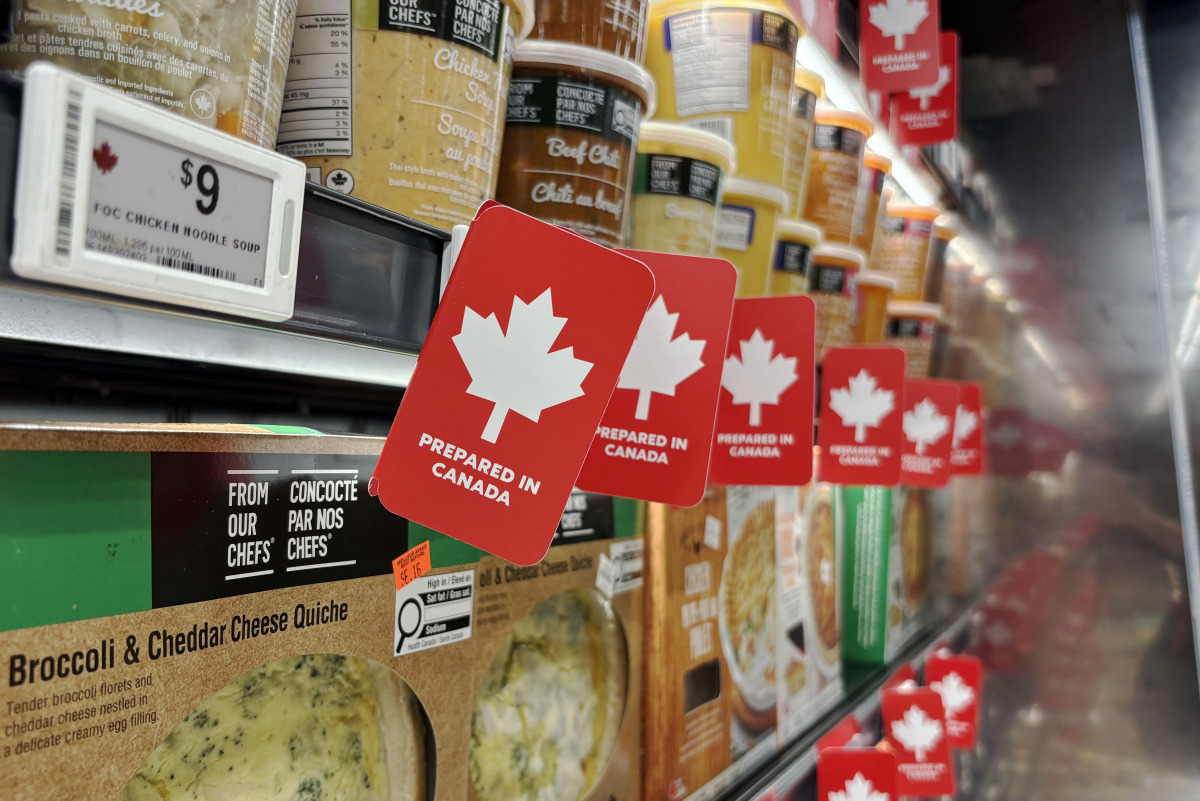
(Joanna Slater/TWP)
Toronto: On a recent morning, Francine Piché sat at her desk in a city on the western end of Lake Ontario and began writing a farewell note.
She had already registered her opposition to President Donald Trump’s threats to annex Canada in other ways. Trips to the U.S. were out. So was her Amazon subscription. She found a substitute for her American-made shampoo and checked each item at the grocery store to avoid imports from south of the border.
Just one thing remained, a product she had loved for years: Bob’s Red Mill gluten-free pancake mix. But as tensions surged between the U.S. and Canada - including a White House executive order changing the name of Lake Ontario to Lake America - it was time to bid adieu to that, too.
These products “will no longer enter my home,” Piché wrote in an email to Bob’s Red Mill on Sept. 1. She hoped to be a customer again one day, she said, but that wouldn’t happen until the relationship between the two countries stabilizes and “your President understands that Canada is a sovereign nation.”
Piché isn’t alone. Other Canadians across the country are also going to increasing lengths to disentangle themselves from their southern neighbor, using their travel and shopping decisions to register their discontent with the Trump administration’s trade policies and aggressive rhetoric.
Their choices are a microcosm of the broader challenge facing Canada as it seeks to reduce its reliance on the U.S. after decades of relatively free trade that left the two economies intertwined. For these consumers, too, it’s not easy - and in some cases impossible - to quit America.
But the depth of the feelings here means some Canadians are willing to try. Trump has “kind of pushed every single button,” said Piché, 66. “I’ll buy Canadian first and anything but the U.S. second. Now the U.S. is a distant third.”
The rhetoric on both sides has ratcheted up in recent weeks. Trump has called Canada “nasty,” Treasury Secretary Scott Bessent likened the country to a “little yippy dog,” and Defense Secretary Pete Hegseth posted a photo seemingly mocking the Canadian military. Canadian Prime Minister Mark Carney, meanwhile, said his country had been “attacked.”
On Tuesday, Carney saluted Canadians who are adapting their spending habits in a speech explaining his government’s decision to impose retaliatory tariffs on about $20 billion worth of U.S. imports.
“The most powerful actions have come from you, buying Canadian and traveling in Canada,” Carney said in a video message. “Decisions taken at the kitchen table, not the boardroom table.”
According to the latest data from June, trips by Canadians to the U.S. are down 25 percent from the same month in 2024. Efforts by consumers to buy fewer American products at the grocery store have also shown up in the data, according to an analysis by the Bank of Canada earlier this year, which described the trend as “modest but clearly visible.”
The initial wave of Canadians shunning American goods and travel to the U.S. came last year. As trade tensions flare anew, the behavior is surging again. “It feels good to vote with your wallet,” said Aaron Ettinger, a political scientist at Carleton University in Ottawa, even if “it may or may not be effective.”
“Canadians are feeling bruised by the decisions made by the American government,” added Avery Shenfeld, chief economist at CIBC Capital Markets in Toronto. “Where there’s a choice, I think a lot of people are doing it out of a sense of patriotic duty.”
One place they go: a “Made in Canada” group on Facebook that acts as both billboard and search engine. Early last year, it had fewer than 300,000 members. Now it has more than 1.4 million members, about 90 percent of them in Canada, said Jayne Little, one of the group’s moderators. (She acknowledged the irony of using an American tech platform, but said it’s the only option with massive reach.)
Among the made-in-Canada items sought by the group’s members: facial moisturizer, protein bars, pet food, golf shoes, cotton underwear, video games, dog collars, pickleball rackets, sponges, and guitars.
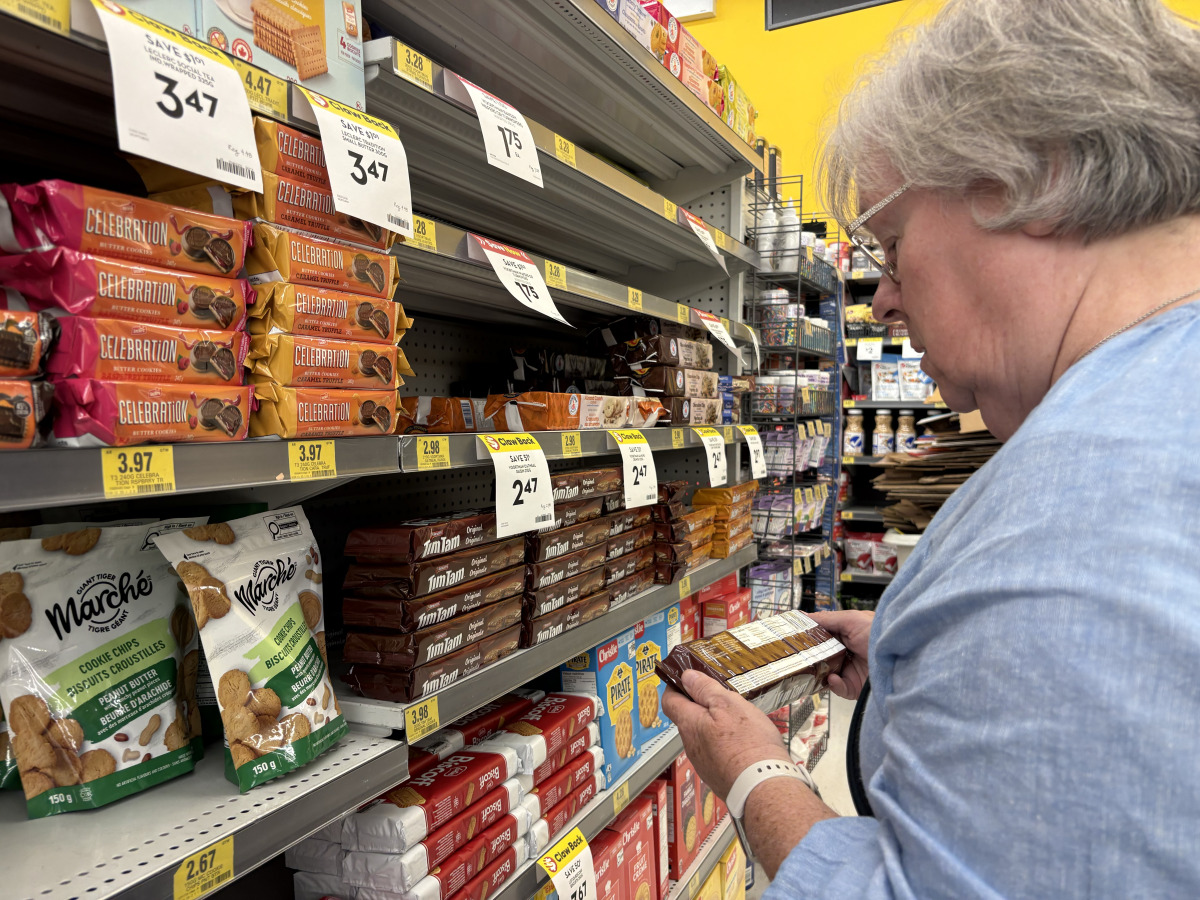 Jayne Little, 68, buys local and checks labels to avoid U.S. products. (Joanna Slater/The Washington Post)
Christina Templeton, a doctor in St. John’s, Newfoundland, recently went to the group seeking a Canadian substitute for the hazelnut coffee creamer favored by her father, who is in his 80s. At first, her parents thought that avoiding American products was silly because it would make no difference given the relative size of the economies, Templeton said.
Then came the Lake Ontario imbroglio. “There was a bit of shouting,” Templeton said. Her father said he didn’t care anymore about whether it had an impact; he didn’t want to have his morning cup of coffee making him upset.
For those inclined to join the “Buy Canadian” movement, there are dedicated websites, mobile apps, browser add-ons, and even an online quiz on brand ownership (“Maple or Eagle?”).
It has also spawned its own controversies. Supermarkets have been accused of “maple washing” (labeling non-Canadian products as Canadian). When Loblaw, a major Canadian supermarket chain, recently said it would remove country-of-origin labels on produce in several provinces, customers rebelled. The company reversed course.
Little, the Facebook group moderator, is an IT security consultant. She used to work in the U.S. and has family in Wisconsin but hasn’t crossed the border since Trump took office in January 2025.
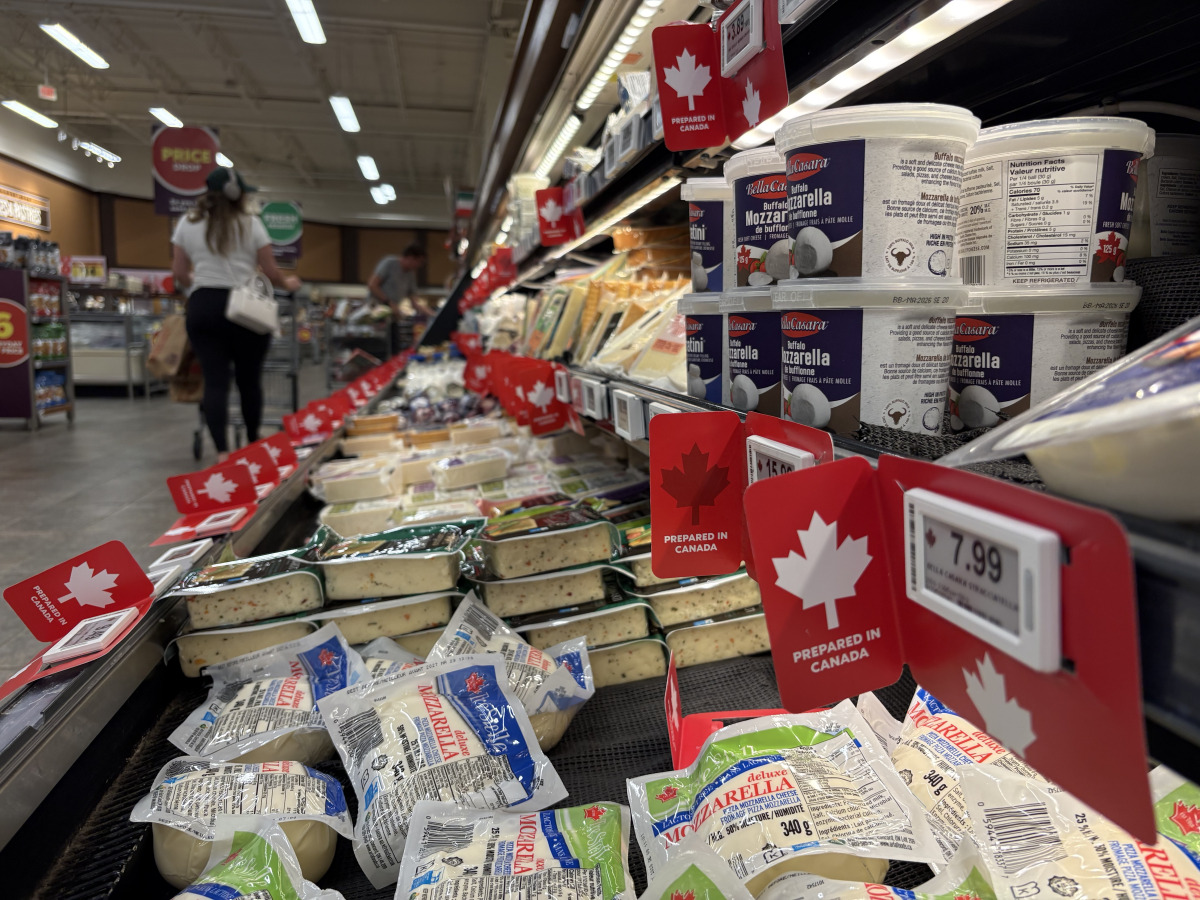 Supermarkets are emphasizing products made in Canada. (Joanna Slater/The Washington Post)
Over the past year, Little has worked to replace the products she buys from the U.S., checking labels and doing online research. An enthusiastic gardener, she uses plant markers to label the dozens of species in her yard. But recently, she wrote to their U.S. maker to ask where the steel came from. The company equivocated, she said. Little isn’t sure what she’ll do when she needs more.
On a recent sunny afternoon, she pulled into a farm store near Cambridge, Ontario. She took a collapsible plastic basket from her trunk and began filling it with locally made crackers, salsas and tortilla chips. Then she picked up a jar of tomato sauce. Was it made in Canada? The store’s proprietor, Tim Barrie, told her it was an Italian import.
Little placed it in her basket and smiled. “Anything but, right?”
Barrie, a fourth-generation asparagus farmer who also makes condiments and roasts coffee, said demand for his products has grown “immensely” over the past year. Each time Trump ratchets up his rhetoric - as he has over the past several weeks - Barrie said calls pour in from stores and supermarkets.
In April, Barrie launched a line of shortbread cookies. He’s selling 100 cases a week. “It’s crazy,” he said. He pointed to the maple leaf embossed on the top right-hand corner of the packaging. “I think the big thing is that.”
Some Canadians are taking their boycott beyond travel and groceries. Earlier this year, Petra Kassun-Mutch, an entrepreneurship expert and writer in Toronto, began looking for alternatives to U.S. technology platforms (she has a spreadsheet entitled “Sovereign Tech Plan”). She found European and Canadian alternatives to Adobe, Google Workspace, Zoom, Mailchimp and more. “It does take a bit of work, but you can untangle it,” she said.
On a recent evening, Angela Allt went for an after-work shopping run at a large supermarket in Guelph, Ontario. The cheese aisle was festooned with miniature Canadian flags indicating locally made products; the displays of several varieties of Doritos emphasized that they were, in fact, manufactured in Ontario.
Allt, a social worker, has drastically changed her shopping habits. “I had to switch laundry detergents, which cheesed me off because who doesn’t like Tide?” she asked. She’s discovered Canadian-made canned beans and salad dressings and cleaning products.
She has admitted defeat in some areas. Grapes, which she loves, almost always come from the United States. The same for celery. And then there’s Splenda: her husband can’t find a substitute he likes as much. “You’ve just got to suck it up and buy it,” Allt said.
She and her husband canceled a trip to New York last summer. “When all this blew up, it was just like, nope,” Allt said. They’re not going back anytime soon.
“There’s no way - no way,” Allt said. “Not until things change.”