Doha, Qatar: The Amir HH Sheikh Tamim bin Hamad Al-Thani said the North Field Gas project is progressing according to the set plans, with the aim of increasing the country’s LNG production capacity.
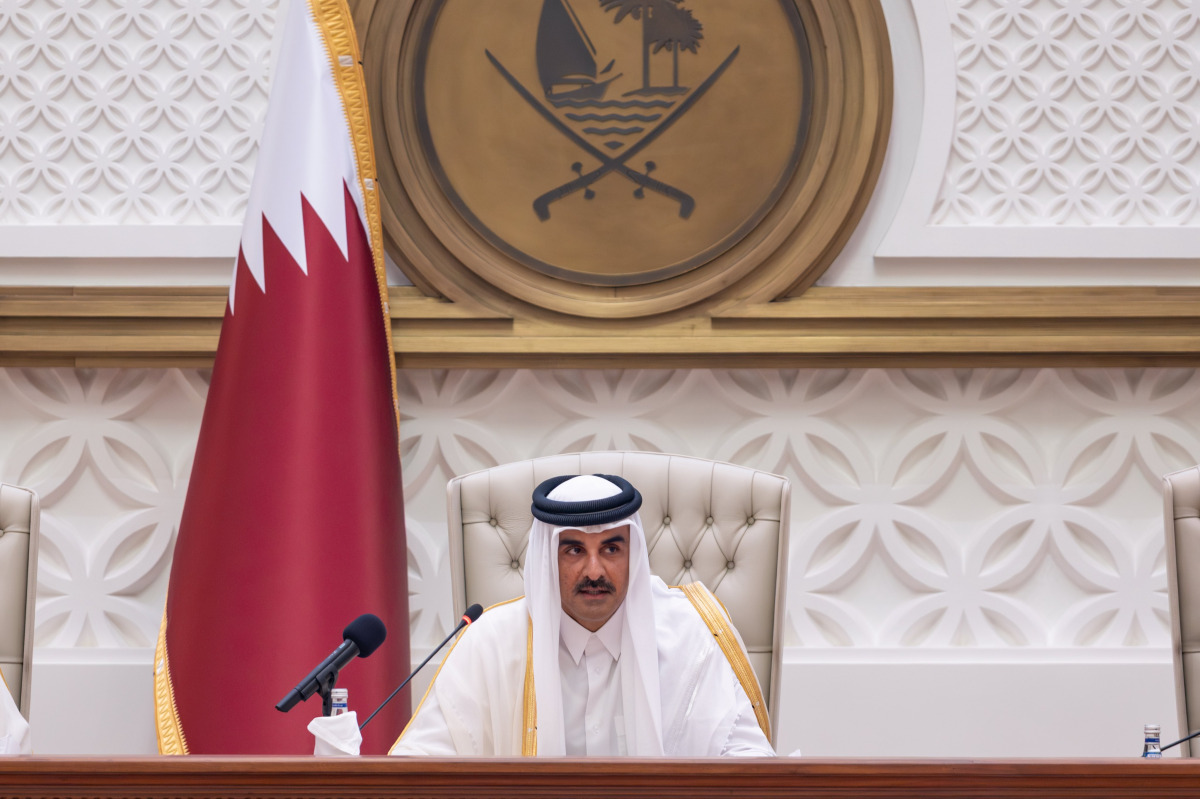
The Amir stated this on Tuesday, October 13, 2026, while opening the second ordinary session of the second legislative term, corresponding to the 55th annual session of the Shura Council, held at the Council's headquarters.
“In the energy sector, work on the expansion of the North Field Gas project is progressing according to the set plans, with the aim of increasing the country’s LNG production capacity. The Golden Pass project in the United States has also made significant progress, while QatarEnergy continues to expand its investments and international partnerships, alongside the development of petrochemical industries, solar energy projects, and efforts to strengthen water security,” the Amir said.
Addressing the regional crisis and the Iranian attack on Qatar's sovereignty, the Amir said, “From the very outset of the crisis, the state placed protecting people, securing their needs, and boosting economic activity at the forefront of its priorities. Its institutions, in cooperation with the private sector, worked to diversify supply routes and secure essential goods and strategic reserves.”
Qatar supplies approximately one-fifth of the world’s liquefied natural gas trade, making disruption to its exports significant for international markets and consumers, the Amir said. "The closure of the Strait of Hormuz, together with the direct damage inflicted on some energy facilities in Ras Laffan Industrial City, disrupted a significant portion of the country’s exports. However, the impact of these economic developments was primarily concentrated in the energy sector, while we ensured that the non-hydrocarbon sectors continued to grow, with their contribution reaching approximately 80% of real GDP. This reflects the resilience of the national economy and its ability to sustain growth under exceptional and complex circumstances,” the Amir added.