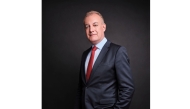
United Nations Development Programme (UNDP) Administrator, Alexander De Croo
Doha, Qatar: As governments and global institutions race to harness artificial intelligence (AI), digital transformation, and innovation-driven investment, last week’s Doha Forum offered a pointed reminder that technology alone cannot close widening gaps in peace, climate resilience, and economic opportunity.
The event, held under the theme ‘Justice in Action: Beyond Promises to Progress,’ brought together leaders shaping the future of development finance, digital governance, and conflict-resolution strategies, an agenda strongly reinforced by United Nations Development Programme (UNDP) Administrator Alexander De Croo, who spoke during a high-level panel.
He called for leveraging private-sector innovation and capital, particularly in fields such as digital infrastructure, AI-enabled public services, and green technology, by outlining two top priorities for the Qatar–UNDP collaboration.
“First, we want to deepen our joint work on innovation and systems transformation,” De Croo told The Peninsula. “Qatar’s visionary angel investment in UNDP’s Accelerator Labs Network was a game-changer in surfacing over 6,500 grassroots development solutions across the world, everything from climate action and clean energy to opening up new livelihood opportunities.”
The official noted that renewed funding is powering the transition into UNDP’s Digital, AI and Innovation Hub and the soon-to-launch Transformation Accelerator Network platforms designed to test, scale and fund breakthrough solutions to challenges like extremism, displacement and poverty.
His second priority centres on demonstrating that development is the most effective security investment, especially in active or post-conflict environments. “Through our collaboration with the Qatar Fund for Development (QFFD) and other national partners, UNDP aims to expand support for the Gaza Ceasefire Response Plan as conditions on the ground allow,” he said. De Croo mentioned that this involves moving beyond the 60-day phase of debris clearance and emergency service delivery toward restoring livelihoods and deploying blended-finance mechanisms to stabilise the financial sector, revive credit for micro, small and medium enterprises, and leverage private-sector capital. He noted, “This is about enabling a wider economic recovery and reconstruction.”
On the other hand, the Administrator stressed that support for basic services in Syria, including the civil service payroll, continues.
“More broadly, our goal is a more strategic Qatar–UNDP portfolio that links immediate relief to systems transformation, innovation, and digital transformation, and economic empowerment, particularly for women and young people,” De Croo said. “It’s about turning vital daily assistance into long-term, systemic change.”
He reinforced UNDP’s operational philosophy by stating, “I want to be very clear about how UNDP works. We listen, we partner, and we deliver. We listen closely to countries and communities. We partner boldly with a wide range of partners, including governments, the private sector, and key partners like Qatar. And we deliver real results, from helping countries expand jobs and clean energy, to unlocking billions in sustainable finance that turns plans into projects people can see and touch.”
De Croo said that the recently-concluded Forum underscored a defining message and reminded of a simple truth.
“Global commitments to peace, climate, and inclusive growth in isolation are not enough on their own. People around the world are not asking for more declarations. They want to see action and results,” he said.
“Mediation is a core pillar of Qatari foreign policy, and the Forum once again positioned Doha as a platform for open, constructive dialogue, whether on Gaza, Syria, Ukraine, and beyond, with a strong focus on de-escalation and practical problem-solving,” he remarked.
“For the UNDP, this sends a clear message. Qatar is a strategic partner in advancing global conflict prevention, peacebuilding, and helping countries to transition from crisis to recovery.”
De Croo also used the platform to outline his broader agenda and topmost priority as the newly appointed UNDP Administrator. “I want to put development back at the heart of geopolitics,” he said. “The world must recognise that investing in sustainable development is the smartest way to address the root causes of instability, extremism, and forced migration rather than responding to crises after they happen.”
He further added, “Development is not an abstract ambition. It is electricity in a clinic, a safer home, a job that lifts a family. That is what UNDP is here to deliver, every day, in every place where people are counting on us.”