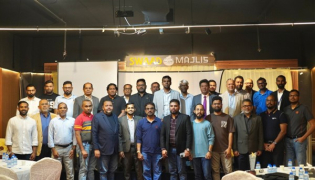
Doha: The Qatar Falcon Genome Project of Al Gannas Qatari Society has announced the development of a highly accurate genetic examination, the first of its kind, to identify falcon breeds and detect the crossbreeding ratios of captive-bred falcons.
Dr. Khalid bin Ibrahim Al Sulaiti, General Manager of Cultural Village Foundation, Katara, affirmed that the accomplishment of the Qatar Falcon Genome Project is considered as a significant scientific success, and it shows the extent of the development in Qatar at all levels.
He explained that Katara, always hosts such achievements, due to the diversity of its projects, which are related to reviving heritage in the spirit of the times and enhancing Qatari identity.
He also emphasised that this scientific discovery would consolidate the role of Qatar and its global pioneering position in preserving the heritage of ‘falconry’, which is considered a global human heritage registered in the Unesco, and practising the hobby of falconry on scientific grounds.
It will also help researchers to provide care for falcons and treat them according to the highest standards.
Ali bin Khatem Al Mehshadi, Chairman of the Board of Directors of the Al Gannas Qatari Society said: “The Qatar Falcon Genome Project has been a dream for many years, in order to preserve falcons and wildlife and ensure the ecological balance by scientifically studied methods. Eventually, due to the relentless efforts by the project, and agreements concluded by Al Gannas Society with local and international entities, including Qatar University, represented by the Biomedical Research Center, to cooperate in the research and scientific projects specialized in falcons, we witness today this impressive result.”
Farouk Al Ejli, Director of the Qatar Falcon Genome Project, and a specialist in genomics said that the examination was based on the latest advances in genetics, using state-of-the-art scientific technologies, which has allowed access to high-quality genetic information of several species of falcons, that were deposited in international bio-information repositories, followed by a large-scale survey of falcon populations.
Al Ejli explained that the genetic examination accurately uncovers the proportions of crossbreeding in falcons, namely those that have been bred in captivity in breeding farms around the world. “The aim of developing the examination is to enable falcon conservation projects in Qatar and abroad to detect the crossbred populations and exclude them from the breeding process, to ensure the reproduction of only pure breeds, especially the endangered ones, in preparation for their release to the wild based on their genetic fingerprints, without risking to disturb the wild gene pool,” said Al Ejli.
Muhammad bin Abdul Latif Al Misnad, Vice Chairman of Al Gannas Society, said: “We are proud of this scientific attainment in the Qatar Falcon Genome Project, which was launched by the Society in January 2016, as is one of the most important recommendations affirmed by the Second Qatar International Falcon Veterinary Conference.” Sheikh Ali bin Abdullah bin Thani Al Thani, owner of the Umm Heesh Reserve for breeding Houbara and falcons, said the achievement of the project was a major scientific discovery, through which falcons and their factions genes can be shown, distinguishing their strains, which is a major move to preserve and increase falcons.