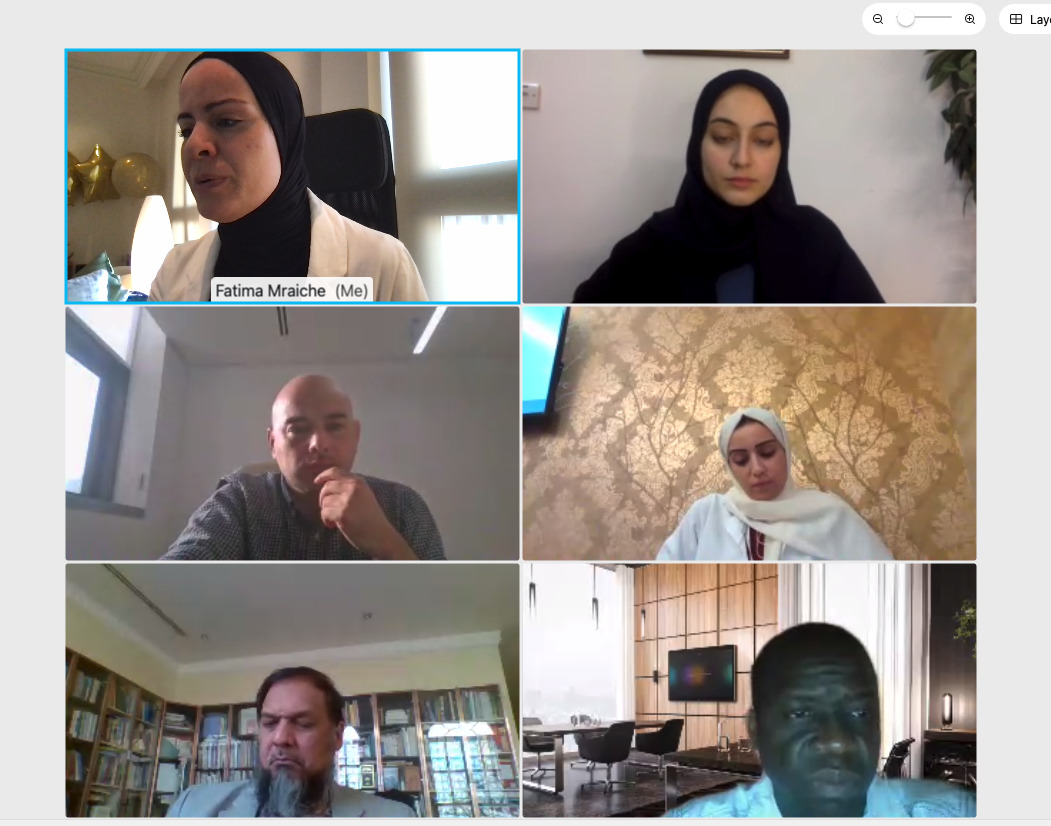
QU-CPH MSc graduate with other officials during an event.
Doha: MSc graduate of Qatar University’s College of Pharmacy (QU-CPH), Samaher Alshaibi recently completed and defended her Masters of Pharmacy (MSc) thesis titled ‘Cost-effectiveness Analysis of Ibuprofen versus Indomethacin or Paracetamol for the Treatment of Patent Ductus Arteriosus (PDA) in Preterm Neonates.’
The research was supervised by Dr. Daoud Al-Badriyeh, a QU-CPH Associate Professor of Clinical Pharmacy and Practice and an expert in Health Economics and Outcomes Research. QU-CPH Professor and Head of Clinical Pharmacy and Practice, Dr. Ahmed Awaisu, also co-supervised the research.
The research is the first health economics analysis, nationally and internationally, to evaluate the cost-effectiveness among all main pharmacotherapeutic options available for PDA closure in premature neonates in Qatar. It was conducted through the Women Wellness and Research Center, a member of the primary healthcare provider in Qatar, Hamad Medical Corporation (HMC).
The optimal management of PDA, which is an opening between the two major blood vessels leading from the heart that fails to close after birth, is highly controversial and remains unclear. There are no universal guidelines or consensus regarding the most appropriate pharmacological treatment and route of administration. Currently, the selection of pharmacological treatment for PDA is dependent on individual institutions. In HMC in Qatar, the preferred first-line treatment is intravenous (IV) infusion ibuprofen, which is not based on any local comparative evidence, even though the IV indomethacin is also available in the HMC drug formulary for PDA closure. In Qatar, there is an increasing trend of using oral ibuprofen as well as oral paracetamol.
Currently, the simulation-based approach of evaluation is the future of healthcare and is appropriate. The current study was based on a hypothetical cohort of 5,000 neonates in Qatar. Economic and clinical data were obtained from robust meta-analyses and local databases and practice guidelines.
Samaher said, “While it is not easy to complete the MSc research within the minimum required duration, I always believed that I could do it with the quality of mentorship I received. The research topic was of particular interest to me. But apart from the topic, I gained much research, communication, and collaboration skills. I published in international journals and presented at international events. I am very satisfied with my MSc experiences and the outputs generated.”
“This analysis is the first economic evaluation in Qatar and the region evaluating ibuprofen versus indomethacin or ibuprofen versus paracetamol for PDA treatment in premature infants, which can be a useful guide to decision-makers on choosing evidence-based therapy. Further, as treatments in the neonatal intensive care unit (NICU) are highly costly, incorporating the cost factor when comparing different treatment options can help save hospital resources in the long run,” she added.
Dr. Al Badriyeh said, “This research is interesting. Ibuprofen and paracetamol are examples of cheap medications. One would assume that there is no point in performing any comparative economic evaluations among such medications. However, given the different consequences associated with drugs, the cost of a baby on these medications can vary between QR300,000 and over QR500,000.”
Dr. Fatima Mraiche, Head of Research and Graduate Studies at QU-CPH, said, “It is always a pleasure to see our students and faculty at QU-CPH address practice-related questions using rigorous research methodology. This is a clear indication of the essential bridge between academy and practice, one which leads to progressive changes in the health and well-being of society.”