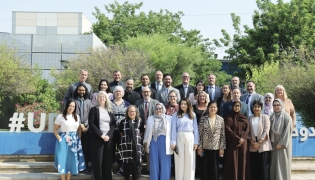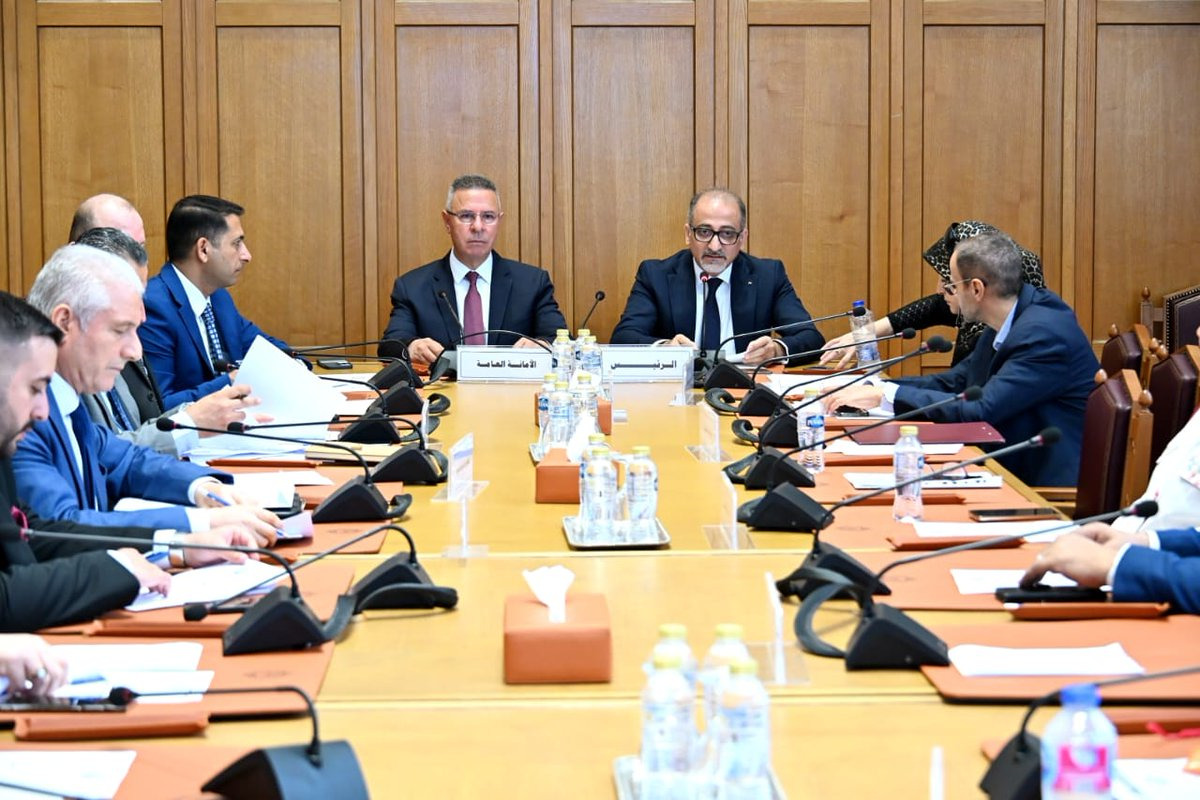
Cairo: The 111th session of the Committee for Educational Programs for Arab Students in the Occupied Arab Territories commenced at the headquarters of the Arab League in Cairo, Sunday, under the chairmanship of Palestine.
Over the course of five days, the committee will discuss the challenges imposed by the Israeli occupation authorities, foremost among them the repeated attacks against Palestinian educational institutions, the targeting of students, teachers, and educational curricula, and the ongoing restrictions and measures aimed at obstructing and undermining Palestinian education.
These actions, according to the committee, deprive Palestinians and Arabs in the occupied Arab territories of their most basic rights, particularly the right to education.
The committee will also examine ways to counter efforts targeting Palestinian educational curricula and the political and financial pressures placed upon them.
In addition, it will discuss Arab and international support for education in Palestine and the occupied Arab territories, as well as efforts to alleviate the suffering of Palestinian students and strengthen their resilience in the face of ongoing challenges.
The committee will further address content within Israeli curricula that promotes violence and racism, considering such material a serious violation of international human rights conventions and agreements.
It will also explore ways to confront these practices and defend the educational rights of the Palestinian people.
In his opening remarks, Assistant Secretary-General and head of the Palestine and Occupied Arab Territories sector at the Arab League, Ambassador Faed Mustafa said that the education sector and all of its components were among the primary targets of Israeli destruction.
This has resulted in a major catastrophe, given the scale of human and material losses affecting every aspect of education, Ambassador Mustafa added.
He noted that Palestine's education sector, particularly in the Gaza Strip, is facing one of the most severe crises in its history as a result of what he described as a war of extermination waged by the occupation.
The Assistant Secretary-General of the Arab League said that this had been accompanied by widespread destruction of educational infrastructure, direct targeting of students and teachers, and attacks on facilities belonging to the United Nations Relief and Works Agency for Palestine Refugees in the Near East, along with escalating restrictions imposed on the agency.
Educational genocide in the occupied Palestinian territories would have devastating consequences extending beyond the current generation to future generations as well, worsening social and economic crises and weakening society's ability to remain resilient and recover, said Ambassador Mustafa.
He emphasized that the damage inflicted on the education sector in Gaza was not merely a war against infrastructure rather, was a direct attack on Palestinian minds and identity, and a systematic attempt to deprive Palestinians of the tools of knowledge and culture.