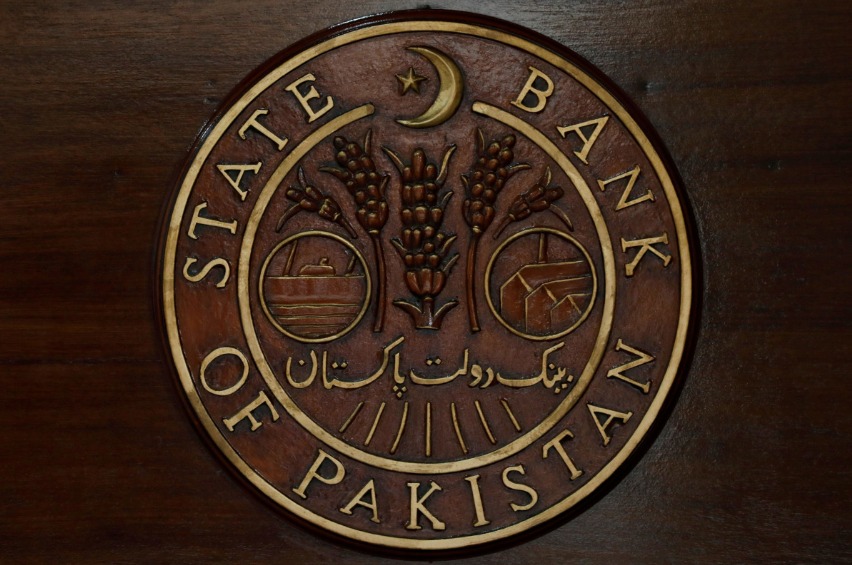
Pakistan State Bank logo pictured at a reception desk in Karachi, Pakistan. File photo for representational purposes only.
Islamabad: Pakistan's central bank on Monday kept its benchmark policy rate unchanged at 11.5 percent, with officials citing unchanged inflation trajectory while warning of external geopolitical tensions and weather-related disruptions
citing a broadly unchanged inflation outlook and rising risks from geopolitical tensions and weather-related disruptions.
A majority of seven of 10 members of the State Bank of Pakistan's Monetary Policy Committee (MPC) took the decision at its second meeting of the 2026-27 fiscal year.
The MPC said headline inflation rose to 11.1 percent year-on-year in August from 9.2 percent in July, mainly due to higher food prices, while energy inflation remained elevated amid the intensification of the Middle East conflict.
The central bank said external account pressures remained contained, supported by robust workers' remittances and higher financial inflows, while economic activity started to gradually pick up after slowing in the fourth quarter of fiscal year 2025-26.
The MPC said the current monetary policy stance remained appropriate to guide inflation toward its medium-term target range of 5 to 7 percent, adding that inflation is expected to gradually ease toward the upper bound of the range by June 2027.
However, it warned that volatility in global commodity prices, adjustments in electricity and gas tariffs, supply disruptions and unexpected movements in food prices could pose significant risks to the inflation outlook.
The committee also stressed the need to maintain a prudent monetary and fiscal policy mix, build buffers against supply shocks and accelerate structural reforms to enhance economic resilience and support sustainable growth.