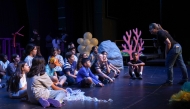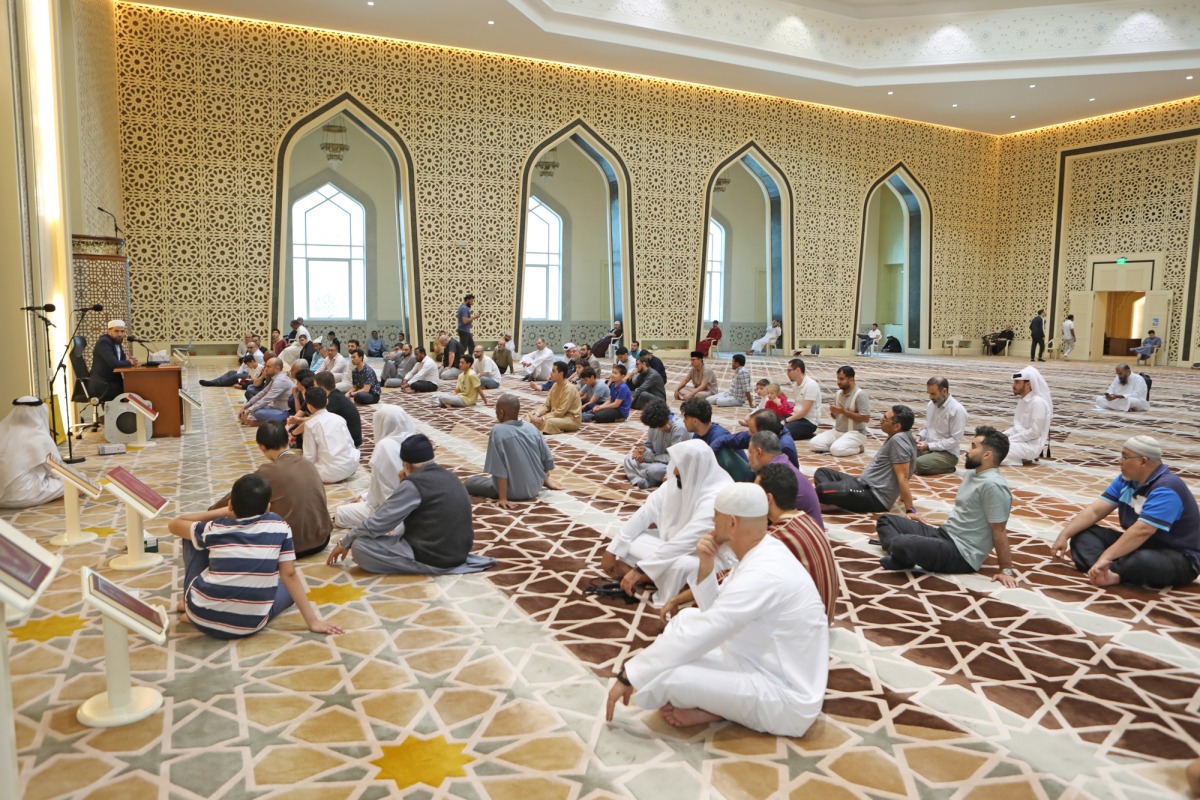
Attendees during a da’wah lesson at one of the mosques.
Doha, Qatar: The Sheikh Abdullah bin Zaid Al Mahmoud Islamic Cultural Centre, under the Ministry of Awqaf and Islamic Affairs, has launched a new series of English-language da’wah lessons targeting Muslim expatriate communities who speak English as part of its ongoing efforts to promote religious awareness and strengthen understanding of Islamic values.
The initiative was rolled out across three mosques located in The Pearl, Lusail, and Al Dafna, drawing strong participation from dozens of attendees. The lectures covered a range of faith-based and educational topics relevant to daily life, aiming to strengthen individuals’ connection with God and reinforce Islamic values in behaviour and practice.
Dr. Saleh bin Ali Al Marri, Director of the Centre, said the continuation of these lessons follows the notable success of the programme during the holy month of Ramadan.
He noted that this success highlights a clear demand among English-speaking communities for specialised religious programmes tailored to their cultural and linguistic context.
He added that the lessons focus on deepening understanding of key concepts such as obedience to God, maintaining a strong spiritual connection beyond Ramadan, and making meaningful use of time and effort to build a balanced and consistent relationship with the Almighty, ultimately contributing to personal conduct as well as spiritual and social stability.
The sessions were held at Sheikh Hamad bin Jassim bin Jabr Al Thani Mosque in The Pearl, Mohammed bin Hamad Al Mana Mosque in Lusail, and Ibrahim Al Khalil Mosque in Al Dafna. Attendees expressed positive feedback, praising the relevance of the topics to their daily lives and needs.
The initiative underscores the importance of such programmes in strengthening Islamic identity among non-Arabic-speaking Muslims, enabling them to better understand the teachings of Islam in a balanced and authentic way. It also serves as an effective platform to bridge language barriers, enhance community engagement, and promote values of moderation and coexistence.
The series aligns with the Centre’s broader mission to build cultural and religious bridges with diverse communities and to deliver high-quality programmes in multiple languages that reflect the tolerance of Islam and promote universal ethical values.