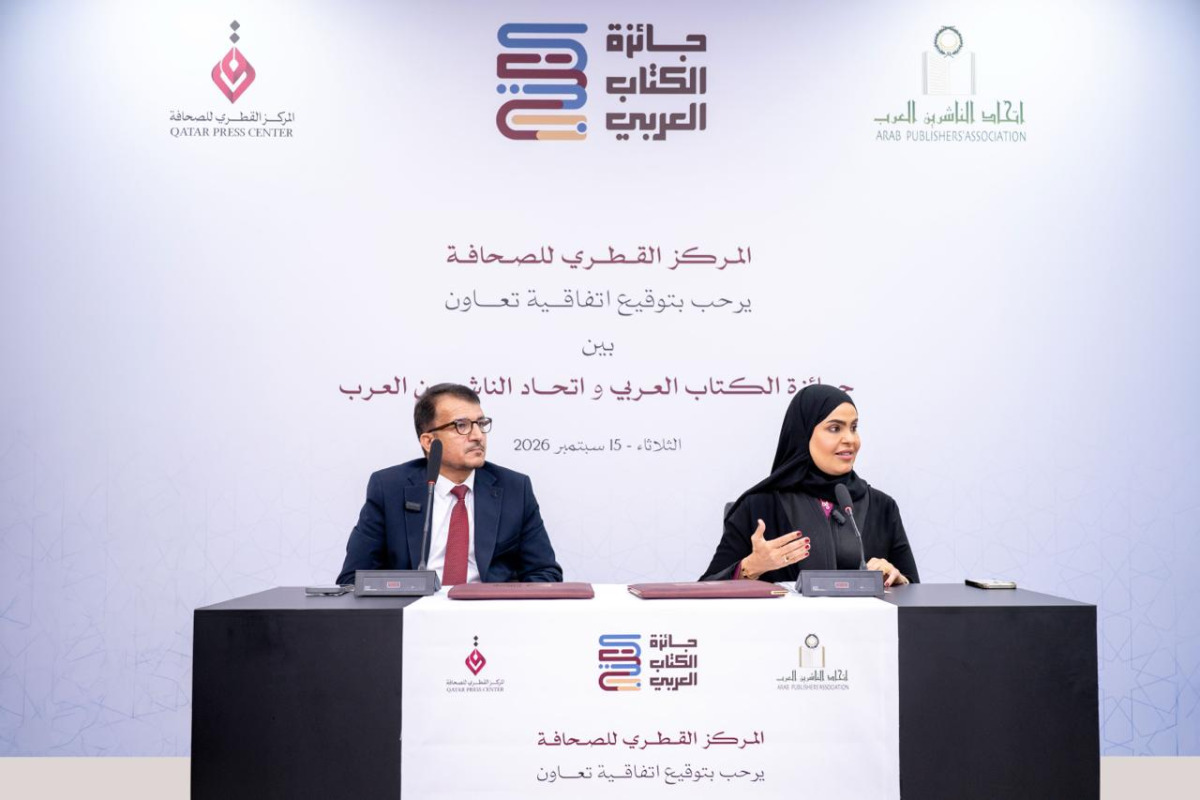
Executive Director of the Arab Book Award Dr. Naji Al-Sharif and Chair of the Arab Publishers Union's Arab Relations Committee Dr. Aisha Jassim Al-Kuwari during the signing of the agreement.
Doha: The Arab Book Award and the Arab Publishers Union have signed a cooperation agreement aimed at deepening ties between the two organizations in support of Arabic-language publishing, with plans to expand joint work in events, seminars, and the exchange of professional expertise.
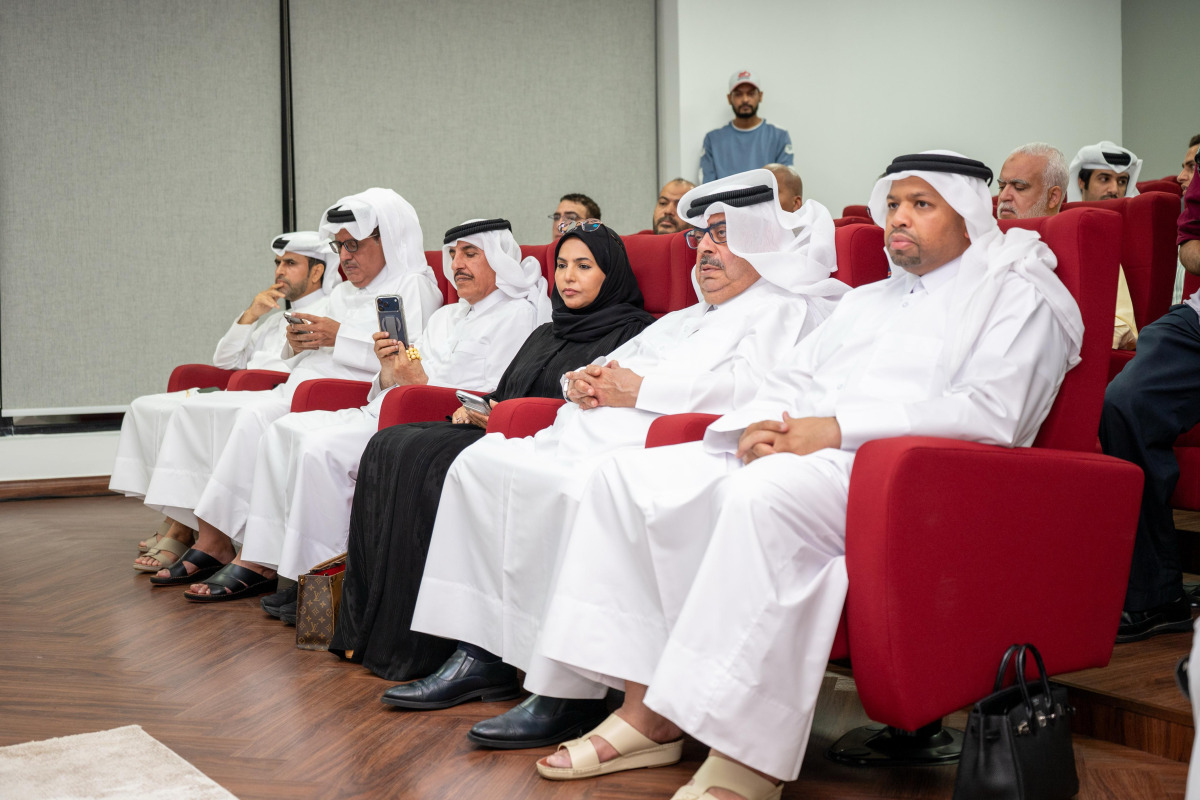
The agreement was signed by Executive Director of the Arab Book Award Dr. Naji Al-Sharif, and Chair of the Arab Publishers Union's Arab Relations Committee Dr. Aisha Jassim Al-Kuwari at a press conference held at the Qatari Press Center. Officials from both organizations attended, along with members of the local cultural community.
The agreement is aimed to establish a framework for cooperation in a number of fields related to books and the publishing industry, and to draw on the accumulated expertise of both sides in serving authors, publishers, and institutions concerned with books.
Al-Sharif said the accord builds on groundwork laid with Union President Mohammed Rashad and reflects the Award's broader push to forge partnerships across the Arab world — following a similar agreement last year with Oman's Al-Zubair Foundation, with more deals reportedly in the works with institutions in other Arab countries.
He described the Union, which has represented authors' and publishers' rights since its founding in 1962, as "a pivotal institution" for the Award's mission. Under the new pact, the two sides will collaborate on publishing support for individual authors and institutions alike, cultural programming, and specialist knowledge-sharing, with the aim of expanding Arabic literature's reach both regionally and internationally.
Aisha Al-Kuwari called the agreement "an important step" toward joint programming that serves authors, publishers, and readers, and said the Union's six decades of institutional experience position it as a valuable partner for research and events tied to the publishing industry.
Turning to broader industry trends, Al-Kuwari addressed what she called the "attention economy," in which publishers increasingly compete not just to reach readers but to hold their focus amid an overwhelming volume of digital content.
She argued that the printed book has held its ground despite years of predictions about its decline, pointing to sustained turnout at fairs such as the Doha International Book Fair as evidence that the reader-book relationship remains strong. E-books, audiobooks and other digital formats, she added, should be seen as complements to print rather than rivals.
Other speakers echoed the theme. Dr. Hanan Al-Fayyad, media adviser to the Arab Book Award, said supporting Arabic-authored books — whether from individuals, institutions, or publishing houses — is central to preserving Arab cultural identity, and praised the growing number of specialized literary prizes in areas such as translation and children's literature.
Ibrahim Al-Buhashem Al-Sayed, Director of Qatar's National Library and Union vice president, said libraries have a critical role in keeping print relevant for younger generations, citing outreach programs that connect schools and youth with books, manuscripts and heritage materials.
Sadiq Al-Ammari, Director of the Qatari Press Center, offered a more cautionary note, highlighting the gap between the Arab world's self-image as "the nation that reads" and the ongoing decline of print newspapers, magazines and books across the region. Strong book-fair sales, he warned, do not necessarily translate into higher readership, since many buyers never finish the books they purchase. The real test, he said, is whether reading becomes a year-round habit rather than a seasonal event tied to fairs.