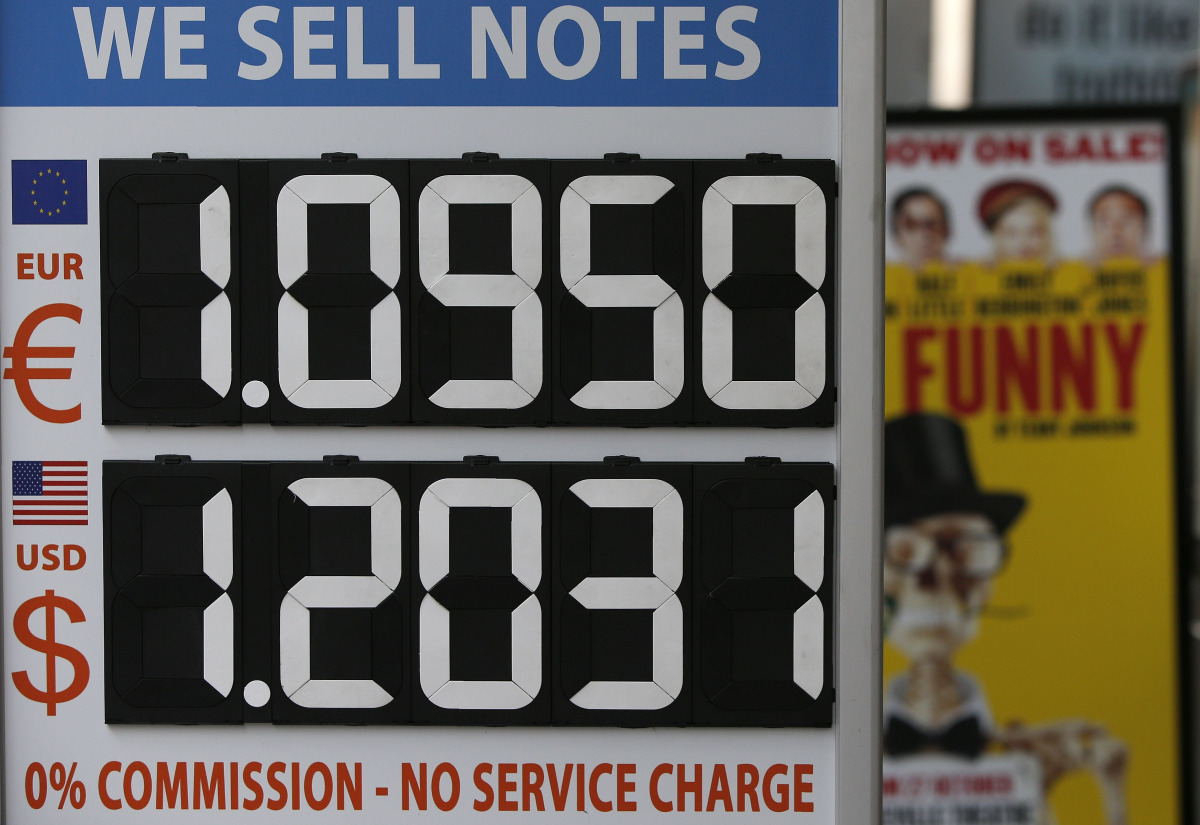
A board diplaying the price of Euro and US dollars against British pound Sterling is pictured outside a currency exchange store in central London on October 13, 2016. (AFP / Adrian DENNIS)
DOHA: The UK’s likely decision to go for “hard Brexit” could prove detrimental for its economy. By choosing hard Brexit, the UK is incurring economic costs to pay for its political choices, QNB said yesterday.
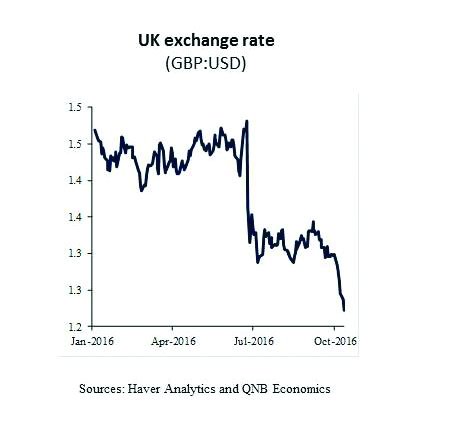
The recent plunge of the British pound has brought back into focus the negative impact of Brexit on the UK economy. Following a sharp deterioration in economic activity in the immediate aftermath of the Brexit vote, the economy has shown resilience throughout the summer months. This was probably due to expectations that a soft version of Brexit will prevail. Some had even hoped that the Brexit decision could be overturned. “However, recent statements by UK government officials have increased the likelihood of “hard Brexit”, which could prove detrimental for the economy”, QNB analysts said.
Economic activity data in the UK have rebounded following a sharp decline in the immediate aftermath of the Brexit vote. Consumer confidence picked up in September after falling to its lowest level since end-2013 in July. Purchasing Managers Index surveys pointed to expanding manufacturing, services and construction sectors in September in contrast to the broad-based contraction registered in July. And real GDP growth in the second quarter was revised up from 0.6 percent to 0.7 percent.
The rebound was probably related to perceptions that Brexit could be overturned or watered down into a “soft Brexit” version.
The Brexit question has always been about the trade-off between economics (having access to the European single market) and political choices (taking control over UK immigration).
The soft Brexit version favours economics over politics as it would allow free movement of people in exchange for access to the European single market. It does not represent a radical change from the world before the Brexit referendum. It is, therefore, not surprising that the data showed a rebound in activity when this outcome seemed likely.
The likelihood of soft Brexit was also supported by the fact that the government did not seem to be in a rush to invoke Article 50 of the Lisbon Treaty (the trigger for the start of the official exit negotiations).
However, recent statements by UK officials have raised the odds of hard Brexit. The UK Prime Minister, Theresa May, has said that Article 50 will be invoked before the end of March 2017. The Prime Minister also explicitly ruled out the Norwegian and the Swiss models as bases for a future relationship with the European Union (EU) and highlighted that the immigration issue is a red line for her government.
Indeed, the government seems insistent on controlling immigration even if it means losing access to the single market. In response, EU officials have reiterated their stance that full access to the single market can only be achieved in exchange for the four freedoms — freedom of movement of goods, services, capital and, crucially, people. The EU does not seem willing to make any exceptions.
The exchange between the UK and the EU may be a negotiating tactic, but the increasing risk of hard Brexit could still take its toll on the economy.
Losing access to the single market is likely to be detrimental to UK exports, given that the EU is the largest export destination. The uncertainty about the future relationship between the UK and the EU could depress investment further. The Bank of England’s surveys of investment intentions suggest a sharp downturn in the summer, despite the overall stabilisation of data. Firms providing financial services in the UK are also at risk of losing their passporting rights to operate in the EU and may decide to move out of London. This would be a blow to the economy, since financial services account for 7 percent of UK GDP.
In short, the rebound of the UK economy in the summer was due to expectations that a soft Brexit outcome could be reached. But economic performance could now reverse given the government’s hawkish stance to limit immigration even if it compromises access to the single market. As a result, QNB expects UK growth to slow to 0.7 percent in 2017 from 1.8 percent in 2016. Given the recent plunge of the pound, which fell to a 30-year low against the US dollar, financial markets seem to agree.