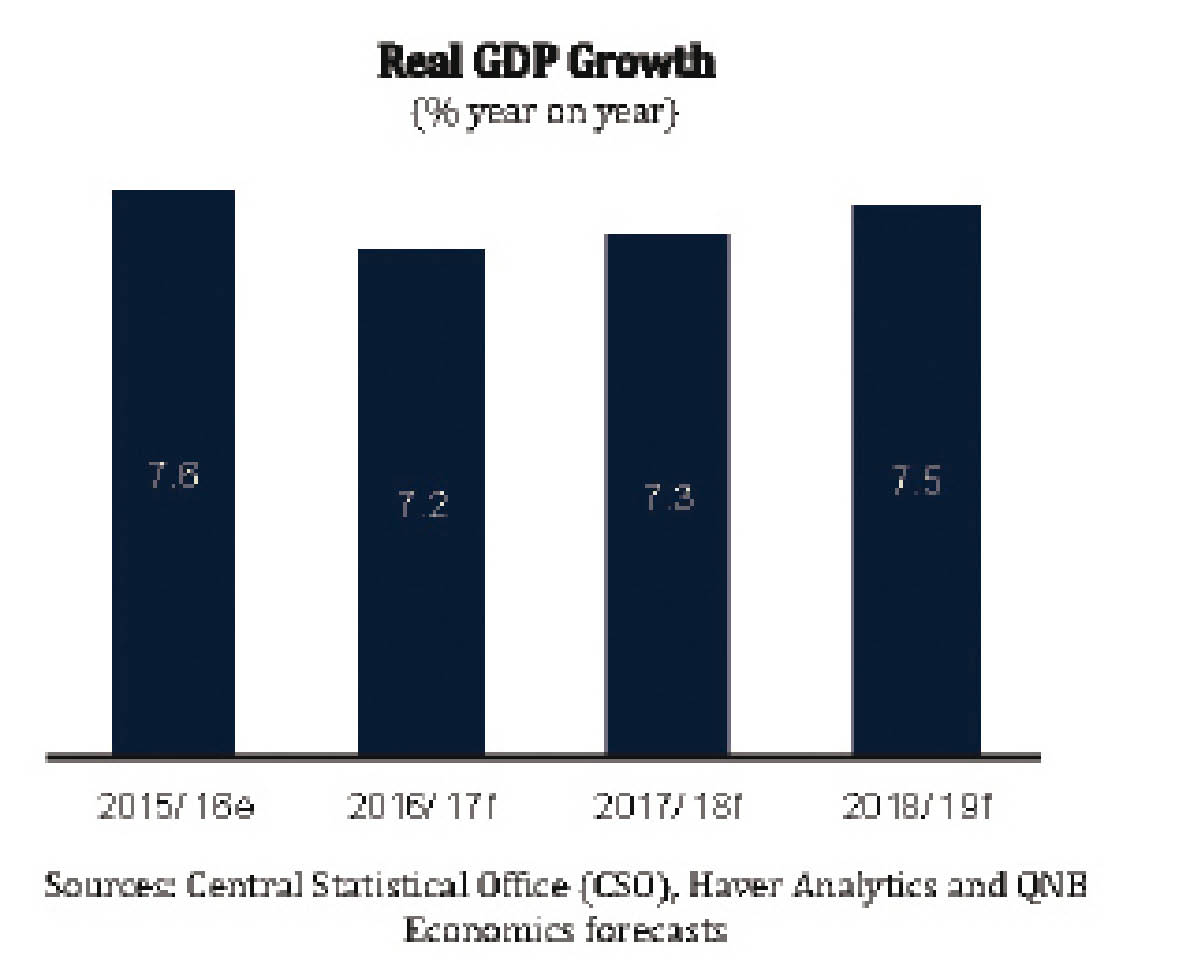
DOHA: QNB expects real GDP growth of India to accelerate from 7.2 percent in 2016-17 to 7.3 percent in 2017-18 and 7.5 percent in 2018-19 as domestic reforms are implemented, said the bank in its ‘India Economic Insight 2016’ report released yesterday.
Key reforms include unifying goods and services taxes, restarting stalled investment projects and restructuring the banking system. Reforms and higher foreign ownership limits should encourage the participation of foreign and private investors, said the report.
Inflation is expected to rise to 5.2 percent this year, then moderate thereafter on lower food prices. A number of temporary factors are expected to raise inflation in 2016-17. Higher rent inflation due to higher public sector allowances; higher power tariffs; and an increase in the services tax rate.
Other factors should keep inflation low over the medium term. A normalisation of harvests should lower food inflation; oil prices should remain moderate; and a new inflation target of 4 percent
Fiscal consolidation is planned to continue with the deficit narrowing from an estimated 6.6 percent of GDP in 2015/16 to 5.2 percent in 2018/19
Expenditure is expected to fall slightly as lower current spending (mainly due to subsidy cuts on food) offsets higher spending on infrastructure investment. Revenue should rise due to higher excise duties, an increase in the services tax rate and proceeds from telecommunications auctions and privatisations.
Growth in the banking asset is expected to slow to 9 percent in 2016-17 before picking up to 10 percent in 2017-18 and 11 percent in 2018-19 as state banks’ balance sheets are cleaned up and the sector is recapitalised.
In 2016-17, the Reserve Bank of India is expected to press banks to address non performing loans, which could be a drag on growth and profitability. The government plans to inject $10.4bn into state-owned banks over the next four years, front-loaded to 2016-17.The Peninsula