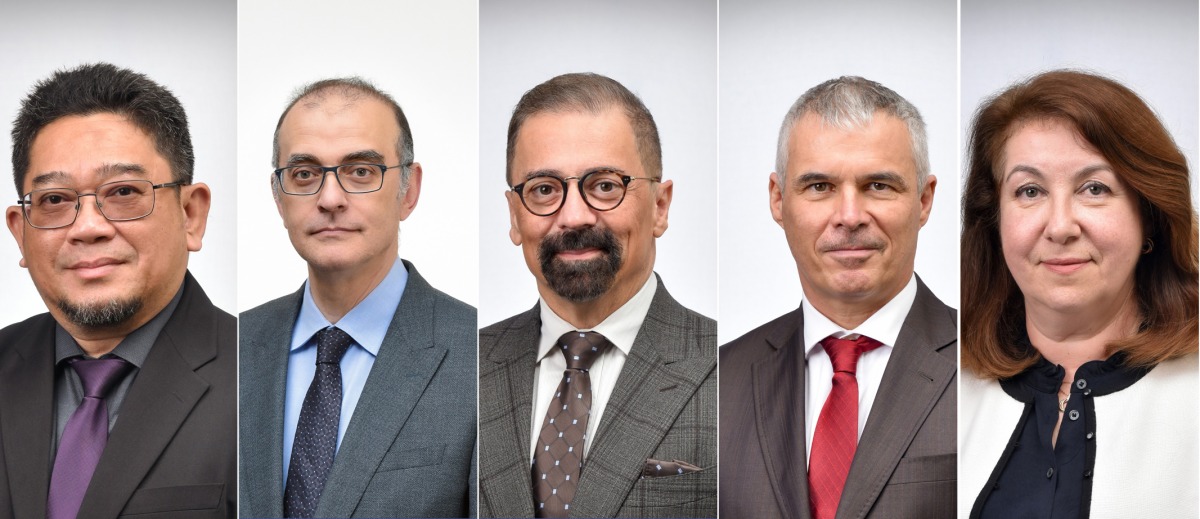
From left: Dr. Raja Mazuir Shah, Dr. Zakaria Maamar, Dr. Shahrokh Esfandiari, Dr. Vincent Mangematin, and Dr. Rosie Bateson.
Doha, Qatar: As the University of Doha for Science and Technology (UDST) celebrates the graduation of a new cohort of students, the institute continues to strengthen its role in shaping qualified national talents equipped with the knowledge, practical expertise, and future-focused skills needed to contribute to Qatar’s development journey and the realisation of Qatar National Vision 2030.
Through an educational ecosystem rooted in applied learning, innovation, industry collaboration, and workforce readiness, the University continues to bridge education with the evolving demands of future sectors.
This year’s graduating class included 1,321 graduates representing 51 nationalities, reflecting the academic and cultural diversity that defines the University community.
Graduates were distributed across a wide range of colleges and disciplines, including 484 graduates from the College of Business, 285 from Computing and Information Technology programmes, 341 from Engineering programs, in addition to 211 graduates from healthcare-related fields. The Class of 2026 also included 1,111 bachelor’s degree graduates, 57 master’s degree graduates, and 153 diploma and certificate graduates.
College deans emphasised that today’s graduates represent far more than academic outcomes. They are emerging talents prepared to contribute to the advancement of priority sectors and to play an active role in shaping the future knowledge economy through innovation, adaptability, and applied expertise.
Dr. Raja Mazuir Shah, Dean of the College of Engineering and Technology, described the College’s graduates as a new generation of engineers and technologists capable of transforming challenges into practical solutions that serve society and vital sectors across the country.
He emphasised that the College focuses on preparing students in line with the needs of modern industry through advanced laboratories and academic programs centered on innovation and applied learning.
Dr. Shah noted that engineering and technology fields have become fundamental pillars in enhancing quality of life and supporting sustainable development, adding that graduates possess the skills necessary to contribute to future projects and the industrial and technological transformations taking place in the country.
Dr. Zakaria Maamar, Dean of the College of Computing and Information Technology, stated that the College’s graduates represent an essential part of the future digital economy, amid growing demand for specialisations related to artificial intelligence, cybersecurity, and quantum computing.
He explained that the College is committed to developing students’ analytical and critical thinking, problem-solving, and entrepreneurial skills through a modern experiential educational environment that injects real case studies into academic study. He added that graduates enjoy broad career opportunities in the job market, while some continue their academic and research journeys within Qatar and abroad.
Dr. Shahrokh Esfandiari, Dean of the College of Health Sciences, affirmed that investing in healthcare education is ultimately an investment in the health, well-being, and future resilience of society. He noted that the healthcare sector is evolving rapidly and requires highly qualified professionals who combine scientific knowledge, clinical competence, innovation, and compassion.
He emphasised that the College of Health Sciences is committed to preparing graduates who are capable of responding to the evolving needs of Qatar’s healthcare system through applied education, experiential learning, research, and strong partnerships with leading healthcare institutions.
Dr. Esfandiari added that students benefit from advanced practical and academic training environments that strengthen their professional readiness and ability to contribute meaningfully to healthcare delivery and community well-being. He expressed pride in the graduates, describing them as a generation prepared to lead, innovate, and make a lasting impact on society.”
Dr. Vincent Mangematin, Dean of the College of Business, stated that today’s business environment requires graduates who possess adaptability, innovation, and decision-making skills. He emphasised that the College works to prepare students to become leaders and changemakers across various economic sectors.
He pointed out that the College’s academic programmes combine theoretical knowledge with practical application through projects and field training in collaboration with the business sector, providing students with real-world experiences that strengthen their professional readiness. He added that graduates possess a competitive advantage that enables them to contribute to the national economy and entrepreneurship.
Dr. Rosie Bateson, Dean of the College of General Education, affirmed that the College offers the common gateway courses in students’ academic journey, by equipping them with knowledge and the intellectual and cognitive skills that ensure success across all disciplines.
She explained that the General Education Requirements focus on developing basic subject knowledge as well as critical thinking, research, analysis, and communication skills. By enhancing global awareness and understanding of contemporary societal issues, the College further encourages learning and engagement.
Dr. Bateson also stressed that the General Education Requirements focus on developing basic subject knowledge as well as critical thinking, research, analysis, and communication skills. By enhancing global awareness and understanding of contemporary societal issues, the College further encourages learning and engagement.
The College also offers distinctive bachelor’s and master’s programmes in Teaching STEM and STEM Education that align with Qatar’s needs and the requirements of future sectors. These programmes are supported by the ‘Tomouh’ scholarship programme within Qatar, reflecting the importance of preparing qualified national competencies in vital fields.
She added that these skills and experiences extend beyond academic life, serving as a strong foundation for preparing graduates capable of succeeding and making an impact in future fields.
This year’s graduates step into their next chapter carrying achievements that reflect the University of Doha for Science and Technology’s growing vision toward future-driven disciplines and evolving industries.
The Class of 2026 marks several academic milestones for the University, including the graduation of the first cohort from the Digital Communication and Media Production programme, developed in collaboration with Qatar Media Corporation, alongside the first graduates of Construction Engineering, the first cohort of the Master of Science in Artificial Intelligence and Cognitive Cybersecurity, as well as the inaugural graduates of the Master of Science in Process Safety.
These milestones go beyond the launch of new academic programmes as they reflect the University’s continued commitment to anticipating the needs of tomorrow’s workforce and aligning education with the accelerating pace of digital transformation, technological advancement, and national development priorities.
Through specialised applied education pathways, the University continues to prepare graduates equipped not only with technical expertise, but with the adaptability, innovation, and forward-thinking mindset needed to lead future sectors and contribute to the realization of Qatar National Vision 2030.