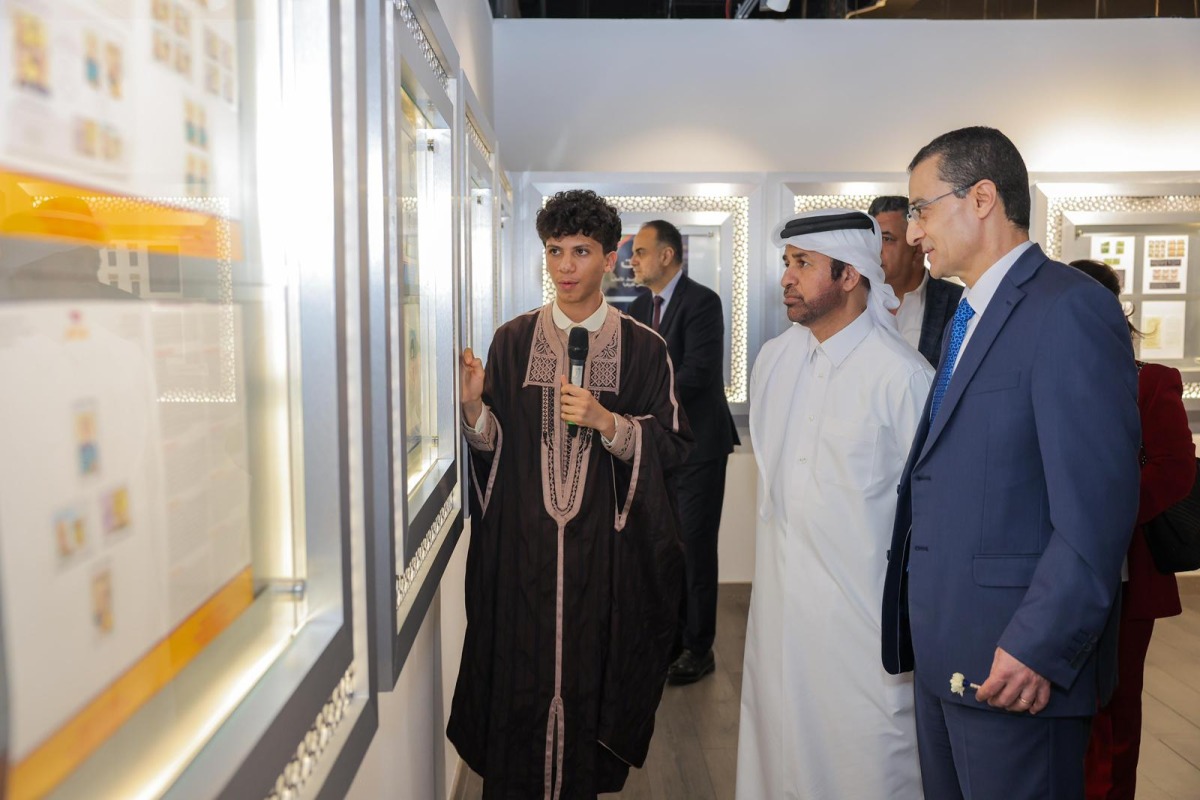
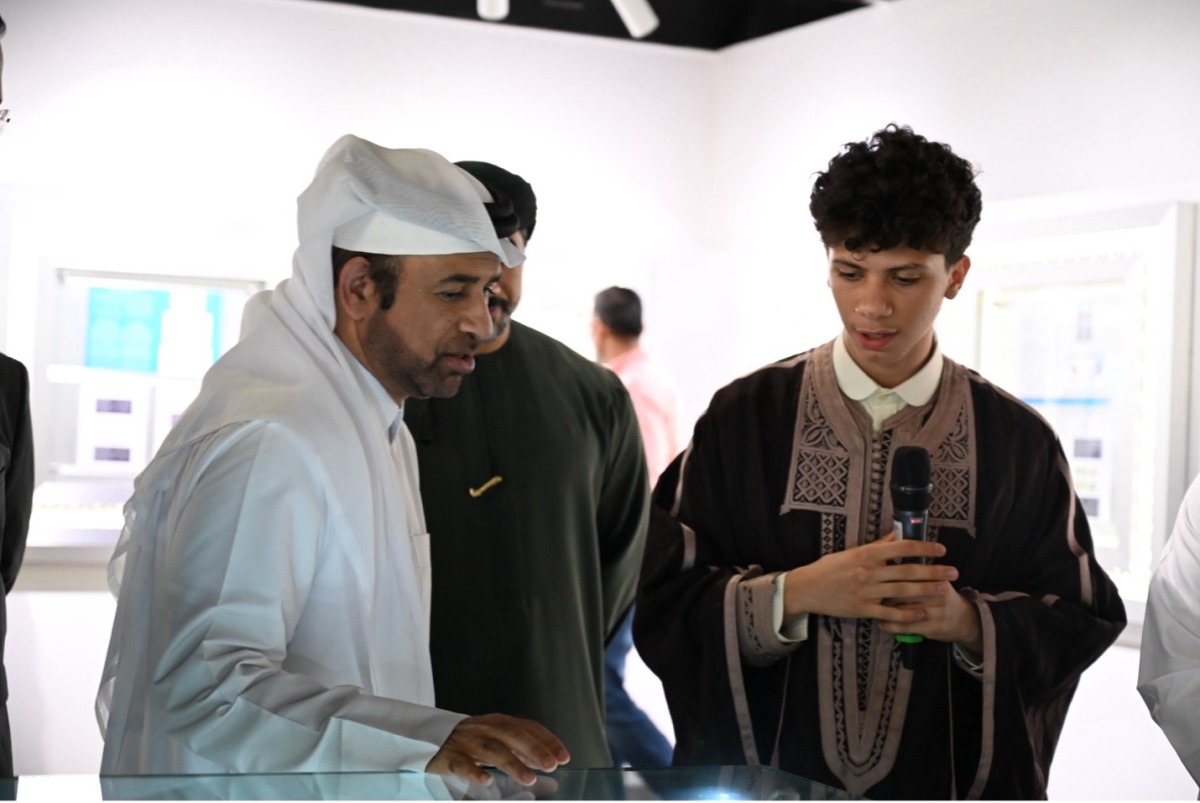
General Manager of Katara Cultural Village Foundation Professor Dr. Khalid bin Ibrahim Al-Sulaiti, Ambassador of the Republic of Tunisia to the State of Qatar H E Farhad Khalif and other officials view the gallery as artist Youssef Ftouhi explains his collection.
Doha, Qatar: Walking through the halls of the Arab Postal Stamps Museum in Building 22 at Katara Cultural Village, visitors are met with hundreds of miniature works of art, each one a small window into a larger world. For 15-year-old collector Youssef Ftouhi, these stamps are far more than paper; together, they form a living archive of family memories, national heritage, and the history of Tunisia, his country.
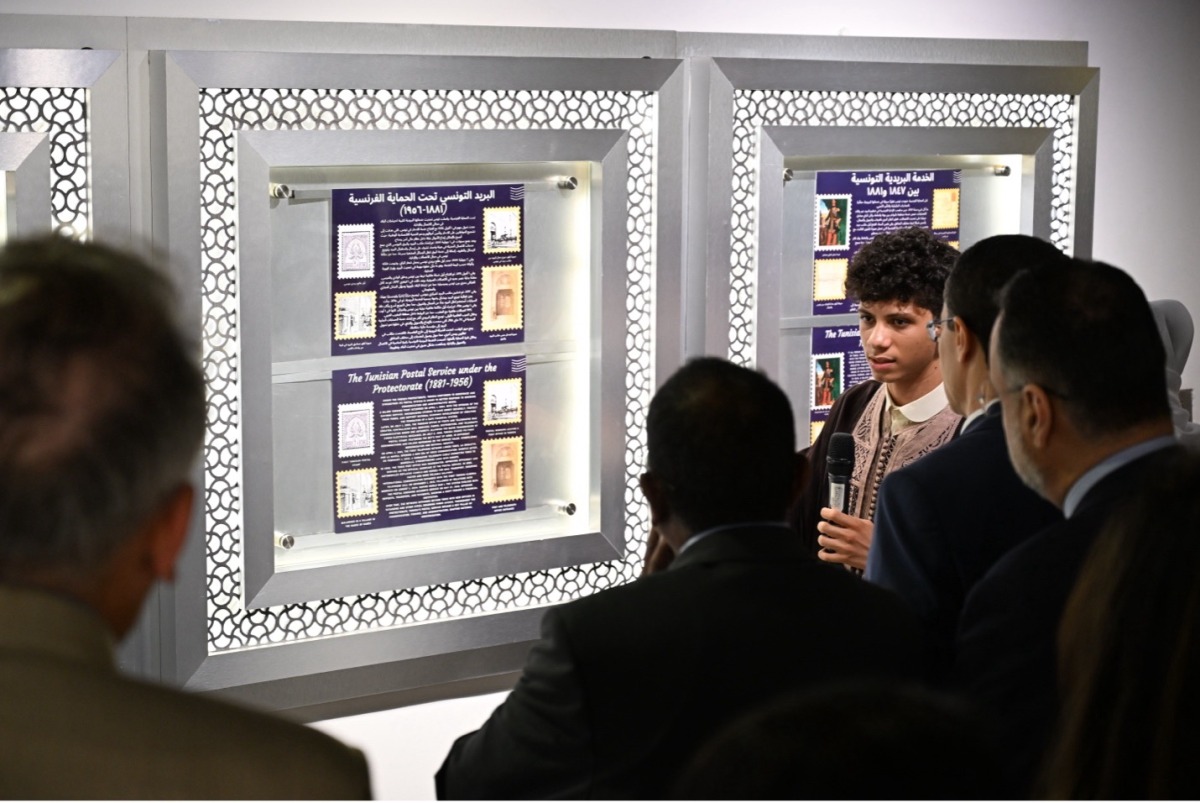 Officially opened on Tuesday (June 16), the History of the Tunisian Postal Service and Stamps exhibition offers a glimpse into more than a century of Tunisia’s postal history. The opening was attended by Ambassador of the Republic of Tunisia to the State of Qatar H E Farhad Khalif along with a number of ambassadors, heads of diplomatic missions, media representatives, and those interested in culture, history and postal heritage.
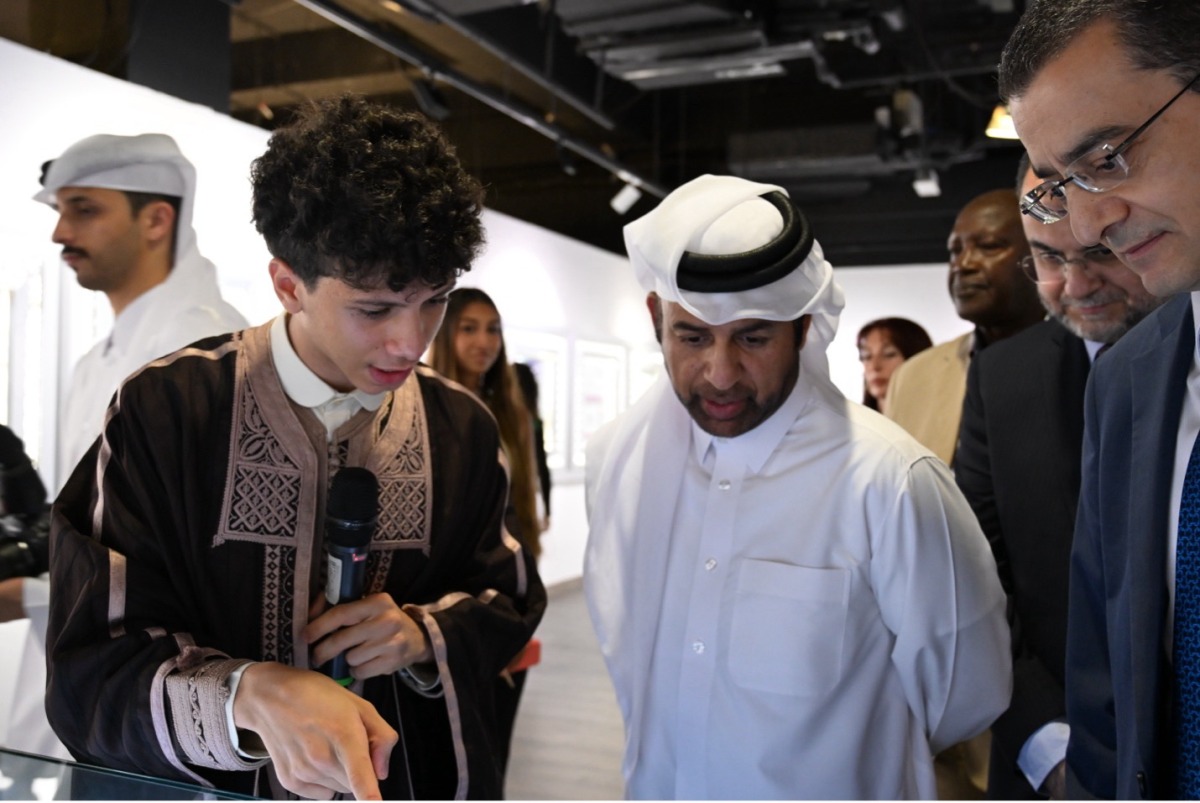 General Manager of the Katara Cultural Village Foundation Professor Dr. Khalid bin Ibrahim Al-Sulaiti inaugurated these deeply personal displays, built around a collection that has been passed down through generations.
Youssef, whose family spent generations collecting the showcased stamps, spoke with The Peninsula about what this means to him. “I’m 15 years old and my family came to Qatar 55 years ago. I lived my childhood in Tunisia, and the stamps that you see in this exhibition are my grandfather Mongi Safra’s collection alongside pieces from my friend Madame Samira Cheniti. They are very personal as they are my family’s personal collection.”
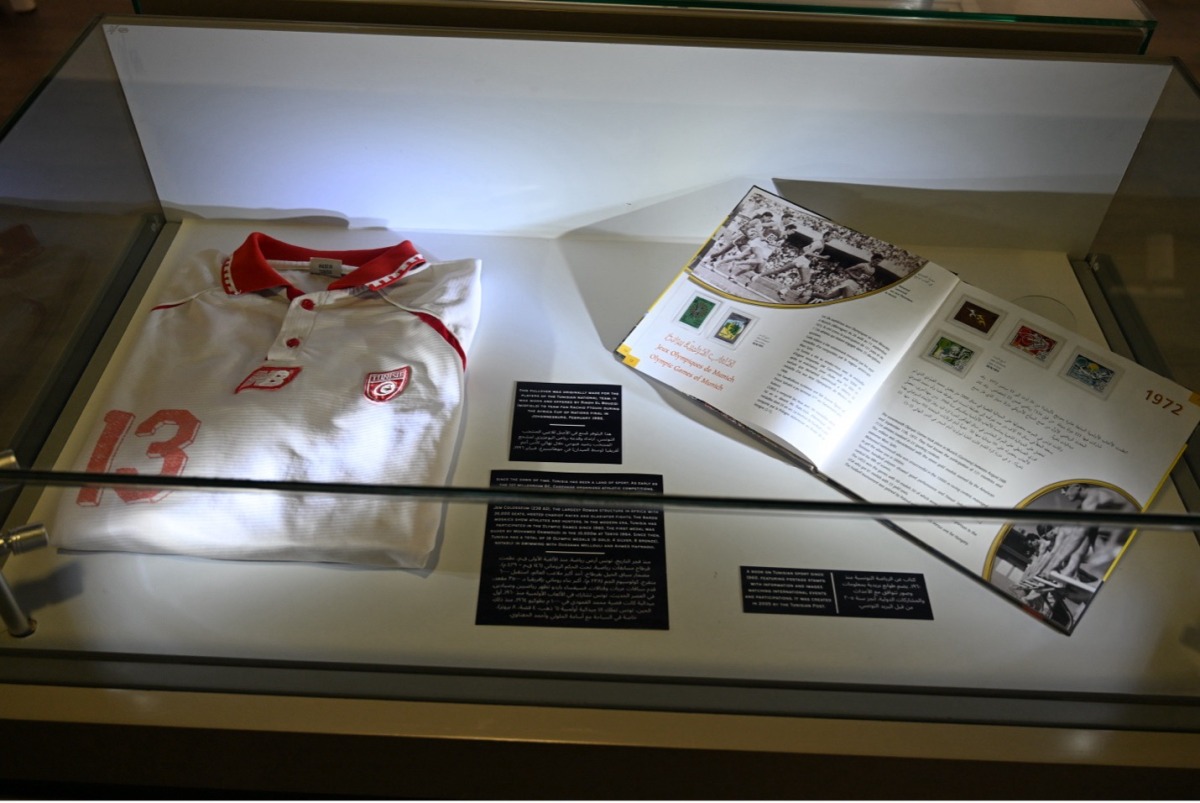
The exhibition features more than 400 stamps. “The oldest stamp is from 1906 and the newest one is from 2010. So it is a collection of more than one century,” he explained.
Youssef added that it took months of preparation to transform decades of history into an experience that was accessible and traversable for the attendees. “We tried to organise this exhibition dividing into five different themes,” he said. These themes include Tunisian heritage, iconic landmarks, sports, arts, notable personalities, as well as human rights and influential figures.
“I know all the stamps by heart because I glued them all on the sheets, and it was very long work. It took months, but we did it.”
Although choosing a particular favorite among hundreds was difficult, one stamp immediately stood out for Youssef. “If I were to pick my favorite, it would be this one,” he said while pointing to a stamp depicting a man wearing a ‘jebba’, traditional clothing for men during special occasions: the same garment he proudly wore during the exhibition’s opening.
Youssef expressed hopes to carry the tradition of wearing this jebba at memorable occasions. “It’s really touching because the one I am wearing is actually my grandfather’s.”
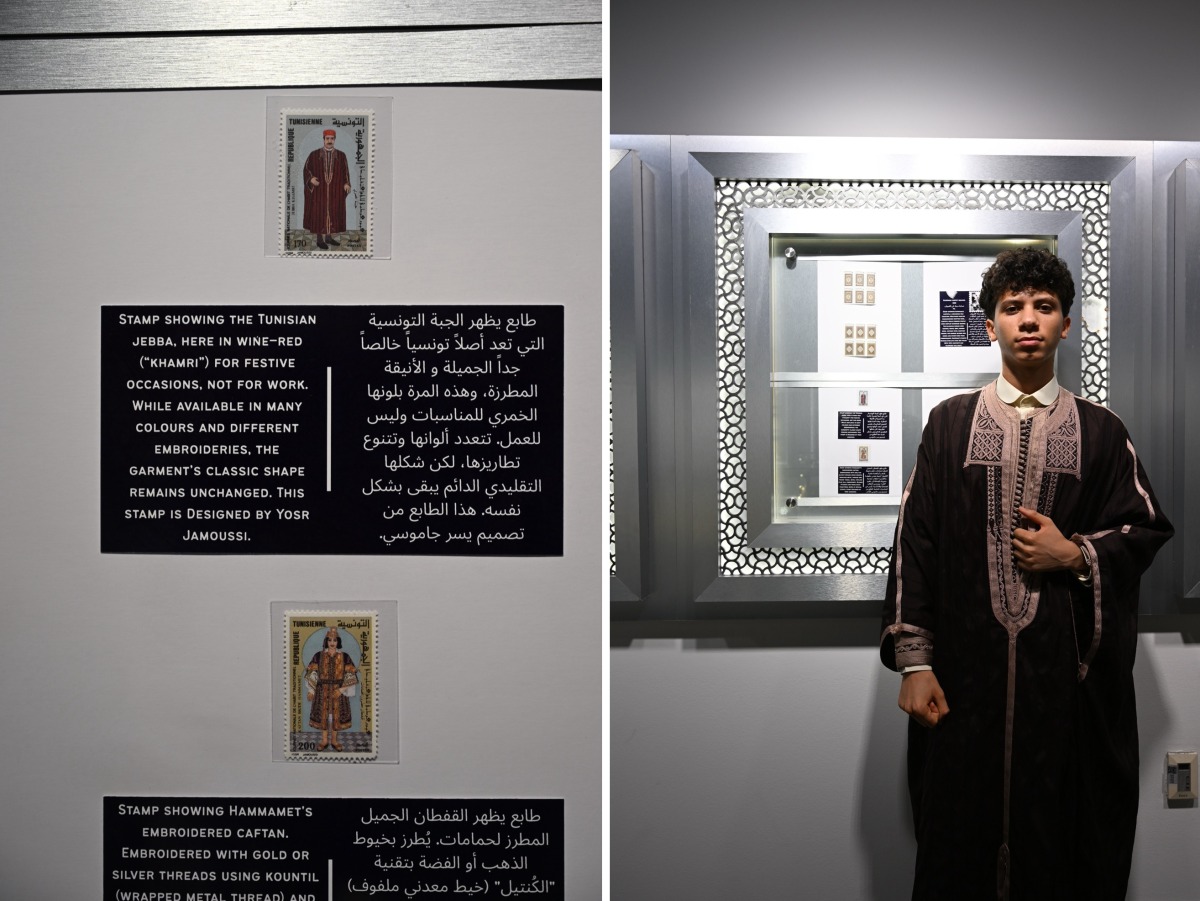
According to him, no single stamp defines the exhibition. Together, they paint the story of Tunisia. “Each stamp in this exhibition shows a piece of Tunisian history, culture, traditions, arts and events,” he said. “That was our objective: to present our culture through postal stamps and preserve my family’s collection.”
 These stamps become more than just collectibles. Through Youssef’s eyes, they transform into family tradition, cultural milestones and serve as a reminder that even the smallest artifacts can carry generations of history.