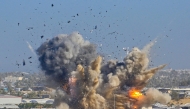
Ottawa: The Western Canadian province of Alberta, in the grip of massive forest fires, was the nation's economic engine before the oil rout.
About the size of France, the province flanks the eastern slopes of the Rocky Mountains.
Vast prairies stretch across its southern parts, where cattle graze on wild grasses. A thick boreal forest of conifers such as spruce and jack pine covers the north, where heavy oil sands deposits were first documented by European traders nearly three centuries ago.
In the late 1960s Alberta started to mine the oil sands.
But it took decades for widespread exploitation, after new technologies reduced extraction costs and oil prices rose, making it economical.
With the third largest oil reserves in the world, Canada has risen in recent years to become the fifth largest crude producer.
The oil sands boom attracted workers to Alberta's north from across the country and around the world, leading to the birth of a city in the boreal forest -- Fort McMurray.
Its population has increased at least tenfold in the last 50 years.
Alberta's population, meanwhile, has increased at more than double the national rate to 4.2 million, representing 11 percent of Canada's total, according to the government statistical agency.
The oil sector's output has quadrupled over the last 30 years.
The product has been exclusively sold to the United States. Several new pipeline projects are in the works to move bitumen from landlocked Alberta to tidewater in order to reach new overseas markets, but they face stiff opposition from environmental activists.
Meanwhile, the drop in oil prices from a 2014 high of more than $100 to below $50 last year has forced companies to slash staff and put new projects on hold.
Before the oil plunge, the median Alberta household income was about Can$100,000, or Can$20,000 more than the national average.
In the wake of falling prices, an estimated 100,000 people lost their jobs over the past two years, pushing up the unemployment rate from less than four percent to 7.2 percent in April.
The economy of Alberta, where the natural resources sector accounts for a third of GDP, meanwhile, plunged into recession.
With the shutdown or slowdown of oil activities since the outbreak of forest fires in and around Fort McMurray this month, production fell by 1.2 million barrels a day, according to the Conference Board of Canada.
This has resulted in an additional Can$1 billion hit to the Alberta economy, and the bill continues to grow as the fire spreads and intensifies.
AFP